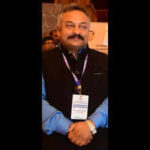

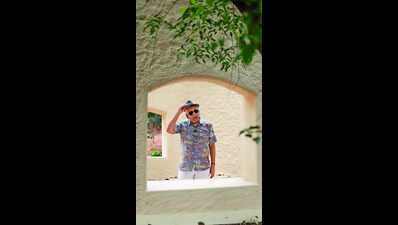
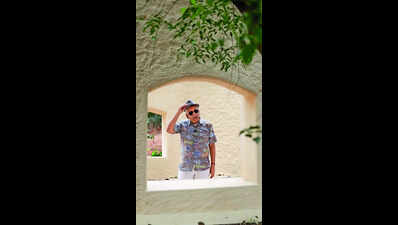
If you’ve spent a day at a literature festival, discovered a new artist at a cultural hub, or felt the city slow down at a community event, chances are Ravichandar V had something to do with it. A corporate professional-turned full-time civic evangelist, the 68-year-old has spent the last 25 years shaping Bengaluru’s cultural landscape. In a conversation with us, he reflects on the Bengaluru he grew up in, the one he helped build, and the one he hopes the next generation will inherit…What’s your earliest memory of Bengaluru?I’ve been in Bengaluru since 1969. We lived in Hanumanth Nagar and later in Chamarajpet. Later, in the early ’80s, when I started working, I remember riding my bike to Nandi Hills with colleagues and spending long evenings at ice cream parlours. Those were classic Bengaluru days.How did your relationship with the city evolve?Until 2000, I was just another Bengalurean. That changed when I joined the Bangalore Agenda Task Force. Within a month, I realised the potential of working with the government and the scale of change that was possible. It was far more exciting than my corporate life. Soon, I became deeply involved in shaping the city’s future.You later moved into arts and culture. Why?Around 2010, I realised success rates in government work are low, and even when initiatives succeed, they take years. I wanted to work in areas where I could move faster. Arts and culture offered that freedom. I’m not an art expert, but I love enabling things to happen. It goes back to my college days of organising festivals and debates.How did festivals like the Bengaluru Literature Festival and BLR Hubba come about?The literature festival began around 2012. I helped raise funds and run it year after year. Today, it’s India’s largest community-funded literature festival. BLR Hubba came later, inspired partly by global celebrations. The idea was to create a festival that draws people into public spaces. Seeing strangers show up, participate and enjoy themselves gives me immense joy.How important are art and culture in making a city feel alive?Arts and culture offer shared experiences. Today, in a screen-obsessed world, these spaces make us human again. They also play a significant role in mental well-being.What makes Bengaluru different from other metros?Bengaluru has always had a certain openness and informality. People come here from everywhere, and the city absorbs them. It has a tech culture, but also a deep undercurrent of art, music, theatre and literature, which is a unique combination.How have festivals like BLR Hubba changed how public spaces are perceived?They’ve shown that public spaces can be joyful, safe and inclusive. When thousands gather at an open venue for a cultural event, it transforms how that space is perceived.
My strongest memories are of cycling all the way to Majestic. There were days when I’d watch three or four movies back-to-back on Kempegowda Road and then cycle home
Ravichandar V
You also created Sabha, a cultural space. What was the ideas behind it?Sabha was our way of personally investing in the city’s cultural life. It demonstrates how you can stay connected to the past while making it relevant with modern lighting, sound and air-conditioning. What excites me most is that it has organically become a hangout for younger people. More than the building itself, people define Sabha by what happens there. It has become the next cool thing, which is what we wanted.How are younger Bengalureans interacting with the city?Young people don’t visit a place because it’s labelled cultural — they come because it feels real and cool. At BIC, audiences once skewed over 50. We consciously worked to bring in younger people. At Sabha, I now see many Gen Z visitors. They discover spaces through Instagram, through friends, through vibe. They’re irreverent and outspoken, but they bring energy. It’s a different kind of engagement — and it’s exciting.
More than the building itself, people define Sabha by what happens there. It has become the next cool thing — and that’s exactly what we wanted
Ravichandar V
Coming from a corporate background, what do cities need to learn from private sectors?The private sector teaches you about outcomes, incentives and scale. There’s a clear link between performance and rewards. There’s also flexibility and innovation in navigating obstacles. In government, systems are often siloed and process-driven. Cities need stronger collaboration between government, the private sector, civil society and citizens. That’s where meaningful change happens.