


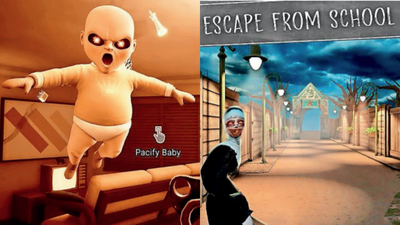
GHAZIABAD: A diary left behind by three minor sisters who died by suicide in Ghaziabad offers a disturbing glimpse into the universe dominated by horror-survival games and online walkthroughs they inhabited in the last few years, one that clinical psychologists said was reflective of how deeply the sisters had retreated into virtual spaces as their real world narrowed.The handwritten note, seen by TOI, lists the names of four mobile games—Poppy Playtime, The Baby in Yellow, Evil Nun: The Scary Horror Game and Ice Scream—the girls were deeply immersed in. All four belong to the horror or puzzle-survival genre, placing players in claustrophobic, threatening settings from which escape is the ultimate goal.Except for Poppy Playtime, which charges about Rs 300 to begin playing, the games are free to download but include in-app purchases.Their father, Chetan Kumar, told TOI that the girls had been playing task-based online games for at least two to three years and were fascinated by Korean culture. They gave each other Korean names and spoke of wanting to visit the country someday. Based on their ages, investigators believe the youngest sibling may have begun playing these games before turning 10, when the applications recommend a minimum age of 12 years.The diary’s references also suggest that gaming was not casual entertainment but a shared ritual. Alongside playing, the girls regularly watched YouTube videos of gamers livestreaming the same titles, content that often amplifies fear, suspense and adrenaline through exaggerated reactions.
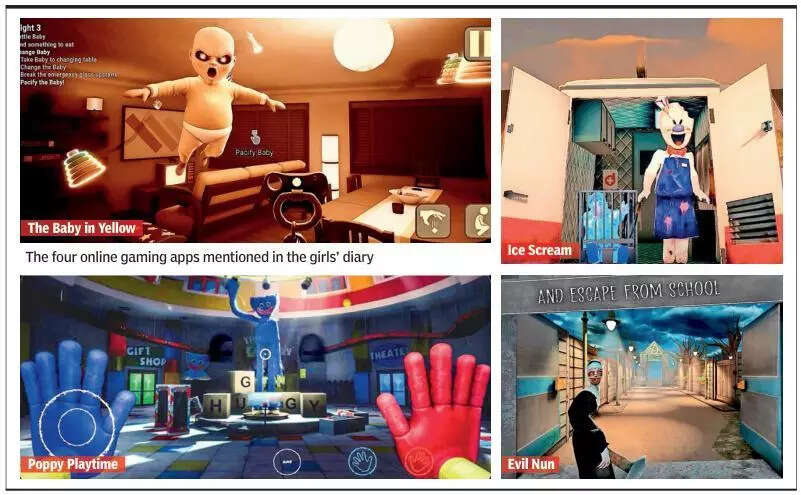
One of the games they played is Poppy Playtime, a game developed by Mob Entertainment that has found a large teenage audience in India. Players take on the role of a former employee returning to an abandoned toy factory, only to discover that its missing workers have been replaced by monstrous, animated toys that stalk the premises. Survival depends on solving puzzles, evading attacks and navigating dark corridors. On Google Play, the game has crossed 10 lakh downloads and carries an age rating of 12-plus. Its official description urges players to “stay alive” and “survive the vengeful toys waiting for you,” framing fear as both challenge and thrill.Another game, The Baby in Yellow, cloaks horror in dark humour. Developed by Team Terrible, it casts players as a babysitter tasked with mundane chores, like feeding, changing diapers, and putting a baby to bed, while increasingly sinister paranormal events unfold. The game’s eerie soundtrack and sudden visual shocks have made it wildly popular, with more than 10 crore downloads globally. Its description asks, pointedly: “How long will you stay in control?”Evil Nun, developed by Keplerians Games, is set inside a school guarded by a terrifying nun transformed after a zombie attack. Players must solve puzzles, rescue trapped children and escape without being caught. With over 5 crore downloads, the game has multiple chapters, extending its narrative and replay value.Keplerians is also behind Ice Scream. The game centres on an ice-cream vendor who kidnaps children and freezes them inside his truck. Set in a small town, the game forces players to sneak, hide and unlock clues without alerting the villain.Across all four games, a common theme emerges: confinement, fear and the promise of escape.While there is no evidence yet that the girls were instructed or encouraged by the games to harm themselves, the diary entries, combined with messages scrawled on walls expressing loneliness, suggest a prolonged withdrawal into fantasy. Experts caution against drawing simplistic links between violent games and suicide. “It’s not fair to blame games alone,” said Pulkit Sharma, a clinical psychologist. “But these patterns should be read as a cry for help.”According to Sharma, the narrative arcs of the games mirror emotional states often seen in adolescents struggling with isolation. “The first thing that we should note is that the girls were depressed and had no support. These horror games that they were playing, where the protagonist is stuck reflects their state of mind in a way. It seems like they sought temporary relief in these games where they are trapped, hunted, alone, but eventually find a way out,” Sharma added. “When someone is feeling very hopeless with life, they feel very numb, and then they get drawn to such dangerous things,” he added.


