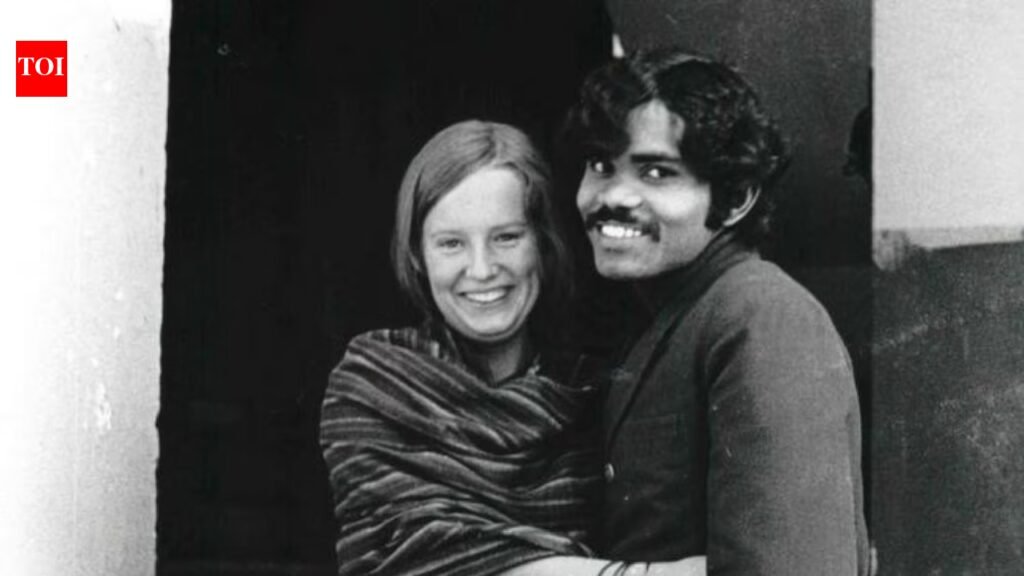
When Pradyumna Kumar Mahanandia, known as PK, fell in love with a Swedish woman in Delhi in the mid-1970s, getting to her was not simple. He was an Indian art student from Odisha. She was a young woman from a Swedish noble family. When Lotta returned to Sweden, PK had no money for a flight. So, in January 1977, he bought a second-hand ladies’ Raleigh bicycle for 60 rupees, packed a sleeping bag, a small tent and his art materials, and began cycling towards Sweden.He had never planned a journey like this. He only knew that he had to reach the woman he loved. It took him 133 days and nearly 6,000 miles across several countries to get there.The extraordinary story was recently reported by The Telegraph, based on conversations with PK, Lotta, their children and filmmaker Orlando von Einsiedel. The journey has now become the subject of ‘The Cycle of Love,’ a documentary.
A love story that began with a portrait
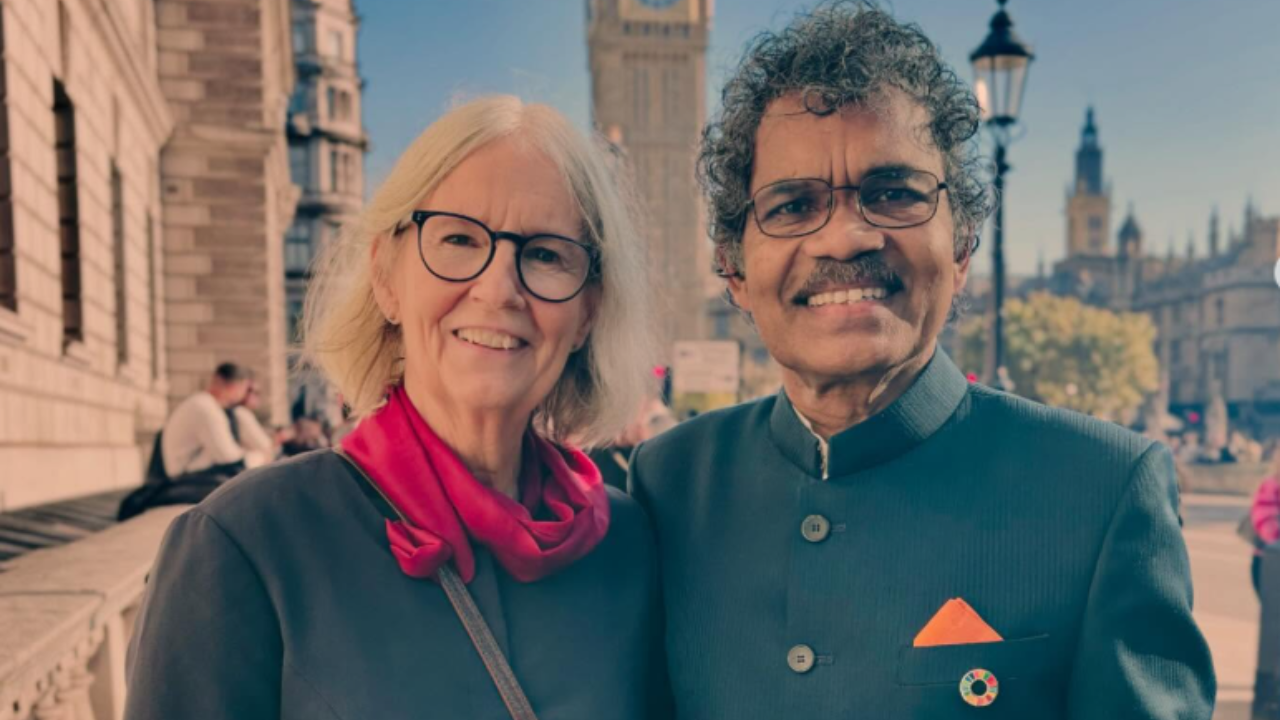
Image Courtesy: Instagram/@pkmahanandia
In late 1975, PK was 26 and studying fine art in Delhi. According to The Telegraph and various media, he had grown up in Kandhapada village in Odisha and came from a loving family. He won a scholarship to study fine art in Delhi and began earning money by drawing portraits near a fountain in the city centre. There had even been a local newspaper article about his talent.Then Lotta arrived. She was 20, Swedish and travelling through India with three friends in a Volkswagen van. PK was immediately attracted to her when she came to have her portrait drawn. But what convinced him that she was the woman he was meant to marry was not just their attraction.His family had always told him that destiny mattered. As per various media and interviews, an astrologer had once told PK’s father that his future wife would come from a distant land, be musical, be born under the sign of Taurus and “own a jungle”. When Lotta returned to India, PK asked about her birthday. She was born in May and was a Taurus. He asked if she was musical. She sang and played the piano.Then came the strangest question: did she own a jungle? Lotta was confused. But she explained that her grandfather, a Swedish nobleman, owned land and a forest near Gothenburg. For PK, that was enough. He told her she would be his wife.Lotta had another reason to believe that something unusual was happening. The Telegraph reported that while working as a nurse in London, she had received a calendar featuring the massive stone wheel of Odisha’s 13th-century Konark Sun Temple. She loved the image and had kept it on her wall.
They married in India, but had to separate
Lotta wrote to her parents saying she had met her life partner. She and PK travelled to his village in Odisha, where his family welcomed her. His father performed a marriage ceremony for the couple.But Lotta had to return to Sweden to continue her studies. The two kept writing to each other. PK finished art college, but he desperately wanted to be with her. He asked about flying to Sweden and was told a ticket would cost around 40,000 rupees, about 18 times the average annual income in India at the time, according to The Telegraph. He could not afford it. So he chose a different route. In January 1977, PK bought a used bicycle for 60 rupees and left India.“I knew the sun rises in the east and sets in the west,” PK recalled in the documentary. At first, PK thought he was heading to Switzerland. He did not realise that Borås, where Lotta lived, was in Sweden. A Belgian traveller eventually showed him a map of Europe and corrected him. The mistake meant the journey was going to be even longer than he had imagined.
A journey powered by strangers
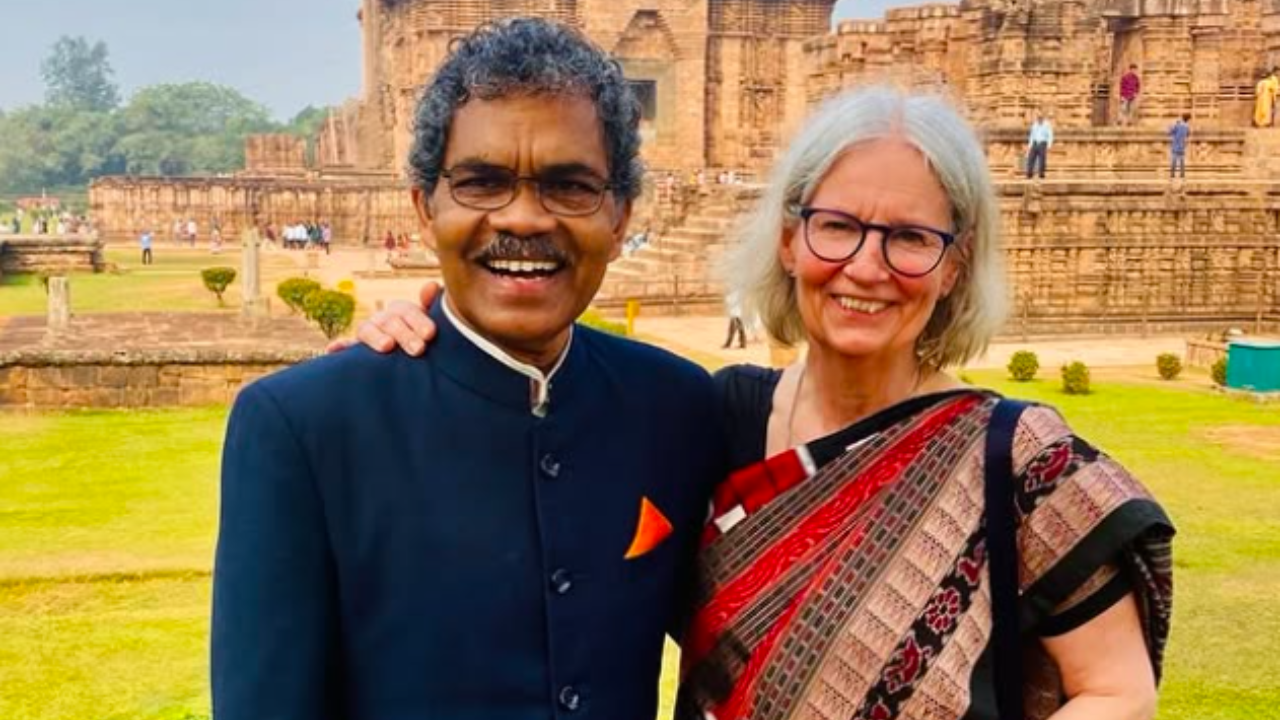
Image Courtesy: Instagram/@pkmahanandia
PK’s route was not straightforward. At the India-Pakistan border, he discovered that he could not get permission to travel through Pakistan. In Amritsar, he met someone he knew from Delhi who was moved by his story and bought him an air ticket to Kabul, Afghanistan. It was PK’s first flight. His bicycle was transported to Kabul in a van by a German couple he had met.From there, he continued by bicycle. The journey repeatedly depended on strangers. People gave him food and shelter. Some gave him money in exchange for his drawings. PK made portraits along the way, just as he had done in Delhi, and those drawings helped him survive.One incident became particularly memorable. While cycling away from Kabul, PK came across a car that had crashed. A young Western woman lay beside it, badly injured and covered in blood. She had lost all her teeth. PK stopped. As reported by The Telegraph, he flagged down a lorry, helped lift the woman into it and put his bicycle in the back. He took her to a hospital in Kabul and stayed with her until she was discharged.She could not speak, but she wrote her name on a piece of paper. Her name was Leanna. She was Austrian and worked at a gallery in Vienna. PK took her to her embassy, where officials arranged a flight for her, and then continued his journey.Weeks later, when PK reached Istanbul, he went to the post office to check whether Lotta had sent him a letter. There was another envelope waiting for him. It was from Leanna. She had sent him a train ticket to Vienna.By the time PK reached Vienna, Leanna had already returned to India. But her sister took him to the gallery where she worked. The owner and his wife bought some of PK’s paintings and gave him a train ticket to Gothenburg. The strangers he met kept pushing him closer to Lotta.
The last moments of the journey
PK still faced trouble at the German border. Guards threatened to arrest him until he showed them his letters from Lotta and an Indian magazine article reporting that they were married. They allowed him to continue, according to The Telegraph.On the train through Sweden, PK met a Norwegian woman. When she saw officials approaching, she quietly pushed money into his pocket. PK had no return ticket and was worried about what would happen when questioned. The money gave him something to show the authorities.Finally, on May 23, 1977, 133 days after leaving India, PK reached Gothenburg. He called Lotta. She drove to collect him. “It was a very precious moment,” Lotta said. “For a long time there were hardly any words, he was just hugging me and crying.”Her parents welcomed him too. They did not speak English, so Lotta taught them a few phrases. Her mother baked a cake and learnt to say, “Welcome home” and “Especially for you.”Later that year, PK and Lotta had an official Swedish wedding ceremony. PK learnt Swedish and became an art teacher. Lotta taught music.
From an unlikely couple to a family
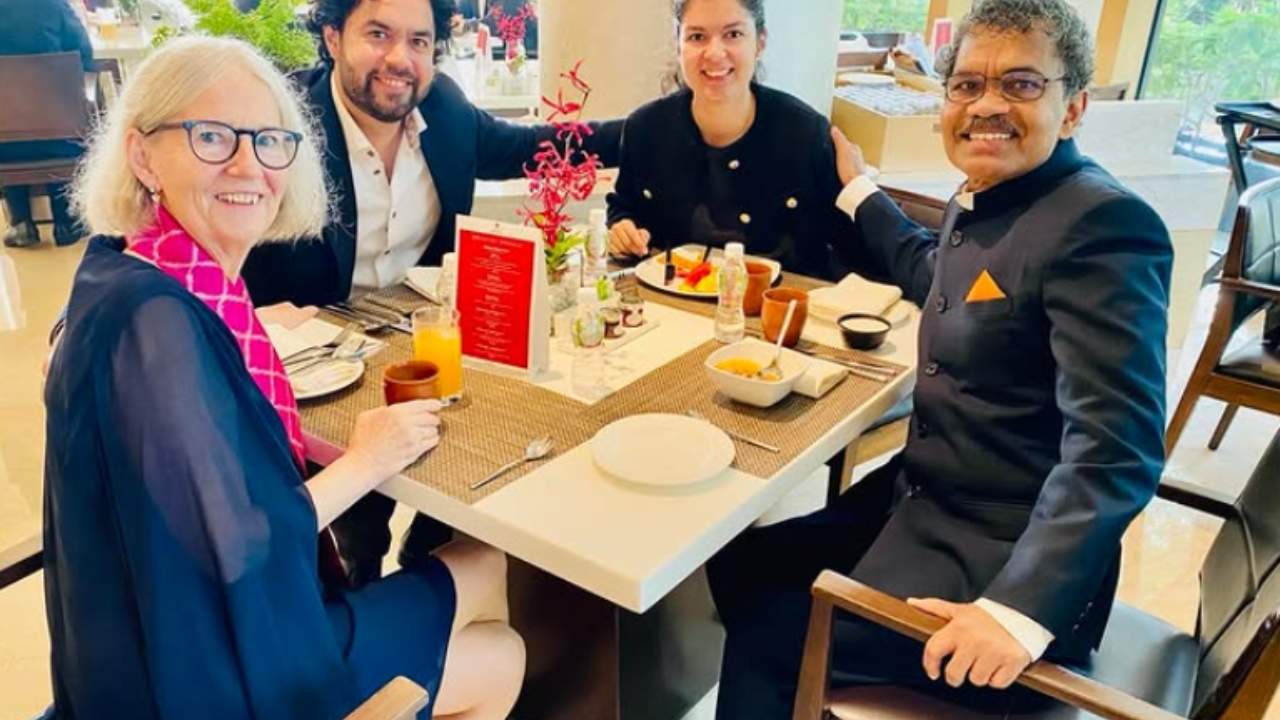
Image Courtesy: Instagram/@pkmahanandia
PK and Lotta eventually built a home in the Swedish countryside near Gothenburg. According to The Telegraph, the foundations date back to 1776, while the house was rebuilt by Lotta’s grandfather in 1936. Today, it sits in the middle of a forest, surrounded by apple trees. Deer and foxes visit the garden, while wild boars turn up often enough for Lotta to joke that they do the gardening by eating the weeds. The couple have two children, Emilie, born in 1985, and Karl, born in 1988.PK’s journey offers a very different picture. He travelled thousands of miles with little money, no proper map and a bicycle, depending on strangers who often had no reason to help him. And they did. Nearly 50 years after PK finally reached Gothenburg, he and Lotta are still together.