[ad_1]
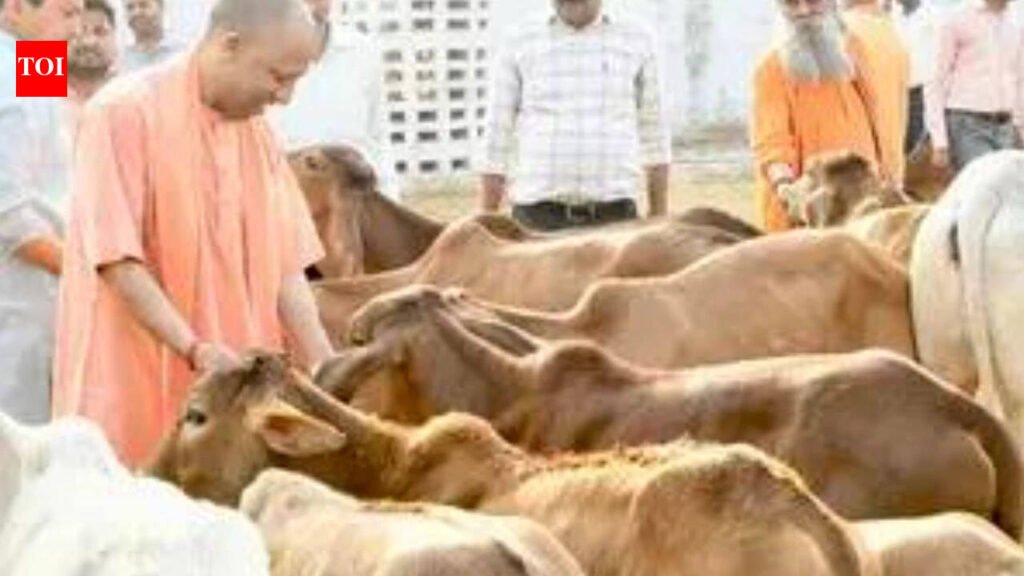
Uttar Pradesh’s cow-protection campaign is entering a new phase. After years of building shelters, strengthening enforcement, providing fodder and veterinary care, and creating mechanisms for community participation, the Yogi Adityanath government is now seeking to bring the younger generation into the movement. The proposed training of around 10,000 ‘Gau Mitras’ across villages marks an important shift in the approach. Instead of treating cow protection only as a matter of shelter and administration, the government intends to connect it with youth engagement, rural employment, natural farming, women’sself-help groups, green energy and the village economy. The initiative envisages preparing master trainers who will subsequently train others at the village level. Preference will reportedly be given to people who already have an interest in cow protection and cow service. Through village campaigns, children and young people will be introduced to indigenous cattle breeds, animal care, natural farming and the economic and environmental dimensions of cattle rearing. The larger objective is to create a generation that sees cow protection not merely as a traditional or cultural responsibility but also as part of animal welfare, sustainable agriculture and rural enterprise.A New Generation Joins an Old Rural TraditionFor generations, cattle have occupied an important place in Uttar Pradesh’s agrarian economy. But mechanisation, declining profitability of cattle rearing and the abandonment of unproductive cattle created a difficult challenge, particularly in rural areas. The state government’s strategy since 2017 has therefore attempted to address the problem at several levels: preventing abandonment, creating shelters, providing maintenance assistance, improving veterinary care, encouraging farmers to adopt cattle and promoting productive indigenous breeds. The proposed Gau Mitra network adds another dimension—social participation. The idea is particularly significant because young people are increasingly connected to digital platforms, social media, entrepreneurship and new forms of volunteering. Training village-level youth as Gau Mitras could potentially create a bridge between traditional cattle care and a younger generation familiar with technology, social enterprises and environmental issues. The campaign also proposes sensitising schoolchildren to cattle care and the importance of indigenous breeds. This can help transform cow protection from an activity confined to government departments and gaushalas into a broader community effort.A Massive Shelter NetworkThe foundation of the state’s cow-protection programme has been the creation and expansion of cow shelters. According to the Uttar Pradesh government’s recent figures, thousands of cow shelters have been established across the state and more than a million destitute cattle are being housed. A government publication reported 7,713 cow shelters accommodating 16,09,557 destitute cows, while more recent state budget figures put the number of operational shelters at 7,497, housing 12,38,547 cattle, with 155 large cow-protection centres under construction. The variation reflects different reporting dates and categories of shelters. Its underlying objective is two-fold-to provide safe shelter and food to abandoned cattle and to reduce crop damage caused by stray animals. The government has also worked towards developing different categories of facilities, including Gau Ashray Sthals, Kanha Gaushalas and Brihad Govansh Sanrakshan Kendras. The policy framework for temporary cow shelters was formally strengthened through a government order issued in January 2019.Financial Support for Cow SheltersOne of the most important changes has been the enhancement of financial support for cattle maintenance. The maintenance assistance provided to cow shelters was increased from ₹30 to Rs 50 per animal per day. The higher allocation was intended to improve feeding and upkeep standards and reduce the financial pressure on shelter operators. The state has also moved towards stronger monitoring and accountability. District-level mechanisms and nodal officers have been deployed, while surveillance arrangements, including CCTV monitoring at shelters, have been promoted. The government has increasingly emphasised that a gaushala must provide more than a roof: it should offer fodder, water, healthcare, vaccination, cleanliness and protection.From Abandoned Cattle to Family-Based CareA major innovation has been the effort to move some cattle from institutional shelters into family-based care. Under the Mukhyamantri Sahbhagita Yojana, also described in government documents as the Mukhyamantri Nirashrit/Beshara Govansh Participation Scheme, interested livestock-rearing families receive cattle for care along with financial assistance. The government’s recent figures indicate that more than 1.8 lakh cattle have been handed over to more than 1.13 lakh livestock rearers under the Chief Minister Sahbhagita Yojana and Nutrition Mission. Government material has also described provision of one cow and Rs 1,500 per month to eligible participating families. This model addresses two problems simultaneously. The cattle receive individual household-level care, while families receive an additional livelihood opportunity through milk, manure and other cattle-based activities.Nutrition, Health and Veterinary CareCow protection has also been linked with animal healthcare. The state has undertaken large-scale vaccination programmes. According to a government publication, 14.50 crore animals have been vaccinated, including 1.92 crore cattle vaccinated against Lumpy Skin Disease. The government has also promoted the 1962 toll-free veterinary assistance service, allowing livestock owners to seek veterinary help. This health infrastructure is important because cow protection cannot be sustained through shelters alone. Disease prevention, vaccination, breeding management, veterinary treatment and timely intervention are essential for improving the overall cattle population.Controlling Abandonment and Strengthening ProtectionThe government has simultaneously sought to strengthen enforcement against cattle smuggling and illegal slaughter while creating institutional mechanisms for cattle protection. Uttar Pradesh already has the Uttar Pradesh Prevention of Cow Slaughter Act, 1955, as amended, and the state has strengthened enforcement under the existing legal framework. Special Cow Protection Task Forces have also been constituted at the state and district levels. A government response records the creation of district-level Special Cow Protection Task Forces and a state-level committee in 2021. These measures are intended to combine enforcement with rehabilitation and shelter rather than relying on policing alone.Gau Kalyan Cess and the Expansion of InfrastructureIn the early years of the programme, the government also introduced a Gau Kalyan/Gau Protection Cess to generate resources for cow welfare and the construction and maintenance of shelters. The move came amid concerns over the growing number of stray cattle in rural areas. The broader policy approach was therefore to create a dedicated financial and administrative framework for a problem that had previously been largely handled through scattered local arrangements.Indigenous Breeds and the Dairy EconomyCow protection is increasingly being linked with a second objective: improving the productivity and genetic quality of cattle. Under the Nand Baba Dugdh Mission, Uttar Pradesh has introduced schemes including the Mukhyamantri Swadeshi Gau-Samvardhan Yojana, Mukhyamantri Pragatisheel Pashupalak Protsahan Yojana, Nandini Krishak Samriddhi Yojana and Mini Nandini Krishak Samriddhi Yojana. The Mukhyamantri Pragatisheel Pashupalak Protsahan Yojana encourages farmers to rear high-quality, productive indigenous breeds. The Nandini schemes provide financial support for larger cattle-rearing units involving breeds such as Sahiwal, Gir, Tharparkar and Gangatiri. The Mini Nandini scheme, for example, provides a subsidy of up to Rs 11.80 lakh for an eligible 10-cow unit. To add, the Swadeshi Gau-Samvardhan Yojana has also been expanded. For 2025–26, the state set a target of 2,100 two-cow units across all 75 districts, with a specific focus on including women beneficiaries. Thus, the policy is moving from simply protecting cattle to making productive indigenous cattle an economic asset.Cow Dung Becomes a Rural ResourcePerhaps the most important evolution in the policy is the attempt to convert cow shelters from expenditure centres into self-sustaining rural enterprises. Cow dung is being used for products such as vermicompost, cow-dung logs, incense sticks, incense cones, flowerpots, earthen lamps and cow-dung-based paint. Cow-based agricultural preparations such as Jeevamrit and Ghanamrit are also being promoted in connection with natural farming. The government has been exploring vermicompost units at shelters, with the agriculture department facilitating inputs, licensing and marketing. Training is also being proposed for cattle rearers and shelter operators. Biogas offers another opportunity. In districts with sufficient cattle numbers, cow dung can become a feedstock for biogas and potentially bio-energy, while the residue can be used as organic manure.This creates a model of circular economy in Uttar Pradesh from Cattle → cow dung → biogas/manure/products → income → stronger gaushala sustainability → better cattle care.Women and Youth at the CentreWomen’s self-help groups are emerging as another key component. Cow-dung products, vermicompost, natural farming inputs and other small-scale enterprises can be operated at village level with relatively modest infrastructure. Linking these activities with SHGs can therefore create supplementary income opportunities without requiring women to migrate from their villages. At the same time, the proposed Gau Mitra programme places youth at the centre of the social mobilisation effort. The government has been discussing a model in which master trainers will first be prepared and then a wider network of trained Gau Mitras developed. This creates the possibility of combining animal care, digital awareness, entrepreneurship and environmental education at the village level. For Gen Z, the initiative could therefore represent a new form of rural volunteering—one that combines traditional values with modern concepts such as sustainability, circular economy and social enterprise.Model Gaushalas and the Gram-Urja VisionThe next stage is to make selected gaushalas demonstration centres for self-reliant rural development. The Yogi government has announced plans for Adarsh Gaushalas across divisions, with the first phase covering Ayodhya, Varanasi, Gorakhpur, Chitrakoot, Bareilly, Agra, Kanpur and Jhansi. These are envisaged as centres integrating modern shelter infrastructure, natural farming, cow-dung utilisation, women’s groups and youth participation. The proposed Gram-Urja Model seeks to connect cattle-based resources with village energy and natural- farming systems. This is a significant conceptual shift: the gaushala is no longer being viewed merely as a place where abandoned animals are kept. It is being positioned as a possible rural production and resource centre.A Long-Term Cow Protection EcosystemOver the past nine years, the Yogi government’s cow-protection approach has consequently developed several interconnected layers:
- expansion of cow shelters and large cattle-protection centres;
- financial support for cattle maintenance;
- family-based adoption through the Sahbhagita model;
- nutrition and fodder support;
- vaccination and veterinary services;
- district-level monitoring and Special Cow Protection Task Forces;
- enforcement against illegal cattle slaughter and smuggling;
- promotion of indigenous cattle breeds;
- incentives for progressive livestock farmers;
- Nand Baba Dugdh Mission and Nandini dairy initiatives;
- promotion of natural farming;
- vermicompost and organic manure production;
- biogas and cow-dung-based enterprises;
- participation of women’s self-help groups;
- development of model, self-sustaining gaushalas; and
- now, mobilisation and training of young people as Gau Mitras.
The scale of the programme is substantial. Government figures show that thousands of shelters are now part of the state’s cattle-protection network, while hundreds of thousands of cattle have been moved into family-based care.Gen Z Could Give Cow Protection a New VocabularyThe proposed entry of Gen Z into cow protection could ultimately prove to be the most socially transformative component of the programme. For the younger generation, the language of cow protection can extend beyond tradition and sentiment to include animal welfare, organic farming, biodiversity, renewable energy, waste-to-wealth, entrepreneurship and village sustainability. If 10,000 Gau Mitras become trained local resource persons, they could potentially serve as connectors between government programmes, gaushalas, farmers, SHGs and young volunteers. The larger vision is clear: protect the animal, support the farmer, empower the village and convert waste into wealth. Uttar Pradesh is attempting to build a cow-protection model in which compassion and conservation are linked with economic opportunity. The proposed Gau Mitra initiative adds the missing generational bridge. By bringing young people into the effort, the state is seeking to ensure that cow protection is not seen only as a government responsibility, but becomes a participatory rural movement with social, ecological and economic dimensions. In that sense, the emergence of Gen Z Gau Mitras could mark a new chapter—where an age-old Indian tradition is being connected with the aspirations and vocabulary of a new generation.
[ad_2]
Source link