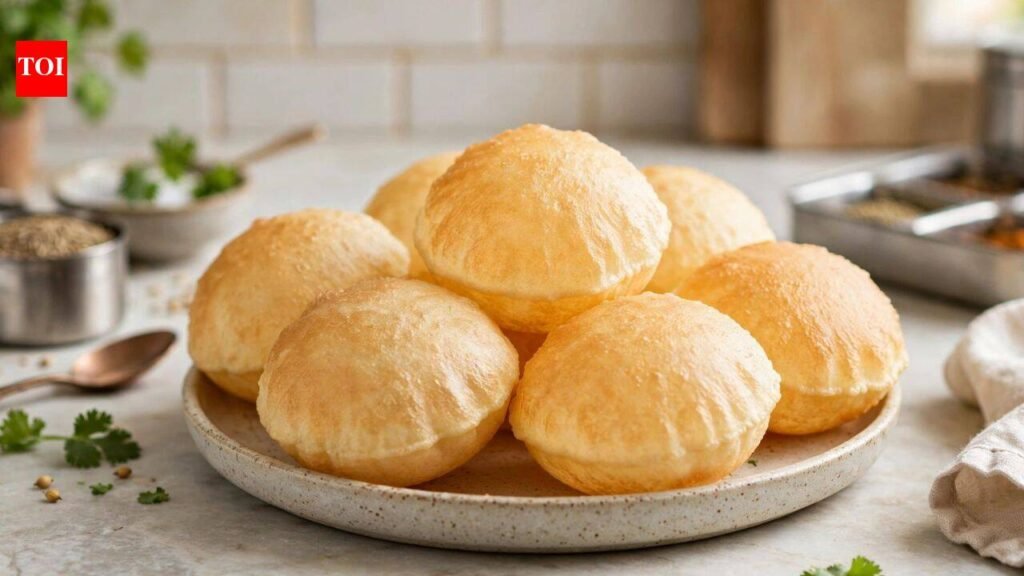
The right method can keep puris soft and fluffy without extra oil. The key lies in the dough, the way each puri is rolled, and the heat of the oil. A firm dough is important because a soft dough can make puris absorb more oil during frying. Adding a little semolina can also help give the puris a texture that is crisp yet soft. The oil needs to be properly heated before frying, while the flame should be kept at a medium heat during cooking. Freshly kneaded dough, even rolling, and the right heat can help puris puff up well and stay soft.
Simple steps for making soft and fluffy puris
Make a firm and smooth dough
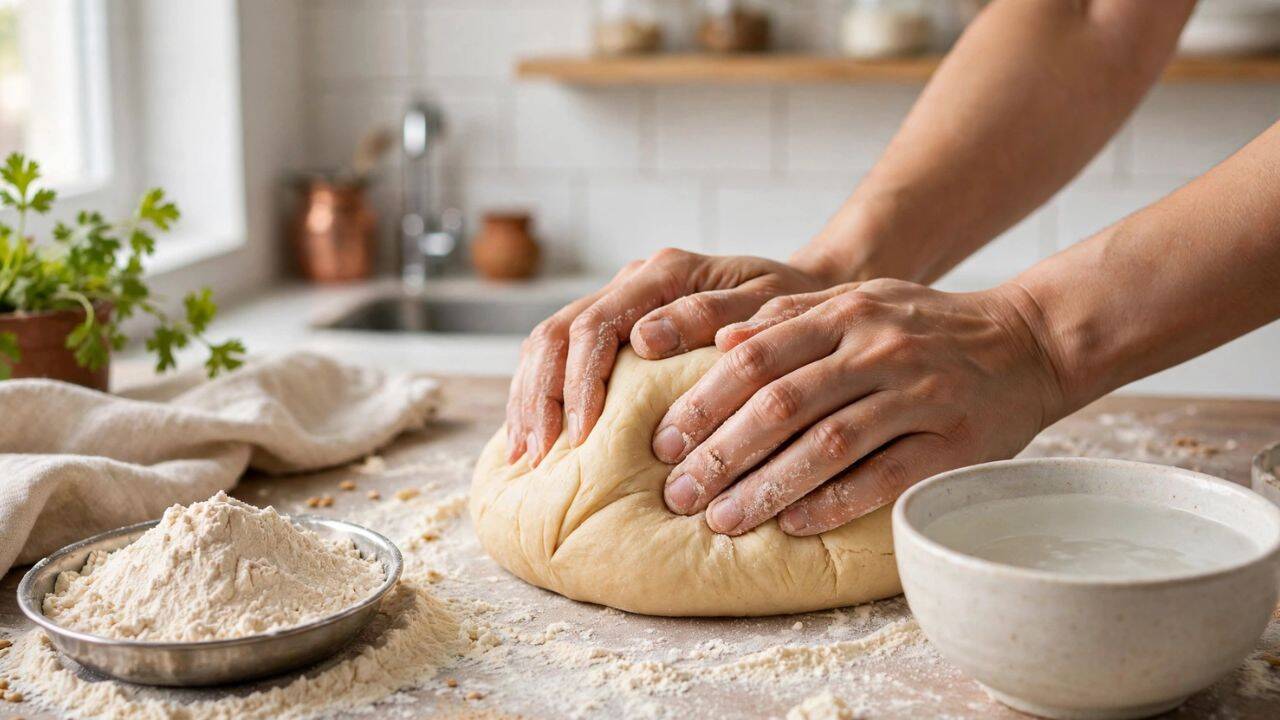
Puri dough should be firm rather than soft like chapati dough. Start by mixing the salt with water, then add the wheat flour gradually. Use about one-third to one-half cup of water for one cup of wheat flour. Knead the dough well until it becomes smooth and firm. A firm dough can help prevent the puris from soaking up too much oil while frying. Once the dough is ready, use it soon instead of leaving it to rest for a long time. This can help the puris cook well and keep their soft texture.
PC: AI Generated
Add semolina for the right texture
A little semolina can help give homemade puris a better texture after frying. For one cup of wheat flour, add two tablespoons of semolina. Another way to make less oily puris is to add about two tablespoons of semolina or gram flour to two cups of whole wheat flour. Once these ingredients are added, knead the dough well so they mix evenly. The dough should stay firm and smooth. This can help improve the texture of the puris and may also reduce the amount of oil they absorb while frying.
Roll each puri evenly
Divide the dough into small lemon-sized balls before rolling. Each ball should be rolled into a small round circle that is neither too thin nor too thick. The puris should be rolled to a medium thickness. Very thin puris can break while frying and may absorb more oil. Once rolled, they should not be left out for too long as they can dry out. Lightly grease the dough balls before rolling instead of using dry flour. After rolling, place the puris in the hot oil soon so they stay fresh and cook properly.
Keep the oil at the right heat
The oil needs to be properly heated before the puris are fried. Once the oil is hot, the flame should be adjusted to medium while frying. The right temperature is important because oil that is too hot can make the puris break or burn quickly. Oil that is not hot enough can make them absorb excess oil. The heat may need to be adjusted while cooking several puris. If the oil gets too hot, turn the flame down or turn it off briefly. If it cools down, use a higher flame for a short time.
Press the puri gently and flip it once
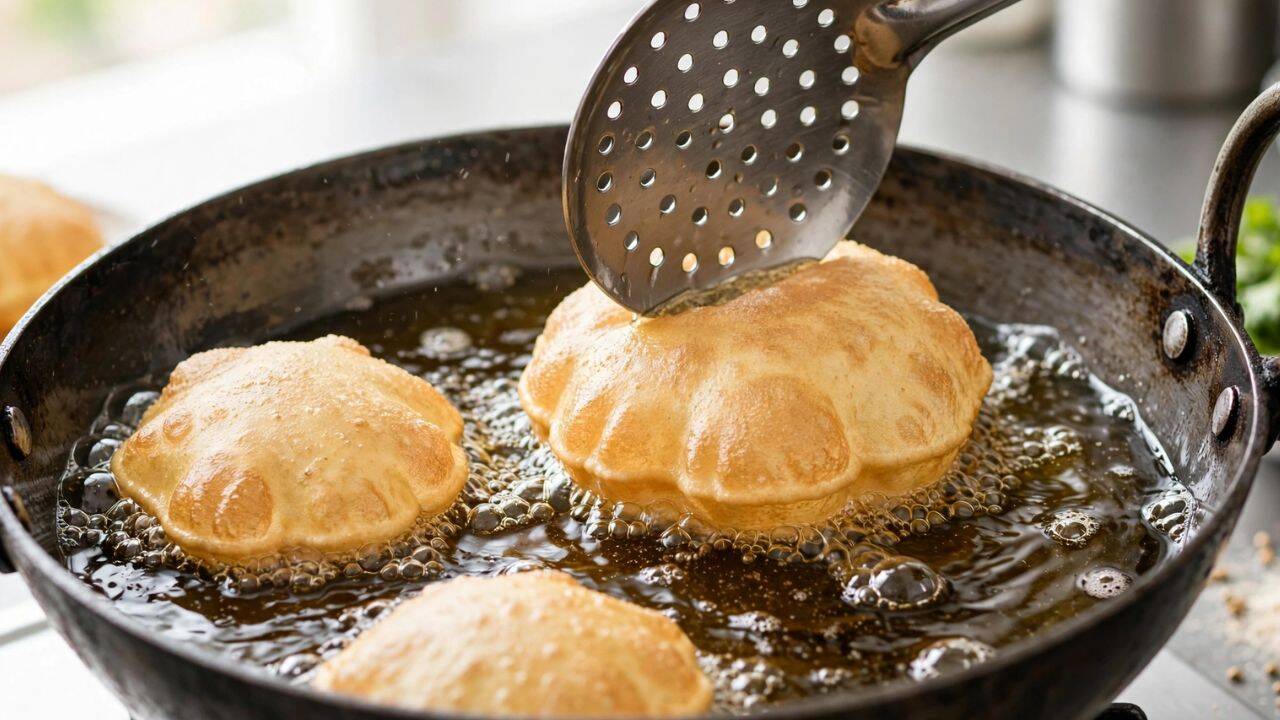
Place the rolled puri gently into the hot oil and let it start cooking. Press it lightly with a ladle or slotted spoon to help it puff up. Once the bottom is cooked, turn the puri over and fry the other side for a few seconds. Avoid turning it again and again, as this can make the puri soak up more oil. Remove it from the oil once both sides are cooked and it turns golden. Frying it for too long can make the puri dark, hard, and too crisp instead of keeping it soft.
PC: AI Generated
Simple tips to improve the texture of homemade puris
Avoid making the dough too soft
The dough should be stiff and firm instead of a very soft dough. Using too much water can make the dough softer and may lead to greater oil absorption during frying. The dough also needs to be kneaded well so it becomes smooth while staying firm. A tight dough helps the puris hold their shape when rolled and fried. Add enough water to bring the flour together, but keep the dough firm rather than making it soft like chapati dough.
Use fresh dough for better puris
Fresh dough is preferred when making puris. Dough that has been stored in the refrigerator can result in puris that absorb more oil and may not puff properly. The same applies to dough that has been left for too long after preparation. Once the dough is kneaded, the puris should be made without unnecessary delay. The dough balls should also be rolled and fried soon after they are prepared. Using fresh dough helps maintain the texture needed for puris that puff properly and remain softer rather than becoming greasy or heavy.
Do not dust the puris with dry flour
Excess flour can burn when it gets into the hot oil and can make the oil dirty. It may also contribute to greater oil absorption. Instead of dusting the dough balls with dry wheat flour, they can be lightly greased with a little oil or ghee before rolling. The rolled puris should also be kept from drying out before they reach the frying pan. Keeping the surface clean and lightly greased can make the frying process easier and help the puris cook properly.
Avoid frying too many puris at once
The oil needs to stay hot while the puris are frying. Adding too many puris at the same time can affect the oil temperature and make it harder to fry them properly. The heat may drop, and the puris can take longer to cook. It is better to fry the puris in small batches so there is enough space for each one to puff up. This also makes it easier to turn and remove each puri when it is ready.
Do not flip the puri repeatedly or fry it for too long
A puri does not need to be turned over again and again. After placing it in the hot oil, gently press it to help it puff. Once one side has cooked, turn it over and fry the other side for a few seconds. Repeated flipping can increase oil absorption. Frying for too long can also change the texture and make the puri harder and darker. Once both sides are properly fried and the puri has a golden colour, it should be removed from the oil. Placing the cooked puris on a kitchen towel or tissue paper can help remove excess oil before serving.