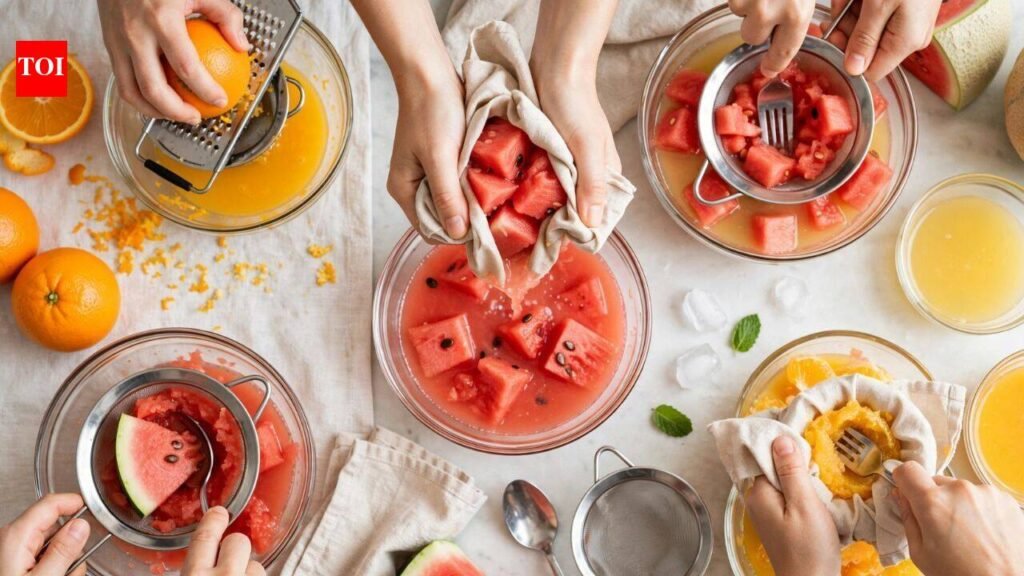
Making fresh juice does not always require a mixer or a complicated appliance. Some fruits release plenty of liquid with a little pressure, while others can be broken down using simple kitchen tools. The trick is to use a method that suits the fruit rather than trying to process every fruit in the same way. Citrus fruits can be squeezed directly, while softer fruits can be grated or crushed before being strained. Even firm fruits can release their juice when finely grated and pressed through a clean cloth. These methods take a little more effort than using a mixer, but they can be useful when you want a small glass of juice without cleaning a machine afterwards. Here are some practical ways to make fresh fruit juice without a mixer, along with the fruits that work best for each method.
Simple ways to make juice without a mixer
1. Grate the fruit and press out the liquid
A fine grater can work well for fruits with firm or moderately soft flesh. Peel the fruit and grate it into a bowl. Transfer the grated pulp to a clean muslin cloth or fine strainer and press it firmly with your hands. Collect the liquid in a bowl or glass. This works particularly well with apples, pears and cucumber.
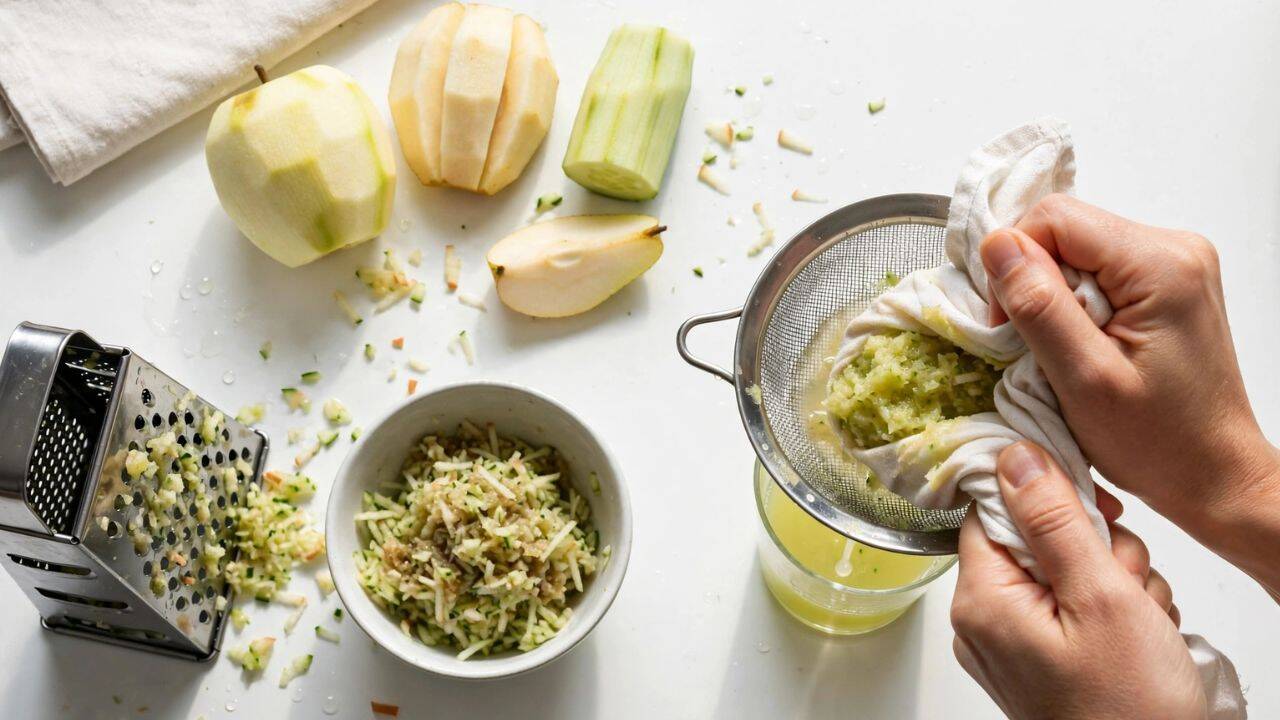
PC: AI Generated
2. Crush soft fruit in a sturdy bowl
Soft fruits can be turned into a rough pulp without using any appliance. Cut the fruit into small pieces and place them in a deep bowl. Use the back of a spoon, a potato masher, or the bottom of a clean glass to press and crush the pieces. Once the fruit becomes pulpy, push it through a fine strainer. Strawberries, ripe peaches, plums, and very soft pears can work well with this method.
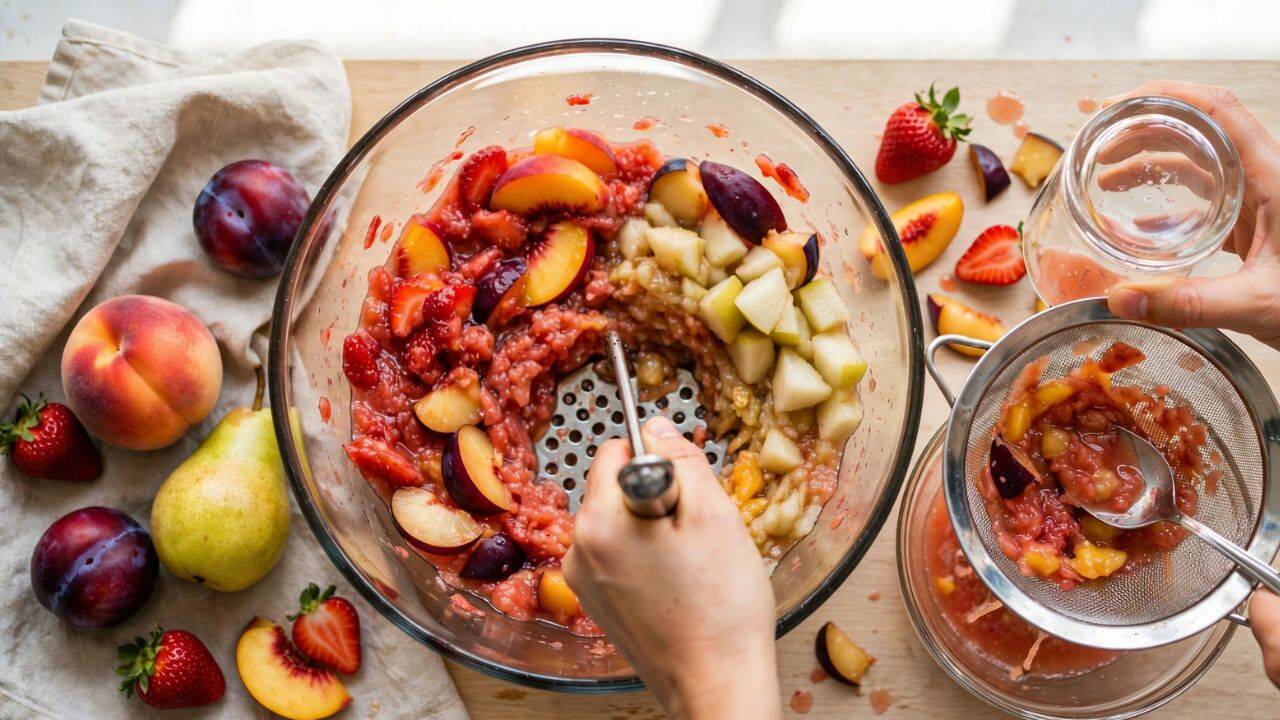
PC: AI Generated
3. Use a rolling pin to break down fruit
A rolling pin can be useful when you want to extract juice from soft or semi-soft fruit without making a large amount of pulp. Place chopped fruit inside a strong food-safe bag. Roll over it gently until the pieces split and release their liquid. Open the bag and strain the crushed fruit through a fine sieve. This method can be useful for grapes and berries.
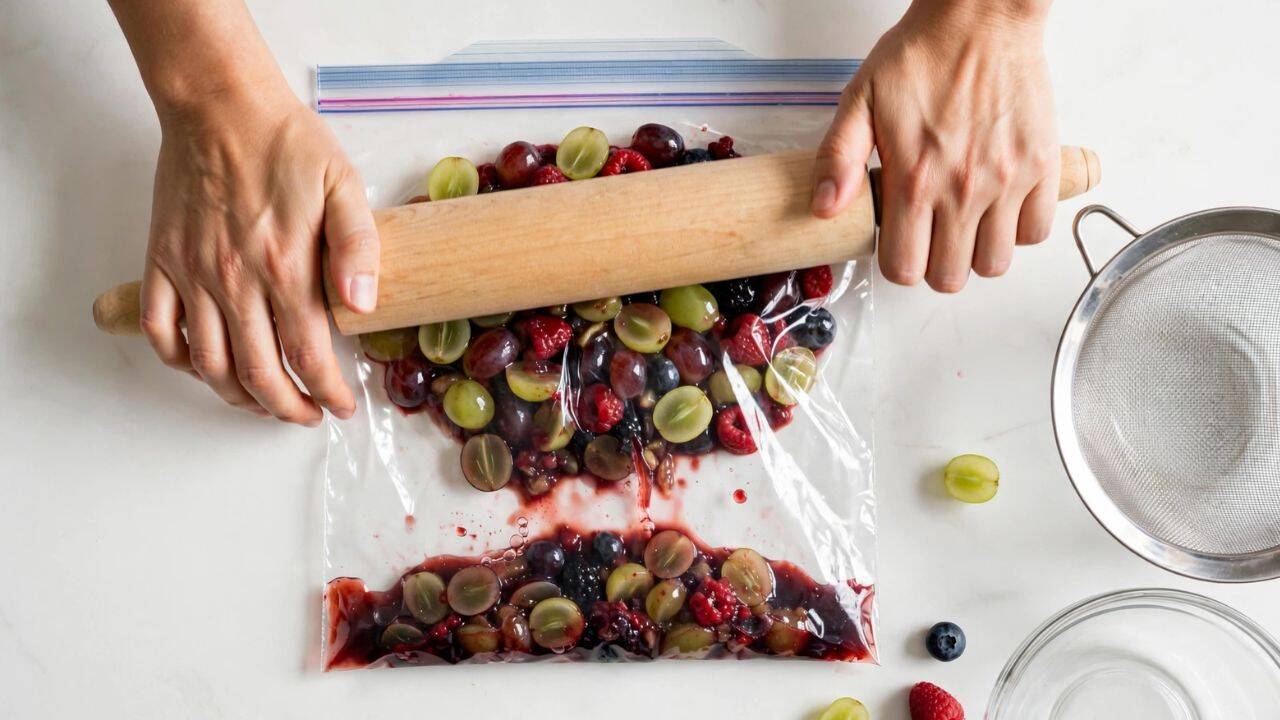
PC: AI Generated
4. Press grated fruit through a clean cloth
For fruit that produces a thick pulp, a clean cloth can be more effective than a standard sieve. Grate or finely chop the fruit first. Place the pulp in the centre of the cloth and gather the edges together. Twist the cloth gently and squeeze it over a bowl. Continue pressing until the flow of juice slows. This method works with apples, pears, carrots and some softer fruits. Use a cloth that is clean and free from detergent residue.
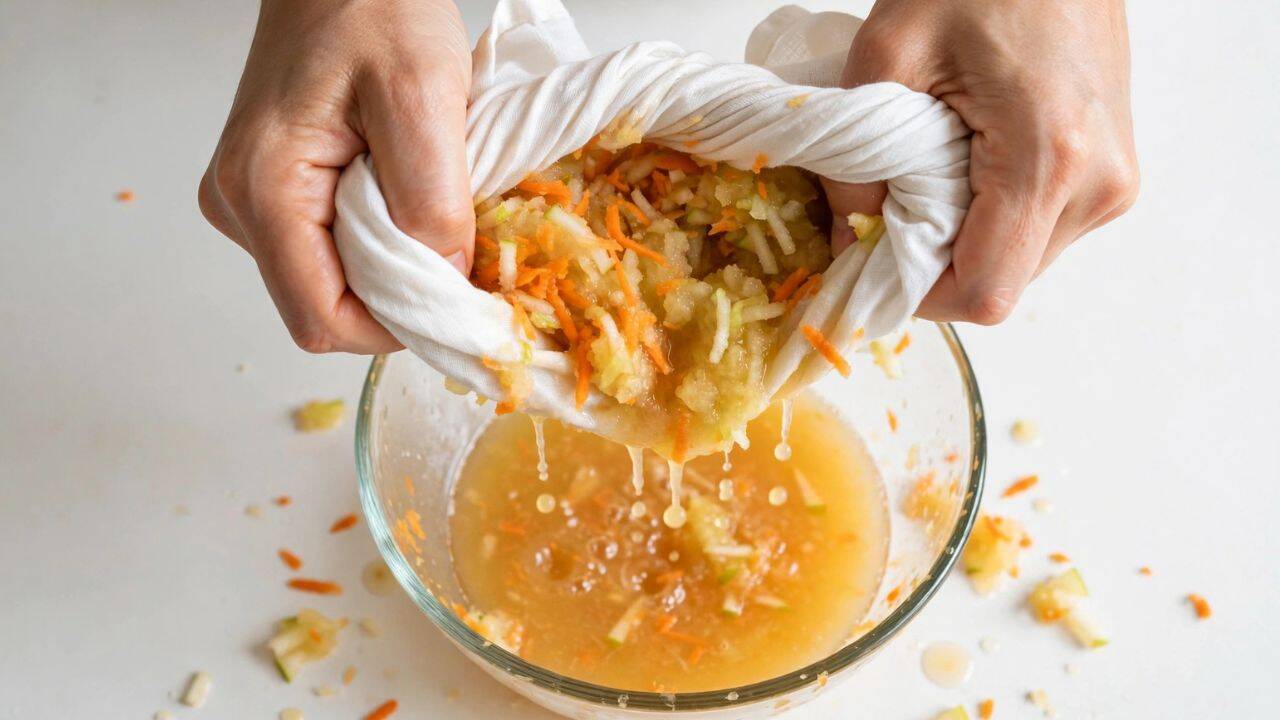
PC: AI Generated
5. Shake crushed fruit in a sealed bottle
Cut soft, juicy fruit into small pieces and place them in a clean, wide-mouth bottle with a little water. Close the bottle tightly and shake it for a minute or two until the fruit breaks down and the liquid becomes cloudy. Leave it for a while so the heavier pulp settles, then carefully pour the liquid through a clean cloth or sieve. This can work well with ripe berries, peeled peaches, and soft melon when making a small serving without a mixer.
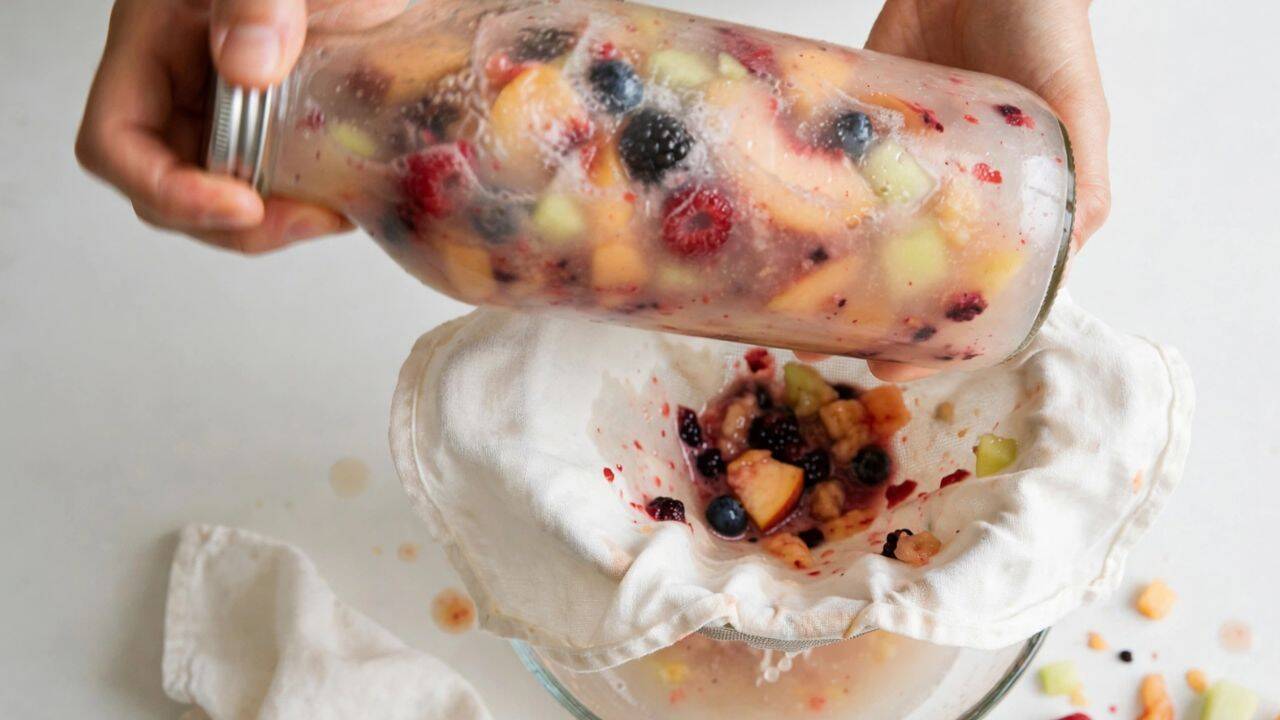
PC: AI Generated
Which fruits work best for making juice without a mixer
Citrus fruits: Squeeze them directly
Oranges, lemons, limes, and grapefruits are among the easiest fruits to juice without a mixer. Roll the fruit firmly against the kitchen counter before cutting it in half. This helps loosen some of the internal sections. Squeeze each half over a bowl or use a handheld citrus squeezer if available. Strain the juice if you want to remove seeds and excess pulp.
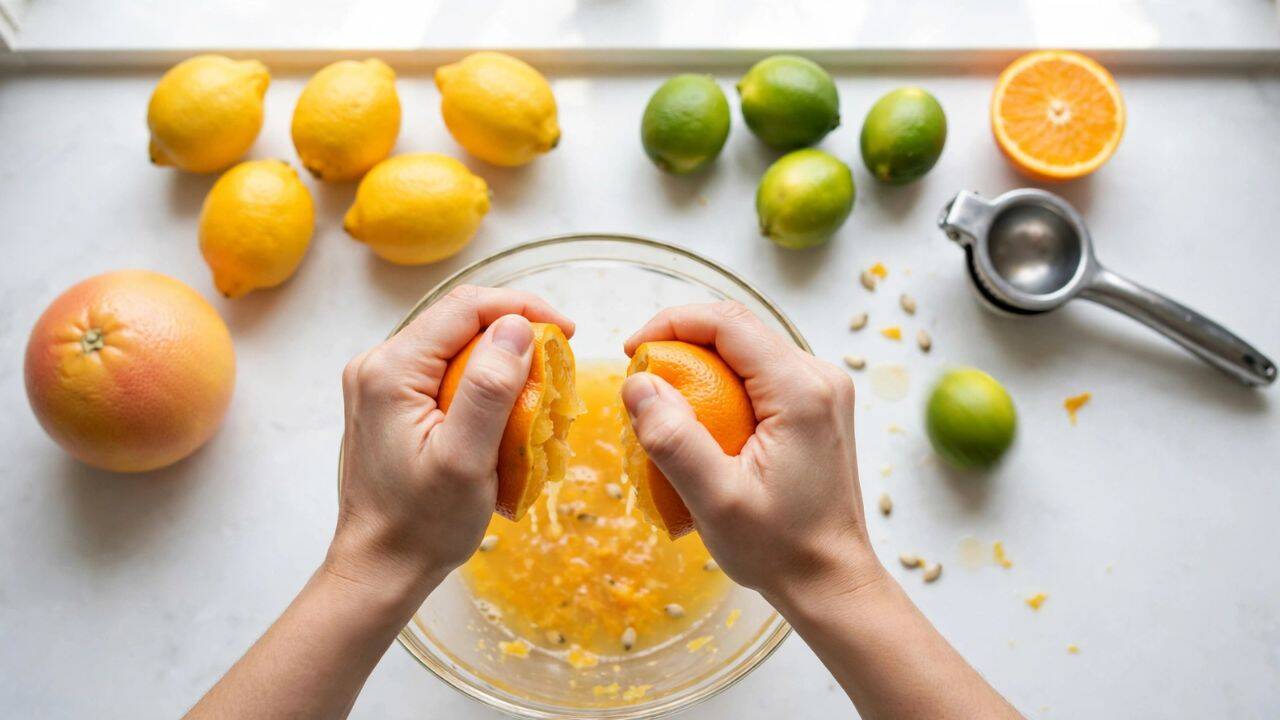
PC: AI Generated
Apples and pears: Grate and strain
Apples and pears are firmer, so simply squeezing them will not produce much liquid. Grating them finely breaks the flesh into smaller pieces. Place the grated fruit in a clean cloth and squeeze it firmly over a bowl. Choose ripe fruit because it tends to release more liquid. You can leave some pulp in the juice if you prefer a thicker drink.
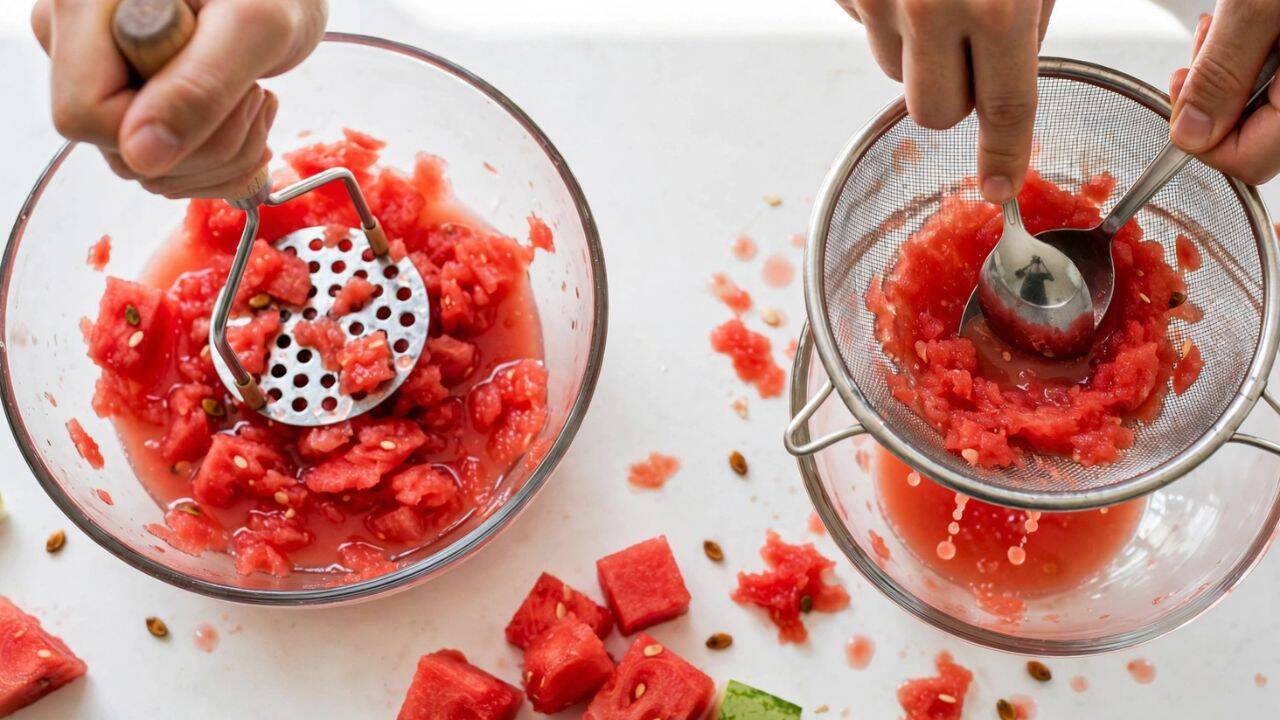
Watermelon: Crush and strain
Watermelon contains a large amount of water, which makes it particularly suitable for manual juicing. Remove the skin and cut the flesh into small pieces. Crush the pieces with a potato masher or the back of a spoon. Pour the pulp through a fine strainer and press it gently to release more liquid. Because watermelon is already highly watery, there is usually no need to dilute the juice.
PC: AI Generated
Grapes: Crush and press
Grapes can be crushed by hand in small batches. Remove the stems and wash the grapes thoroughly before placing them in a bowl. Crush them until the skins split, and the juice collects at the bottom. Strain the mixture through a fine sieve and press the remaining pulp with a spoon. Seedless grapes are easier to handle because they require less sorting during straining.
Strawberries and other berries: Mash and strain
Strawberries, raspberries, and other soft berries can be mashed with a spoon or potato masher. Once the fruit has become a loose pulp, pass it through a fine sieve. Pressing the pulp against the mesh helps extract more liquid. Berry juice can naturally be thicker than citrus juice, so a little water can be added if a lighter drink is preferred.
What to keep in mind when making juice without a mixer
Wash fruit before cutting or crushing
Wash the fruit with clean water before preparing it. This becomes particularly important when the fruit will be crushed by hand or processed with its skin.
Use clean tools and cloths
Any cloth, strainer, bowl, or utensil that touches the fruit should be clean and suitable for food preparation. Avoid using a cloth that has previously been exposed to strong detergents or household chemicals.
Be careful with seeds and tough skins
Some fruits contain hard seeds, thick skins, or fibrous parts that should not be crushed into the drink. Remove these parts before mashing or grating the fruit.