[ad_1]
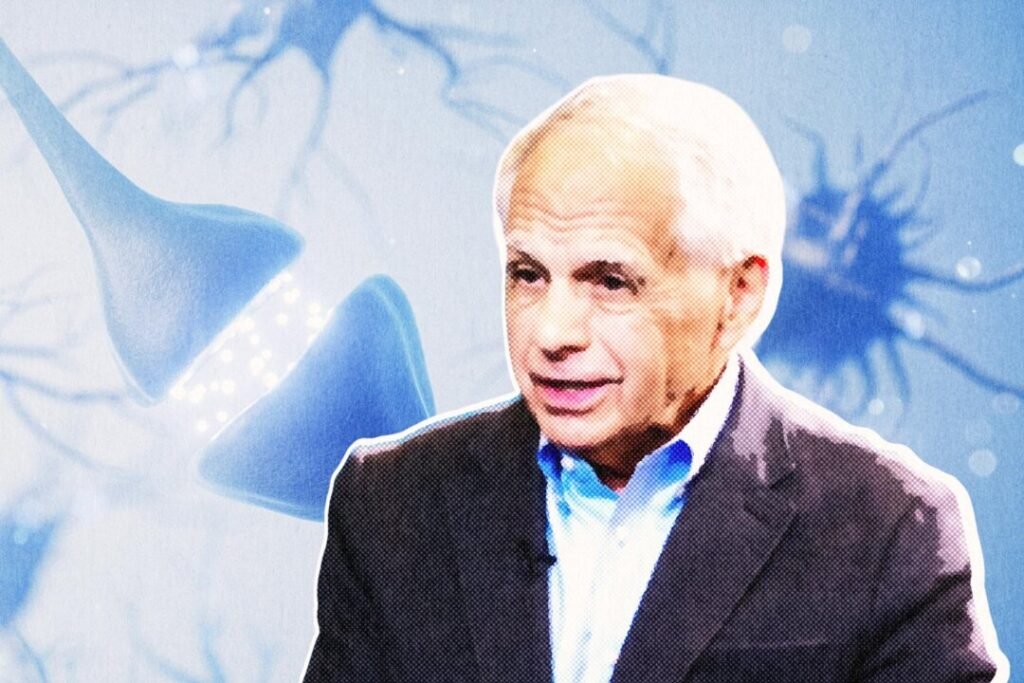
At 40, neurosurgeon Dr. Joseph Maroon appeared to be at the height of his career. Then, within one devastating week, his father died suddenly at age 60, his marriage collapsed, and severe burnout drove him away from the operating room.
“I went from literally doing awake brain surgery on patients with tumors in eloquent parts of the brain to working in a dilapidated truck stop that my father had heavily mortgaged and bequeathed to my mother,” Maroon said on a recent episode of “Vital Signs,” a program of The Epoch Times.
“For a year, I was flipping hamburgers and filling up 18-wheelers, wondering, ‘How did this happen to me?’”
Overweight, depressed, and struggling even to climb stairs, Maroon had reached the lowest point of his life. His eventual recovery would reshape not only his health but also his understanding of how the body and mind affect each other.
The Run That Changed His Trajectory
The turning point began with an invitation from the banker who held the mortgage on the truck stop. The banker encouraged Maroon to join him for a run.
Related Stories
Although Maroon could barely manage a staircase, he agreed.
“We went around the track four times. I said, ‘Never again.’ But that night, I slept for the first time in months,” he recalled.
The next day, he returned. Gradually, he began running farther. After reading about triathlons and cross-training, he bought a bicycle, learned to swim, and made exercise part of his daily life.
As his body grew stronger, he noticed changes in his sleep, mood, memory, and ability to think.
“What was happening is I was rebooting my neurotransmitters,” Maroon said. “I was getting my serotonin up, my acetylcholine levels improving—my memory sharpening naturally, without any drugs.”
Within a year, he had lost the excess weight, regained mental clarity, and overhauled his diet and daily habits.
Although the biological effects of exercise are more complex than changes in any single neurotransmitter, research supports its role in mental health.
For Maroon, the experience revealed a principle that would guide the rest of his life.
“We know the mind can make the body very sick—heart attacks, strokes, irritable bowel syndrome—but the body can heal the mind,” he said. “Everything we do—diet, exercise—is centered on brain health, mental health, and physical health.”
He believes that a physical reset through exercise—both aerobic and resistance training—can serve as the body’s effective self-repair mechanism, calming a restless mind and restoring balance.
When Stress Pushes the Brain and Body Out of Balance
Maroon came to define burnout as “overwork, overcommitment, overstress—out of balance.”
Burnout is more than ordinary tiredness. Persistent stress activates the body’s hypothalamic-pituitary-adrenal axis and increases the release of hormones such as cortisol and adrenaline. In the short term, this response helps the body meet a challenge. When it remains activated for too long, however, it can disrupt sleep, emotional regulation, attention, and memory.
Maroon is particularly concerned about the hippocampus, a brain region involved in learning and memory. Prolonged stress is associated with functional and structural changes in this region.
“If we don’t have a healthy mind and a healthy brain, life is very problematic,” he said.
Physical activity helped Maroon interrupt that cycle, but his recovery eventually taught him that fitness alone was not enough. A person can be physically strong and still be dangerously out of balance.
Four Dimensions of a Balanced Life
In his book “Square One: A Simple Guide to a Balanced Life,” Maroon offers a visual exercise for evaluating where one’s time and energy are going.
Imagine four axes extending from the center of a square. Each represents a major area of life: work, family, spirituality, and physical health. Mark each axis according to how much attention that area receives. When the points are connected, the resulting shape reveals whether life is relatively balanced or dominated by one dimension.
The goal is not to distribute every hour equally. Certain responsibilities naturally require more attention at different stages of life. The exercise is meant to reveal whether an important part of life has been neglected for so long that the imbalance is undermining the others.
Looking back on his own collapse, Maroon saw that nearly every dimension had suffered.
“When I was burned out, my work line was a flat EKG (electrocardiogram)—no family, no spirituality—I was a mess.”
Exercise gave him enough energy and clarity to begin rebuilding, but improved fitness was only one side of the square. He also changed his diet, reconnected with his spiritual roots, and reconsidered his relationships and priorities.
“The body is a temple—you need to take care of it,” he said. For him, however, caring for the body is not an end in itself. It provides the foundation needed to participate more fully in family, work, service, and spiritual life.
Five Foundations for Physical and Brain Health
Within the physical-health dimension of his square, Maroon emphasizes five practical foundations: nutritious food, regular exercise, limiting harmful exposures, managing stress, and getting adequate sleep.
These habits reinforce one another. Exercise can support sleep and stress regulation, while sleep helps the brain and muscles recover from physical activity. Diet supplies the nutrients needed for energy production, tissue repair, and immune function.
Maroon particularly emphasizes two ways nutrition may influence brain health: through the gut microbiome and the body’s antioxidant defenses.
The typical Western diet—loaded with processed foods, hormone-treated meats, and sugary drinks—is, in his view, a key driver of chronic inflammation and brain damage.
“A healthy gut is essential for a healthy brain,” Maroon said. “Much of our immune system resides in our gut.” The gut microbiome—the trillions of bacteria in our intestines—plays a critical role in digestion, nutrient absorption, vitamin production, and immune regulation. When that ecosystem becomes imbalanced, often triggered by a poor diet, it compromises immune function and ramps up systemic inflammation.
“If you don’t have the right microbiome,” he said, “your immunity is not healthy or suppressed; you’re much more susceptible to the development of infections and diseases.”
Maroon advocates for a diet that restores microbial balance and reduces inflammation, recommending fiber-rich whole foods, fermented foods like kefir, and probiotics to support gut health and overall brain function.
Glutathione and the Brain’s Antioxidant Defenses
Maroon also points to oxidative stress as an important contributor to brain aging and neurodegeneration. Oxidation is a normal part of cellular energy production, but it generates unstable molecules known as free radicals. When these molecules exceed the body’s ability to neutralize them, they can damage mitochondria, DNA, and cell membranes.
One of the body’s primary defenses is glutathione, a major antioxidant produced within cells.
“Glutathione is the master antioxidant in the brain,” Maroon said.
He compares oxidation in brain cells to what happens when a sliced apple or peeled banana is left exposed to air and gradually turns brown. The processes are not identical, but the image illustrates how oxidative damage can accumulate when protective defenses are overwhelmed.
The trial is still underway, so it is not yet known whether raising glutathione will improve Parkinson’s symptoms. For Maroon, the research nevertheless illustrates a broader principle: protecting the brain requires supporting its natural defenses long before disease becomes advanced.
Antioxidant defenses are only one part of that strategy. Maroon continues to regard movement as one of the most accessible ways to support both physical and mental health.
The best activity is one that a person can begin safely and continue consistently. Maroon’s recovery did not start with a triathlon. It began with four difficult laps around a track.
Rebuilding at Any Age
Maroon’s father died at 60, when Maroon himself was 40. The loss forced him to confront where his own health might be heading.
Beginning in midlife, muscle mass and physical resilience can gradually decline, while years of inadequate sleep, poor diet, inactivity, and unmanaged stress may become increasingly difficult to ignore. Yet these patterns are not fixed. Regular movement, adequate recovery, sound nutrition, meaningful relationships, and a sense of purpose can still influence how people function as they grow older.
At the time of the interview, Maroon was 85 and remained active in neurosurgery.
“I’m operating, doing neurosurgery, and more creative than I was in my 60s,” he said. “I want to die young—as late as possible.”
Maroon’s story suggests that recovery may begin with one manageable physical action—but it becomes sustainable only when the rest of life is brought back into balance.
“Pedal to the metal,” he said. “Enjoy each day—enjoy the gusto, and give back.”
[ad_2]
Source link