

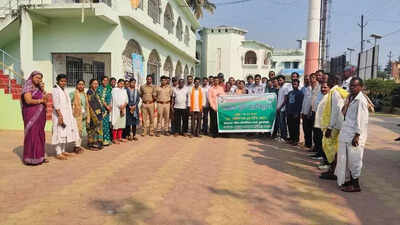
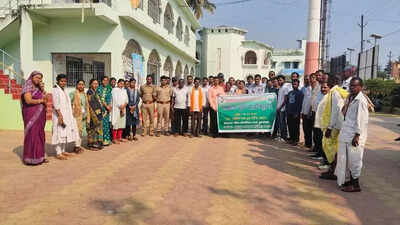
Berhampur: The govt is likely to declare Rushikulya river mouth, famous for mass nesting area of endangered Olive Ridley turtles in Ganjam district, as Biodiversity Heritage Site (BHS), with two panchayats possessing jurisdiction of the area consenting in this regard on Saturday. People of Ramagada and Palibandh panchayats have given written consent that the area from Potagada, a historical site to Bateshwar, be declared as BHS in a meeting held at Ganjam town. The Odisha State Biodiversity Board conducted the meeting, which was also attended by members of the biodiversity management committees in eight panchayats. “The elected members of the concerned panchayats and the members of the biodiversity management committees have expressed their willingness for declaration of the area as BHS in the meeting,” said Ganjam block development officer Achyutanand Jani. Several scientists of the board have explained about the concept of the biodiversity heritage site under Section 37(1) of the Biological Diversity Act-2002. They clarified that BHS status does not curtail customary community practices but enhances ecological sustainability in line with guidelines of the National Biodiversity Authority (NBA). Earlier, Berhampur divisional forest officer Sunny Khokkar had submitted a proposal to the govt for consideration of declaration of the site as the Biodiversity Heritage Site, recognising its unique ecosystem and cultural significance. Proposed area is spread over 747 hectares, where thousands of Olive Ridley turtles visit every year for mass nesting. Several migratory birds also took shelter near the river’s mouth during the peak winter, while various dolphins are sighted in the area. The villagers, mostly fishermen, protect these species. While a record number of over 9 lakh Olive Ridley turtles laid eggs in the Rushikulya rookery last year, forest officers sighted 13 Irrawaddy dolphins near the river during dolphin census last month. Rabindra Sahu, former honorary wildlife warden, Berhampur, said as the govt has taken a strategy to protect biodiversity outside conventional protected areas with communities playing a pivotal role in stewardship, Rushikulya river mouth area was one of the suitable spots for declaration of Biodiversity Heritage Site.