A digital cover of TIME magazine, published on July 27, featuring the Dalai Lama, caught my attention. It deeply reminded me of Tibet—and, more importantly, of the fate of Hong Kong.
Three times in my life, I have had the privilege of meeting His Holiness the 14th Dalai Lama—in Australia, Belgium, and Dharamsala, India, where he has lived in exile since 1960 after fleeing Tibet in 1959. During one of our meetings in Brussels, we had a deep conversation about Tibet and what the future might hold for Hong Kong under the rule of the Chinese Communist Party (CCP).
I have also personally known many of the Hong Kong activists mentioned in this article, some of them for more than 30 years. They are people who have paid a tremendous price for defending freedom, democracy, human rights, and historical memory.
Hong Kong and Tibet have very different histories. But Tibet offers Hongkongers a profound warning: Once Beijing takes control of a territory, preserving its people’s identity, culture, and political memory could become a generational struggle.
Tibet and Hong Kong: 2 Promises
Before the CCP’s occupation, Tibet functioned as a distinct political entity, with its own government, military, currency, language, religion and administrative system. For much of the first half of the 20th century, it operated with substantial de facto independence and was regarded as such by many governments and international observers.
Related Stories

After the CCP came to power in 1949, the People’s Liberation Army entered Tibet in 1950. In 1951, Tibetan representatives signed the Seventeen-Point Agreement, which brought Tibet under the sovereignty of the People’s Republic of China while promising to preserve its political system, religion, and the position of the Dalai Lama.
The Tibetan government later repudiated the agreement, maintaining that it had been signed under military coercion and did not represent a voluntary surrender of Tibetan sovereignty to Beijing.
In 1959, the Tibetan uprising was crushed. The 14th Dalai Lama fled to India and has never returned to Tibet. Before his exile, he lived at the Potala Palace in Lhasa, the traditional winter residence of the Dalai Lamas.
Today, the magnificent palace remains standing, but it is primarily a tourist attraction. The man who once called it home cannot return. There is something deeply symbolic about that.

A meeting with the 14th Dalai Lama to discuss what happened to Tibet and what the future of Hong Kong might look like, in Brussels, Belgium, in 2016. Courtesy of Edward Chin
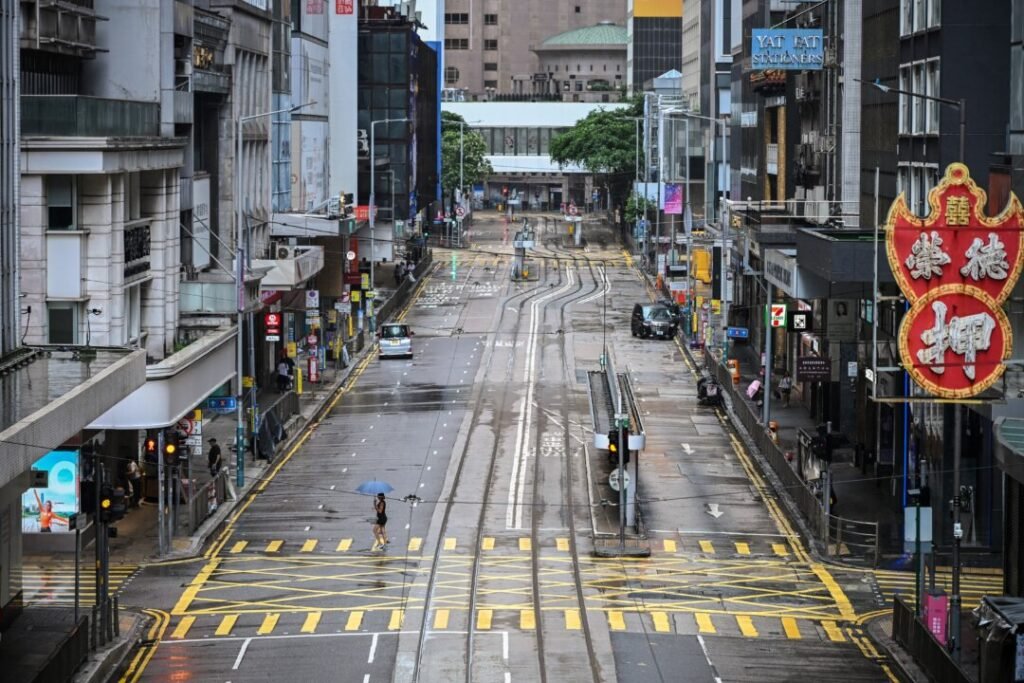
Hong Kong’s history was different. On July 1, 1997, Hong Kong returned to Chinese sovereignty after more than 150 years of British rule. Under the Sino-British Joint Declaration and the Basic Law, Hong Kong was promised a high degree of autonomy and the continuation of its way of life under “One Country, Two Systems.” For decades, Hongkongers believed that the arrangement could work.
Tibet reminds us that political promises ultimately depend upon the willingness of those in power to honor them.
The Night Hong Kong Changed
For many Hongkongers, the decisive turning point came on June 30, 2020. At 11 p.m. local time, Beijing imposed the National Security Law on Hong Kong, which took effect shortly before midnight on the eve of the 23rd anniversary of the handover.
That night marked the beginning of a fundamentally different Hong Kong. Political organizations disappeared. Newspapers closed. Civil-society groups dissolved. Activists were arrested or went into exile.
The “Hong Kong 47” case arose from an unofficial pro-democracy primary election held in 2020 to coordinate candidates for the Legislative Council election. Authorities later prosecuted participants under the National Security Law, making it one of the defining political prosecutions of the post-2020 era, with Benny Tai among its best-known figures.
Jimmy Lai and Apple Daily became symbols of Hong Kong’s struggle for press freedom. Founded by Lai in 1995, Apple Daily became one of Hong Kong’s most widely read and outspoken newspapers, known for its support of press freedom, democracy, and critical reporting.
After Lai was arrested and the newspaper’s assets were frozen, Apple Daily was forced to shut down in June 2021, symbolizing the dismantling of Hong Kong’s once-vibrant independent media.

Benny Tai and Joshua Wong support a pro-democracy campaign in Hong Kong in 2014. Courtesy of Edward Chin
Joshua Wong, born on Oct. 13, 1996—less than nine months before the handover—came to represent a generation that grew up under “One Country, Two Systems” and became one of the most recognizable faces of Hong Kong’s youth-led democracy movement.
Chow Hang-tung, a barrister and human-rights defender, represented another strand of the struggle: defending civil society, historical memory, and the right to remember the June 4, 1989 Tiananmen Square massacre in Beijing.
As a leading figure of the Hong Kong Alliance, Chow helped organize the annual candlelight vigil that brought generations of Hongkongers together to remember the victims. On Aug. 21, Chow was found guilty of inciting subversion under the National Security Law.
In different ways, Lai, Wong, and Chow represent three dimensions of Hong Kong’s freedom movement: the free press, the younger generation’s demand for democracy, and the determination to preserve historical memory.
Tibet’s Hard Lesson: Beijing Can Live With Overseas Noise
Since 2020, Hongkongers overseas have not remained silent. Communities have grown across Britain, Canada, Australia, and the United States, with others settling in Taiwan and elsewhere.
We demonstrate. We organize. We lobby. We write. We speak. We pray. All of this matters. But Tibet teaches us a difficult truth: An active diaspora does not necessarily cause Beijing to change course.
For almost seven decades, Tibetans in exile have kept the Tibetan issue alive. The Dalai Lama became one of the world’s most respected spiritual leaders, yet Beijing still controls Tibet. Why? Because Beijing controls the territory, institutions, education, and political system.
Under Chinese leader Xi Jinping’s policy, officially called the “Sinicization of religion,” Beijing has sought to reshape religious life so that religious institutions operate within the ideological and political framework of the Party and the state. This has profound implications for Tibetan Buddhism. Even the Dalai Lama’s future succession has become a geopolitical issue.
This is not simply about religion. It is about who gets to define Tibet’s future identity—and that is precisely why Hongkongers should pay attention.
Once Beijing controls the territory, it can reshape institutions, education, media, religion, and historical memory. The diaspora can speak, organize, and lobby outside. But Beijing still controls the ground inside.
What Can Hongkongers Learn From Tibet?
The 14th Dalai Lama was born in 1935 and celebrated his 91st birthday in July. He has spent roughly two-thirds of his life in exile, while generations of Tibetans have grown up outside their homeland.
So we must ask: What will Hong Kong mean in 30, 40, or 60 years?
Tibet teaches us that the struggle cannot simply be political. It must also be about preserving identity.
The Tibetan exile community built schools and cultural, religious, and democratic institutions to preserve its language, history, and traditions.
Hongkongers must do the same. We must preserve Cantonese, Hong Kong’s literature, journalism, music, films, archives and history—and tell younger generations about the Hong Kong that existed before 2020.
We must remember Apple Daily. We must remember June 4, 1989—the Tiananmen Square Massacre. And we must remember those who sacrificed their freedom.
2 Hong Kongs: 1 Territory, 1 Spirit
Perhaps the future requires two parallel Hong Kongs. One is geographical: Hong Kong in the Pearl River Delta. The other is carried by its people—a diaspora spread across London, Toronto, Vancouver, Sydney, New York, Taipei and many other cities.
This second Hong Kong has no geographical boundary. Its territory is memory. Its language is Cantonese. Its culture is heritage. Its infrastructure is community. This does not mean abandoning those who remain in Hong Kong. It means recognizing that preserving Hong Kong can no longer depend solely on what can be preserved inside the territory.
That is the lesson Tibet offers us. The Tibetan struggle has continued for nearly seven decades because Tibet survived not only as a geographical place, but as a civilization carried by its people. Hongkongers need the same long-term mentality.
The World Has Another Chance
And now, there may be another opportunity for the world to act.
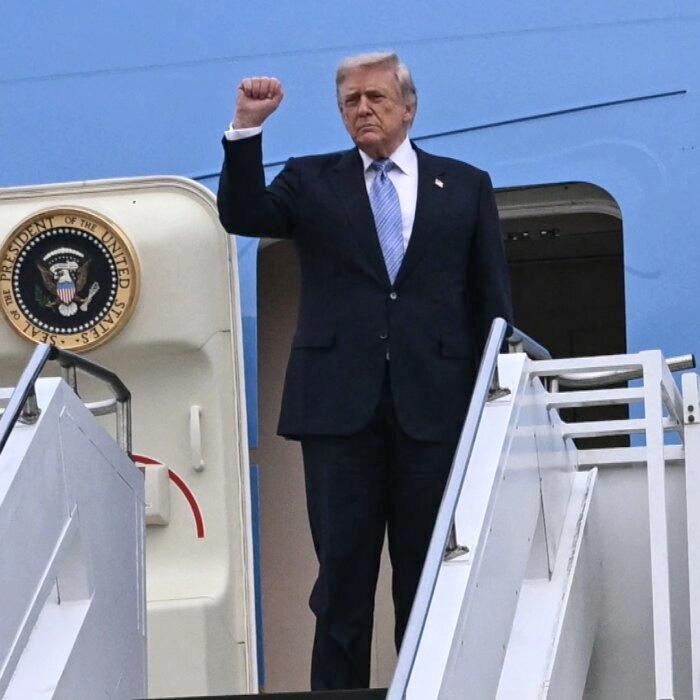
During President Donald Trump’s visit to Beijing in May, he raised the cases of Pastor Ezra Jin Mingri and Jimmy Lai with Xi Jinping. Trump said Xi would give serious consideration to Pastor Jin’s case. Weeks later, Jin was released and reunited with his family in the United States. His family credited Trump’s intervention and Xi’s decision.
But Trump acknowledged that Lai’s case was different. “He told me that would be a tough one,” Trump said of Xi’s response. That is precisely why Lai’s case must not be forgotten. If Xi’s proposed visit to Washington goes ahead on Sept. 24, Trump will have another opportunity to raise it.
I hope he will be direct:
Release Jimmy Lai.
Not as a bargaining chip.
Not as a footnote to a trade negotiation.
But as a matter of human freedom.
For Jimmy Lai.
For his family.
For Hong Kong.
And for all those who remain behind bars because they refused to surrender their conscience.
Beijing may control Hong Kong’s political institutions, but it cannot determine what Hongkongers around the world remember, teach, or pass on to their children. Above all, we must remember. The choice remains ours!
Views expressed in this article are opinions of the author and do not necessarily reflect the views of The Epoch Times.