
Photo: RNZ
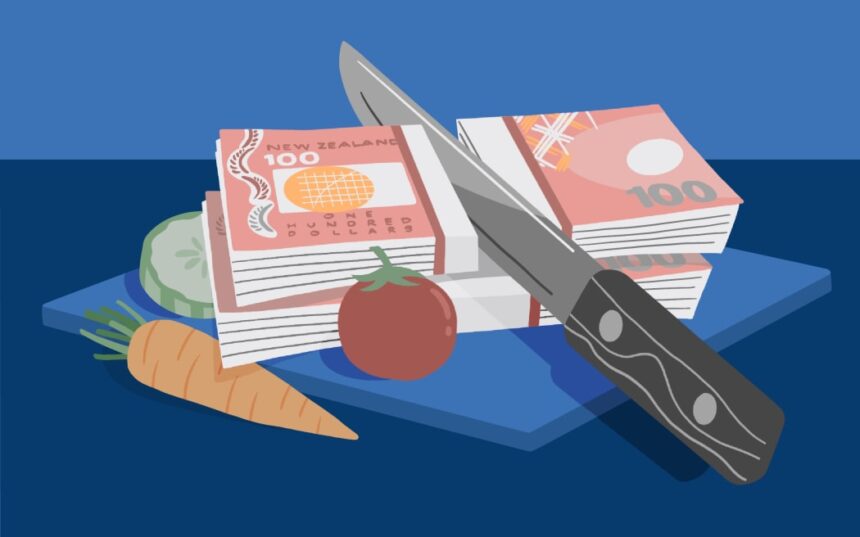
You might be going to get a bigger contribution to your KiwiSaver this year – but will it be at the expense of your pay rise?
The first step in the increase in KiwiSaver contribution rates takes effect on April 1, for people who do not opt out.
The default rate rises to 3.5 percent from both employer and employee – so many employers will be contributing an amount equal to an additional 0.5 percent of their wage bill from that date.
This only applies for employers who have structured KiwiSaver contributions in the traditional way, where an employee contribution is matched by an employer contribution on top of their pay. People who are paid by total remuneration will have to cover the full increase themselves.
When the change was announced, Treasury said it expected 80 percent of the employer cost to be met by lower than expected pay rises.
Kelly Eckhold, chief economist at Westpac, said it was likely that all else being equal, pay rises this year would be lower.
“In the end, employers will pay a total level of remuneration in line with prevailing supply and demand trends in the market. Changing the allocation of what employees do with that remuneration is not likely to change that assessment. Having said this it will be impossible to know the counterfactual as we can only observe what employees are paid as opposed to what they might have been paid.”
Catherine Beard, director for advocacy at Business NZ, said businesses had to consider the total cost of employing someone.
“ACC charges, potentially fringe benefit tax, you’re going to have training costs, you might have uniforms… as someone who is hiring you think about what is the total cost to me and my business. So over time, any cost of employment does end up being factored into how much it costs to hire someone… superannuation KiwiSaver will be part of it.”
Apparel sector retailers example of hard times
Carolyn Young, chief executive of Retail NZ, said it was still a tough environment for retailers.
“Consider a retailer in maybe the apparel sector. They’ve been heavily hit over the last 12 months.
“Last year apparel monthly sales were down 5 percent in January, 9.1 percent in February, down 8.5 percent in March, down 7.8 percent in April, down 4.4 percent in May, down 1 percent in June… the whole year was really tough.
“They’re really running by the skin of their teeth – there’s no fat in the business… we do know that increasing KiwiSaver … is a place where as a country we need to head.
“The real difficulty is, it’s so challenging right now for retail to navigate increasing costs.”
She said until the economy clearly improved, the contribution increase was likely to mean smaller pay rises.
“It’s definitely a tricky time and definitely a space where employers will have to navigate their budgets really carefully around how they can recognise and reward staff alongside other increases that have been put in place.”
Craig Renney, who is Council of Trade Unions chief economist and policy director and also a Labour candidate in the upcoming election, said it was likely to mean that more low-income people opted out of KiwiSaver. “If you’re struggling with the cost of living, 1 percent on your salary is quite a lot.”
He said a better solution would be an Australia-style system where it was up to the employer to cover the cost of superannuation savings and employees who did not take it up missed out, rather than receiving it in their pay packets.
Meanwhile, a survey by ANZ showed a third of KiwiSaver members intended to stick with the new 3.5 percent default rate when it took effect. Another 21 percent would contirbute more if their employer matched it.
Only 10 percent intended to request a temporary reduction.
Sign up for Money with Susan Edmunds, a weekly newsletter covering all the things that affect how we make, spend and invest money.