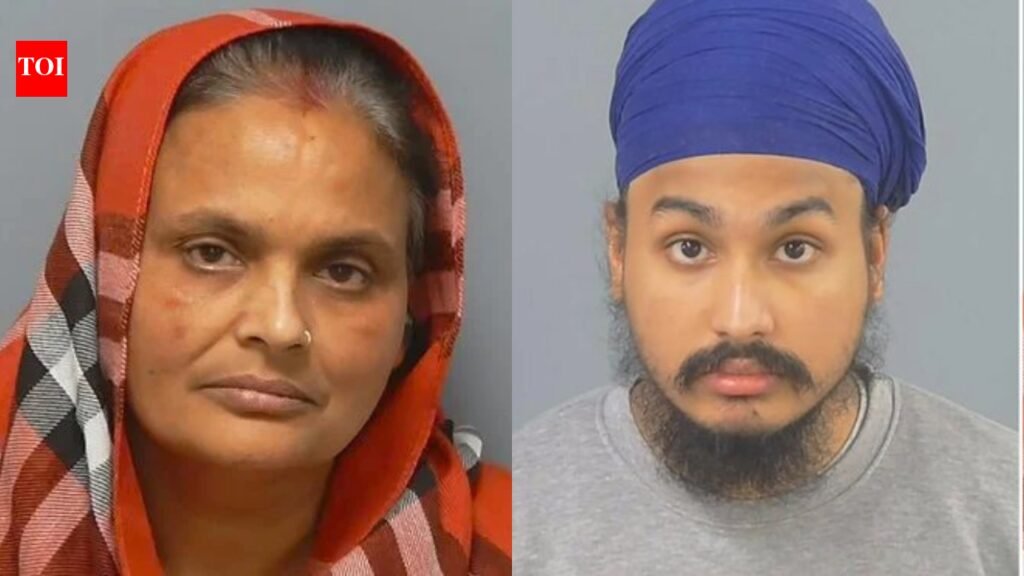

The mother of a Sikh man jailed for murdering an 18-year-old student Henry Nowak could leave prison early under changes to England’s early release rules.Kiran Kaur, 53, was sentenced to three years in prison in July for removing the knife her son, Vickrum Digwa, used to kill Nowak in Southampton in December. Kaur is appealing against her sentence, with her case due before the Court of Appeal on November 5.Donna Jones, Hampshire and Isle of Wight’s Police and Crime Commissioner, said an early release would be a significant setback for Nowak’s family.“She wasn’t even sentenced until July this year, which was just three months ago, and here we are now talking about her potential release,” Jones told BBC Radio 4’s Today programme.Jones said she would write to Justice Secretary Alex Norris to seek clarification on the rules so she could continue supporting the family.The changes were introduced under the Sentencing Act 2026, which came into force on October 1. Under the new system, most prisoners serving fixed-term sentences of up to two and a half years are automatically released on licence after serving one-third of their sentence, rather than half.Kaur’s offence, assisting an offender, is not among those excluded from the revised scheme. She would serve the remainder of her sentence in the community under licence conditions and could be returned to prison if she breached them.The Ministry of Justice said the 221 days Kaur spent on remand had been taken into account when she was sentenced. It remains unclear whether she could also face deportation.The government said it would “always seek to deport foreign criminals at the first opportunity”. Foreign nationals sentenced to 12 months or more in prison are generally considered for deportation, although exceptions apply and decisions can be appealed.The Ministry of Justice said new licence measures include a presumption that prison leavers will be electronically tagged, restrictions confining some offenders to agreed areas, and allowing victims to have a say in licence conditions. Near real-time location data for probation officers is due to be rolled out nationally by the end of 2026.A government spokesperson said: “Our thoughts remain with the family and friends of Henry Nowak, whose life was cruelly cut short in a horrific act of violence.”Digwa was sentenced to life imprisonment on June 1, with a minimum term of 21 years, for killing Nowak after falsely claiming the student had racially abused him. He has also been granted permission to challenge the length of his sentence at the Court of Appeal on November 5.Kaur was jailed for removing the murder weapon and hiding it at the family home, where police later found it among more than 20 other weapons. Prosecutor Nicholas Lobbenberg described her role in concealing the knife as “crucial” and called her actions “criminality of the highest order”.Sentencing her in July, Judge William Mousley KC said Kaur had acted to protect her son rather than for personal gain, but said she still had to be punished for her actions and to deter others from doing the same.