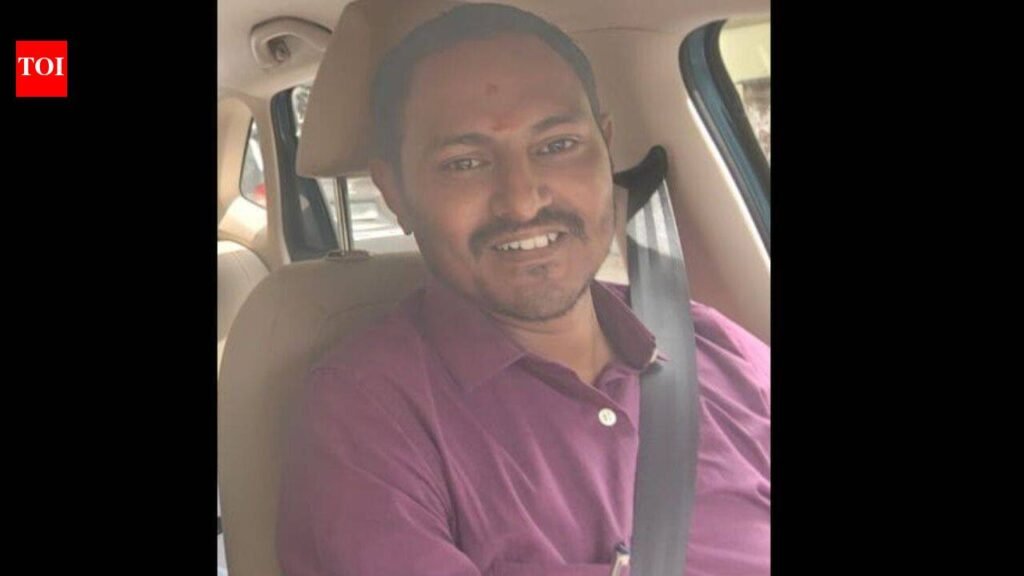
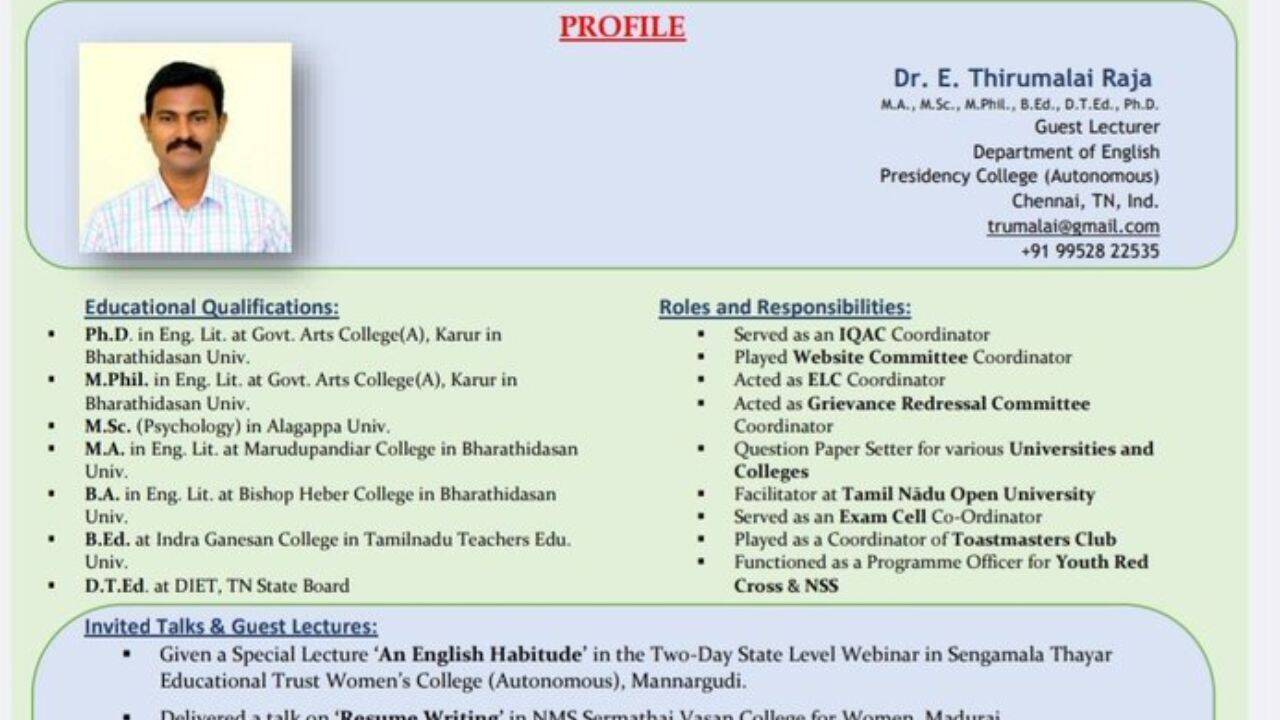
When an Indian Railways officer named Ananth Rupanagudi posted a resume on X, he did not expect the response he got. He asked his followers to zoom in. To read carefully. To look at what this man had built in classrooms, in research halls, in conference rooms, and in journal pages and to ask themselves one honest question. How is this person driving a cab? The resume belonged to Dr. E. Thirumalai Raja. And within hours, his story had spread across the country not because it was extraordinary, but because it was heartbreakingly familiar to thousands of people who recognised themselves in it.
The qualifications that should have been enough
Let us begin with what Dr. Raja has actually built across decades of dedication to education and scholarship. He holds a PhD in English Literature his doctoral thesis explored Black Humour in Indo-Anglian Writing. He has an MPhil. He has an MA in English literature and an MSc in psychology. He holds a B.Ed. and a diploma in teacher education. He has presented research papers at national and international seminars. He has delivered keynote and guest lectures at academic institutions. He has worked as a university paper setter. He has published research in UGC-listed journals. He has served as an IQAC coordinator, an examination cell coordinator, an editor, a motivational speaker, and a communication skills trainer.By any reasonable measure, this is the profile of a person who should have found a stable, well-compensated academic position years ago. Instead, Dr. Raja earns approximately Rs 30,000 a month as a contract lecturer at Chennai’s Presidency College. He was previously working as an assistant professor in Namakkal for around Rs 20,000 a month. And when the teaching hours are done, he drives a cab.
The family he cannot live with
There is a detail in Dr. Raja’s story that is easy to miss in the discussion about academic salaries and guest lecturer policies. His wife and two school-going children live in Namakkal. He lives in Chennai for work. They are separated not by choice but by necessity because the salary he earns in Chennai is not enough to bring his family with him, and the work is not close enough to home for him to commute. A PhD holder. A published researcher. A keynote speaker. Living away from his children because academic India does not pay its teachers enough to keep families together. That is the quiet devastation underneath the resume.
‘A big salute but why has no institution hired him?’
The responses to Ananth Rupanagudi’s post were immediate and divided. Many people praised Dr Raja’s perseverance, the sheer determination it takes to hold a PhD and an MPhil and multiple postgraduate degrees while simultaneously driving a cab and living away from your family and still showing up to teach every day. But the praise came wrapped in uncomfortable questions.“It is surprising that, despite the large number of educational institutions in and around Chennai, a native Tamilian has not been able to secure a more suitable academic position,” one user wrote, capturing a frustration shared by thousands. Others pointed to the structural reality of academic employment in India, where permanent positions are scarce, guest and contractual roles are exploitative by design, and some of the country’s most qualified minds spend their careers in temporary positions with no job security, no benefits, and no pathway to permanence.
The larger crisis behind one man’s story
Dr. Raja’s story is not unique. It is one face on a problem that affects thousands of academics across India. Guest lecturers and contractual teachers constitute a significant portion of India’s teaching workforce in many universities and colleges; they form the backbone of the academic system. They teach the same students, prepare the same courses, and carry many of the same responsibilities as permanent faculty. They are paid a fraction of the salary. They receive no job security. They are renewed semester by semester, year by year, with no guarantee of continuation. And despite years of experience and strong academic records, many of them never cross over into permanent employment.The result is exactly what Dr. Raja’s story illustrates. Brilliant, dedicated, deeply qualified people people who have given their professional lives to education supplementing their incomes by driving cabs, running small businesses, or doing whatever it takes to keep going while they wait for a permanent door that never quite opens.
What India owes its teachers
Ananth Rupanagudi asked his followers to help. To DM him if they had an opportunity that matched Dr. Raja’s profile. To look at this resume and see a person, not just a problem. The response showed that India sees him. The viral spread of his story, the thousands of shares and comments and expressions of disbelief, showed that people understand what is wrong with a system that produces scholars and then fails to give them a place to stand. Dr. Raja holds a PhD. He drives a cab. He teaches during the day and earns at night and lives apart from his children and keeps going. That kind of perseverance deserves more than a viral moment and a DM. It deserves a system that values the people who dedicate their lives to education as much as it values the degrees those people help students earn.