


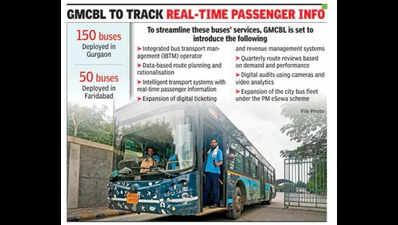
Gurgaon: Failing to become the service that it was envisioned as, city bus service Gurugaman is set to see an overhaul. GMCBL, which runs the service, has decided to engage a new integrated bus transport management (IBTM) operator to provide better quality and enhance ridership. According to GMCBL, the selected IBTM operator will provide project development and management support across operations, ticketing and revenue management, intelligent transportation systems (ITS) and the programme management unit. The authority said the focus is on building a “more structured and integrated public transport system that enhances safety, reliability and financial performance”.Officials expect the move to increase ridership and encourage a shift from private vehicles by offering better service quality and real-time passenger information. GMCBL, which is planning to upgrade and streamline the city’s bus services, is looking at a “technologically advanced operational framework”.With the proposed IBTM framework, GMCBL plans to “enhance system-wide co-ordination”. GMCBL CEO Vishwajeet Chaudhary said, “With the planned expansion of the bus fleet in the near future, efforts are being made to enhance service efficiency, improve commuter convenience and ensure reliable and sustainable urban mobility across the city.”At present, Delhi Integrated Multi Modal Transit System (DIMTS) is providing programme management services for monitoring and managing the city bus service. While 150 buses are plying on 23 routes in the city, 50 Gurugaman buses are running in Faridabad on the direction of the state govt. The plan to induct 200 new buses allotted under the PM eSewa scheme is also under process.Officials said the intelligent transport management systems will make travel more efficient, improve access to real-time information, expand digital ticketing options and introduce data-driven audits for better oversight. In addition, a digital audit system supported by cameras and video analytics will help detect ticketless travel and strengthen fare enforcement through data-based inspections.Operations management support will focus on route planning and rationalisation. GMCBL said that route design has a direct impact on passenger demand, journey time and operating costs. Poorly planned networks often result in route duplication, overloaded buses in some areas and underutilised services in others. The IBTM operator will analyse parameters such as load factor, average travel time, waiting time, earnings per bus and walking distance to bus stops to recommend improvements. These routes will be reviewed every three months and adjustments will be suggested based on passenger demand and operational performance.



