
Take the Aviva Stadium and Croke Park out of the equation and there isn’t a venue on this entire planet that has come to frame the fortunes of modern Irish sport more than the Stade de France out on the northern fringes of Paris.
Few places can generate the type of atmosphere that has engulfed the great amphitheatre in Saint-Denis down the years and, for over a quarter of a century, Irish athletes of various stripes have mixed misery with majesty across a series of fronts.
The fear as Andy Farrell’s Ireland side gets its Six Nations underway at the place on Thursday evening is that this latest chapter will fall into the first of those categories as an injury-hit side struggling for form goes into the bearpit.
Here we run through a list of ten of the most memorable, and forgettable, of days.
The first and, some might say, still the best day Ireland has experienced in what was then a shiny and newish stadium. Ireland hadn’t won in Paris in 28 years, and wouldn’t do again for half that again, so this was special in so many ways.
Only 21 at the time, O’Driscoll’s hat-trick was the game that launched him as a superstar that transcended the game of rugby, the images of him scooting over the French line in that baggy green jumper still up there among the most iconic in Irish sporting history.
This had been coming for the Kerry woman. Gillian O’Sullivan had placed tenth in the 20km walk at the Sydney Olympics in 2000, and then fourth over the same distance at the Europeans in Munich three years later.
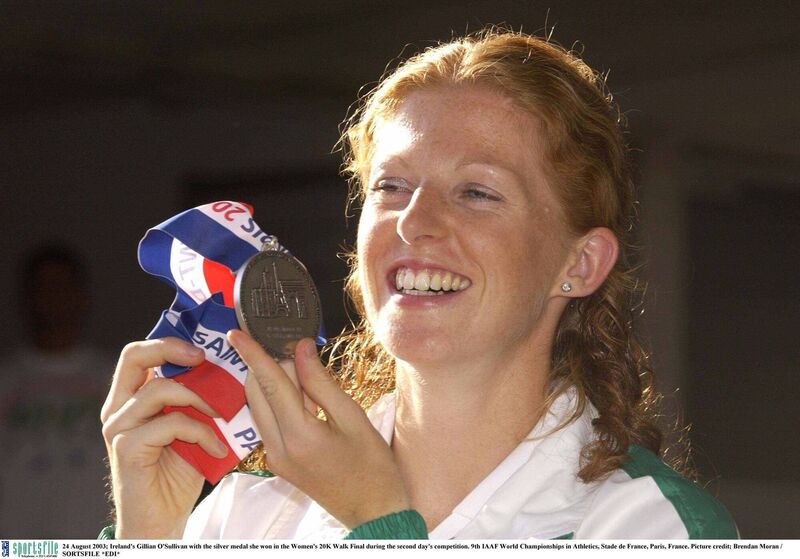
She shaved over a minute off that latter time to take the silver medal, arriving triumphantly into the stadium off the surrounding streets with well over half a minute to spare on the Belarussian in third.
It was the first Irish medal at a World Championship since 1995 and she was the first woman to do it.
One that got away, no question. Brian Kerr’s Republic of Ireland played some superb football in this World Cup qualifier with Clinton Morrisson, Robbie Keane and John O’Shea all going close to giving the visitors the lead and Shay Given denying Thierry Henry late on.
Roy Keane was back in harness at this point under Kerr who had started the campaign with a 3-0 win against Cyprus and a draw with the Swiss in Basel. A 2-0 win over the Faroes would follow before a draw in Tel Aviv that started a slide that cost Ireland and Kerr so dearly.
If that one hurt it was like nothing compared to the fallout from this World Cup playoff when Ireland played some scintillating football on the back of a 1-0 loss in Croke Park in the first leg and ‘won’ 1-0 over 90 minutes.
Cue Henry’s fateful extra-time intervention, William Gallas’ goal and everything it spawned from the ludicrous calls to be the 33rd team at the tournament and FIFA’s €5m payment to the FAI to ward off any potential legal action.
Too often ignored during Giovanni Trapattoni’s time in charge, Wes Hoolahan showed Ireland what they had been missing under Martin O’Neill and his superb goal against Sweden in the team’s Euro 2016 opener was the obvious high point.
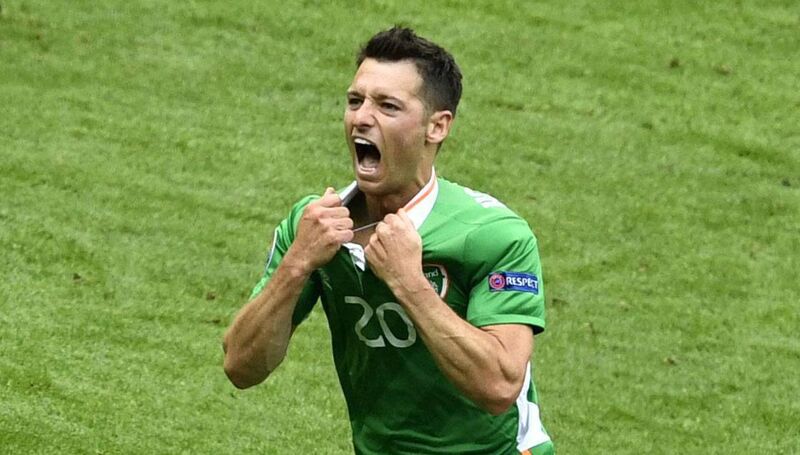
A Ciaran Clarke own goal 14 minutes from time curbed the giddiness but Ireland would go on to beat an Italy B-team in Lille and give the hosts plenty of it in the last 16 in Lyon. Great times. Weso’s goal was the catalyst for it.
Ireland were building towards something big heading in to this first round Six Nations game in Paris, but Grand Slam ambitions looked to be over at the first hurdle as an unimpressive French side under new coach Jacques Brunel somehow held a narrow, late lead.
Then Ireland managed to put together an astonishing 41 phases, including a heart-stopping crossfield kick to Keith Earls, that left Johnny Sexton with a brutally tough 45-metre drop goal that sailed through the posts for a 15-13 win.
Three times Ireland played in the Stade de France at the last World Cup and every game made for an electric occasion as thousands of Irish fans invaded the place and soundtracked the evenings with renditions of Zombie by The Cranberries.
The pool win over South Africa was utterly brutal in the physical sense and just as epic, the defeat of the Scots surprisingly routine before a quarter-final loss to the All Blacks that was desperately heartbreaking. All in the space of just three weeks.
Fourth, as Eamonn Coghlan would tell you, is the cruellest of positions in an Olympic final. That was Rhasidat Adeleke’s fate in the women’s 400m final when finishing 0.3 seconds adrift of Poland’s Natalia Kaczmarek in the race for the last medal.
It later turned out that Bahrain had been allowed to send a team of ten athletes to the Games despite being found guilty of ‘serious anti-doping rule violations’. One of the ten was Salwa Eid Naser, previously banned for two years for missing three tests inside 12 months.
For Adeleke, this was rinse and repeat. Just 24 hours after her individual effort she was part of a 4 x 400m team with Sophie Becker, Phil Healy and Sharlene Mawdsley that finished fourth in a final of exceptional quality.
All of the first five teams posted national records on the biggest day of them all while Canada and Belgium, sixth and seventh respectively, put up season’s best times. Ireland finished just 0.22 seconds behind Great Britain.
The men’s sevens went to the Paris Games with the expressed aim of claiming a medal. Their form supported that grand ambition but they fell short after opening their campaign with two wins on the opening day of action.
A narrow pool loss to New Zealand at the start of day two left them with a tough quarter-final against Fiji’s defending champions and, as with the earlier loss, they let slip a second-half lead. Within a year the IRFU had disbanded the men’s sevens programme.