

Rabobank senior animal proteins analyst Jen Corkran said the outlook for New Zealand’s agribusiness sector this year was mostly positive.
Photo: 123RF
A new report has alerted that geopolitical risks, like further escalation of tensions in Iran, could affect prices for key items used on New Zealand farms like fertiliser.
Prices for key commodities and farm inputs were often vulnerable during times of volatility, like the sharp increase in grain prices at the start of the war in key producing nation Ukraine, in 2022.
Widespread [https://www.rnz.co.nz/news/world/583713/why-are-iranians-protesting-and-what-does-it-mean-for-the-regime anti-government protests were held across Iran throughout January, in response to economic and social crises.
It came as the key producer of urea and ammonia fertilisers also faced a sharp increase in tensions with the United States.
In a new annual report titled Keeping One Move Ahead, Rabobank senior animal proteins analyst Jen Corkran said the outlook for New Zealand’s agribusiness sector this year was mostly positive from a farming point of view.
She said stable supply of our key exports coupled with good international demand should keep farmgate prices high this year, especially for dairy, red meat and horticulture.
“The mood out there in the agri-food and fibre spaces is quite buoyant and I guess positive, and this is driven largely by above average farmgate pricing across the board really.”
However, Corkran said geopolitical risks could push farm inputs prices even higher this year, like further escalation in tensions involving key fertiliser producer Iran.

Jen Corkran.
Photo:
“Perhaps some softening in the later part of this year in terms of some of those farm input costs,” she said.
“But of course, some of these inputs are affected by some of the geopolitical situations globally, such as in the Middle East, in terms of the costs of some of the stuff we’re bringing into New Zealand.”
Iran was a major global exporter of urea in particular.

Iranians gather while blocking a street during a protest in Tehran, Iran on 9 January 2026.
Photo: AFP/MAHSA
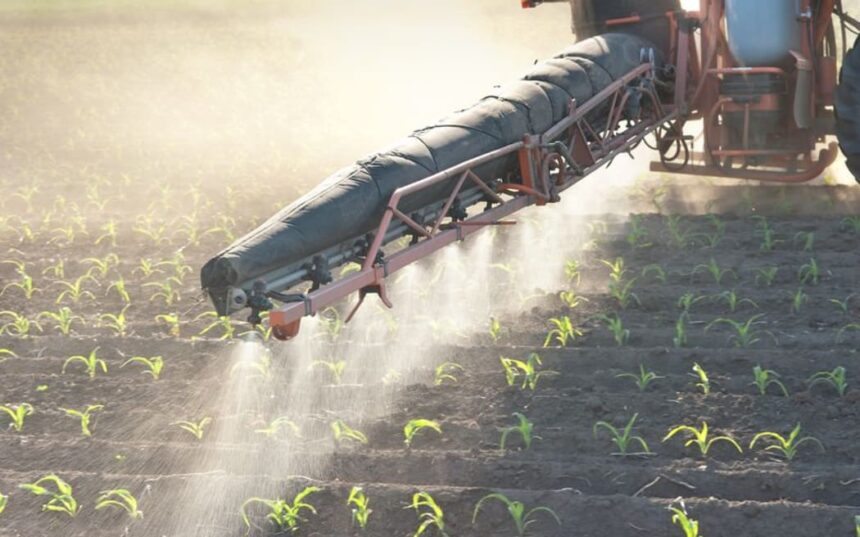
Corkran said urea and phosphate prices were already elevated for farmers – with urea highly volatile throughout last year, and possible further increases in the near-term.
“Certainly at times challenging around fertiliser prices, and we are expecting to see a bit of volatility continuing. It will be something we keep an eye on.”
She said fertiliser prices increased 8 percent for urea last year compared to the year prior, up 14 percent for phosphates and 22 percent for potash.
However she said with farmgate pricing for commodities well above five-year averages, this will help off-set rising costs.
Report co-author Emma Higgins said the “global chessboard” shifted again in 2025, with a steady tightening of trade blocs, industries policies and geopolitical manoeuvring.
“As we enter 2026, the pieces are still moving, and the pace hasn’t slowed,” Higgins said.
“Major economies are making assertive ‘opening moves’ on trade, technology and security, turning commerce into a tool of leverage more than cooperation.
“For New Zealand, this isn’t distant noise. It is the environment in which our farmers, processors and exporters must operate – in addition to usual supply and demand fundamentals.”
Sign up for Ngā Pitopito Kōrero, a daily newsletter curated by our editors and delivered straight to your inbox every weekday.