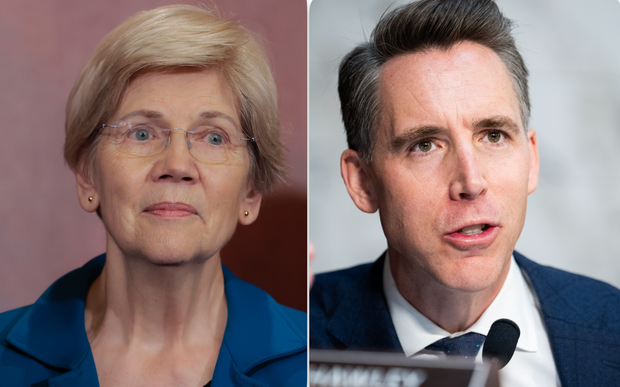
Sens. Elizabeth Warren and Josh Hawley may not agree on much — she’s a Democrat from Massachusetts who ran for president in 2020, and he’s a Republican from Missouri who is a staunch ally of President Trump. But they’re teaming up on legislation aimed at addressing a couple of the biggest political issues heading into the midterm elections: health care and affordability.
Warren and Hawley are introducing a bill Tuesday to break up what they call “Big Medicine,” focusing on health care conglomerates they say are manipulating the system, driving up prescription drug costs and stifling competition, CBS News has exclusively learned.
“There’s no question that massive health care companies have created layers of complexity to jack up the price of everything from prescription drugs to a visit to the doctor,” Warren said in a statement to CBS News. “The only way to make health care more affordable is to break up these health care conglomerates. Our bill would be a monumental step towards ending the stranglehold that corporate giants have on our broken health care system.”
“Americans are paying more and more for healthcare while the quality of care gets worse and worse,” Hawley said in a statement to CBS News. “In their quest to put profits over people, Big Pharma and the insurance companies continue to gobble up every independent healthcare provider and pharmacy they can find. Working Americans deserve better.”
Getty Images 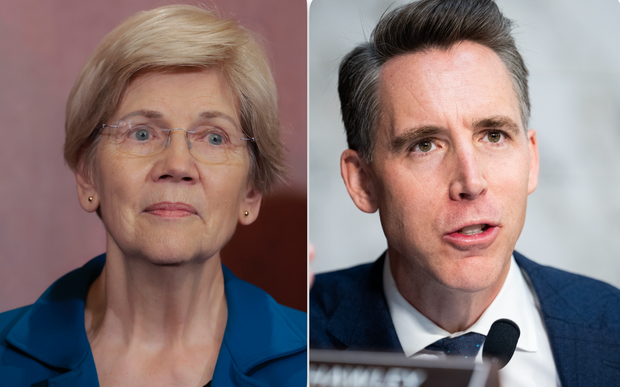
The bill targets large health companies, like UnitedHealthcare or CVS Health, that own or control various parts of the health care supply chain, from the physician’s office to the pharmacy to the Pharmacy Benefit Manager — known as a PBM — which serve as the middlemen between drug manufacturers and insurance companies. The legislation essentially says that a healthcare company cannot own both sides of a transaction. (Supporters of this type of regulation have called it the “Glass-Steagall” of health care, referring to the 1930s-era act that separated commercial and investment banking after the stock market crash.)
UnitedHealthcare, for example, owns Optum Rx, a PBM that negotiates drug benefits and discounts. CVS Health owns the PBM CVS Caremark, and they also own the insurance provider Aetna. Optum, Caremark, and ExpressScripts are the top three PBMs that manage nearly 80% of prescription drug claims, according to the independent health research firm KFF. And, as the senators point out, each of these PBMs are owned by a company that also operates its own health insurance company, doctor’s office, and a pharmacy.
The lawmakers argue that by “controlling both the company that pays for health care services and also the entity that sets the prices for those health care services” these healthcare companies “may be steering business to their own providers, evading laws intended to rein in corporate profiteering, or using physicians they employ to boost government payments to their insurance arms.” They also point to the ways the consolidation leaves independent pharmacies unable to compete.
According to the senators, the legislation would: prohibit a parent company from owning a medical provider or management services organization and a PBM or an insurer and prohibit a parent company of a prescription drug or medical device wholesaler from owning a medical provider or management services organization. It would also create financial penalties and enable the Federal Trade Commission, Health and Human Services Department, and Justice Department to bring lawsuits against those who don’t comply.
Industry heads have pushed back against the characterization of the system as market concentration. “No I wouldn’t agree that it’s market concentration. I would suggest it’s a model that works really well for the consumer,” said CVS Health Group president David Joyner when pressed by Democratic Rep. Alexandria Ocasio Cortez of New York at a House hearing on Capitol Hill last month.
PBMs have garnered bipartisan criticism, and new rules regulating them were included in the latest appropriations package signed into law by President Trump last week. The president has also issued executive orders around prescription drug prices, including one directive to “reevaluate the role of middlemen.”
Warren and Hawley also teamed up on PBM legislation in 2024. But this new, expanded bill comes as both parties are seeking ways to reign in health care costs ahead of a midterm election that could hinge on the state of the economy and consumer prices.
Both senators have staked out populist positions within their parties and have crossed the aisle on legislation. Recently, Warren teamed up with Sen. Tim Sheehy of Montana on the right to repair legislation that was endorsed by the administration. Last month, President Trump called Warren after she gave an economic speech to talk about a plan to cap credit card interest rates. Last year, Hawley introduced legislation with Democratic Vermont Sen. Peter Welch to increase the federal minimum wage to $15 an hour, a position conservatives have long opposed.