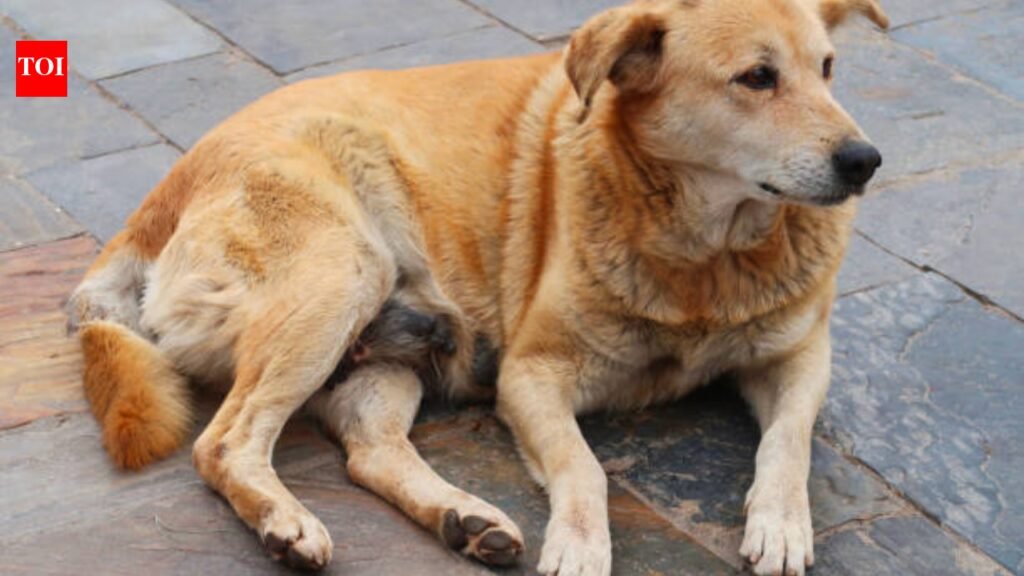
Delhi is currently trying to crown its “chonkiest” dog, and some of the city’s most recognisable street dogs have suddenly found themselves with thousands of supporters.The contest began as a joke on an Instagram page called Fat Dogs of Delhi. People were invited to nominate neighbourhood dogs they thought deserved a place in the competition. Sixty-four dogs made it into the first round.Supporters began designing posters, making reels, creating memes and even asking strangers to vote for their favourite dog. What started as an online joke turned into a full knockout tournament, with the field shrinking after every round.By Tuesday, just eight dogs were left.And the contestants have names that sound almost too perfect for this strange election. There is Dahi Bhalli, named after the popular north Indian snack. Then there is Mahakutteshwar. Others include Googoo, Rambabu and the wonderfully direct Kutta Singh.The final result is due on Wednesday.
These dogs belong to a neighbourhood, not one person
Perhaps the most interesting part of the contest has little to do with their weight.Many of these dogs do not have a single owner. They are community dogs, animals that live around markets, parks, streets and residential areas and are often fed and looked after by several people.A shopkeeper might give one food. A security guard might know where another sleeps. Someone else may take a dog to a vet when it gets injured.So when people began voting, they were not necessarily voting for a pet sitting at home with one family.They were voting for a dog they had seen around their own neighbourhood.That may help explain why the competition spread so quickly.The anonymous person behind the Instagram page told the BBC that the idea came after seeing similar knockout competitions on X.The original plan was simply to create something fun that could bring people together. Instead, the page gained thousands of followers and the contest attracted tens of thousands of votes.“I love the sense of community that we have right now,” the organiser told the BBC.
One finalist is actually trying to lose weight
Googoo is perhaps the most curious example.The 46kg mixed-breed dog is currently staying at an animal-care centre in Delhi. And while people are voting for him because of his size, the dog is actually on a weight-loss programme.His food is being regulated and he receives regular medical checks.According to The Indian Express, a teenager who entered Googoo into the contest first spotted him in a local park in 2021. At the time, the dog was less than half his current size.His supporters have since turned him into something of a celebrity, making posters and online campaigns and even calling him the “GOAT” — the greatest of all time.It is funny, but there is a serious question underneath it.
When does a funny contest become unhealthy?
Some social media users have criticised the competition for appearing to celebrate obesity in dogs.And veterinarians have long warned that excess weight can increase the risk of health problems in dogs and affect their lifespan. Overfeeding a dog simply because people enjoy seeing a larger animal can have serious consequences.Googoo’s case makes the distinction particularly clear. He may be competing because he is unusually large, but the people caring for him are simultaneously trying to bring his weight down.So the contest is not really a guide to what a healthy dog should look like.It is more like a snapshot of the affection people can develop for animals that become part of their everyday surroundings.
Delhi’s complicated relationship with street dogs
That affection matters in a city where community dogs have become part of daily life, but also a source of serious conflict.Delhi and its surrounding areas have a very large population of street dogs. In some neighbourhoods, residents feed them and treat them almost like community pets. In others, people are worried about aggressive packs, dog bites and rabies.The issue has also become a major legal and civic debate.Last year, the Supreme Court ordered stray dogs in Delhi and nearby areas to be moved into shelters because of concerns over dog bites and rabies. The order was later modified to allow sterilised and vaccinated dogs to return to their original localities.