

Look closely at a fingertip. It has tiny lines that curve, loop, and swirl. These lines are called fingerprints. No two people share the same pattern, not even twins. These tiny maps help hold objects, sense touch, and tell people apart. They are small, but their story is big and fascinating.
What exactly are fingerprints
Fingerprints are raised lines on the skin of fingers and toes. Scientists call them ridges. Between the ridges are tiny valleys. Together, they make patterns that stay the same for life. Cuts heal, skin grows, but the pattern returns. That makes fingerprints very special and very reliable.
How fingerprints begin before birth
Fingerprints start forming early, around the 10th week of pregnancy. A baby floats in fluid, moves hands, and touches the womb. Pressure, movement, and growth happen together. These tiny pushes shape the ridges. Even small changes matter. That is why each pattern turns out unique.
Why no two fingerprints match
Genes give the basic plan, but life adds the details. Blood flow, finger size, and position in the womb all play a role. Think of baking cookies with the same dough. A slight change in heat or shape makes each cookie different. Fingerprints work the same way.
The three main fingerprint patterns
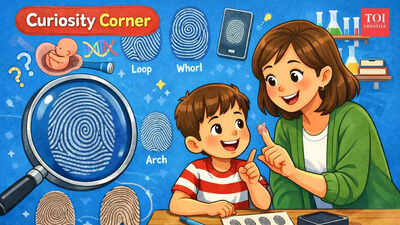
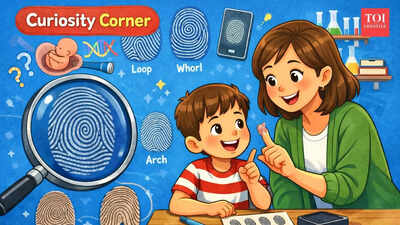
Most fingerprints fall into three groups. Loops curve in and out like a river bend. Whorls look like circles or spirals. Arches rise gently like a hill. Many fingers mix these shapes. Small details inside them make each print truly one of a kind.
How fingerprints help in daily life
Fingerprints improve grip, which helps hold a pencil or a cup. The ridges increase touch signals, helping feel textures better. They also help identify people. That is why fingerprints are used in phones, school projects, and science labs.
A fun way to notice fingerprints
Press a finger on a window or a mirror. The pattern appears for a moment. It is a quiet reminder that every child carries a personal mark, one that no one else has. These lines tell a story of growth, chance, and nature working together.Disclaimer: This article is for learning and curiosity only. It shares general science facts and is not meant for medical or forensic use.