

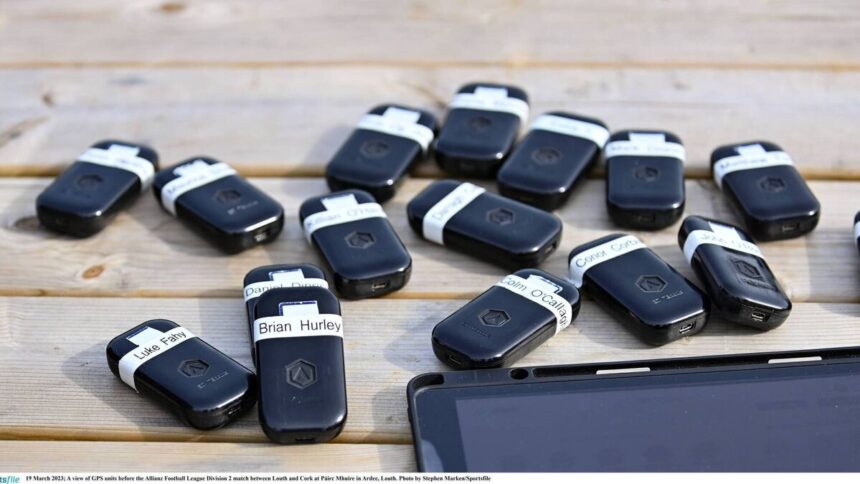
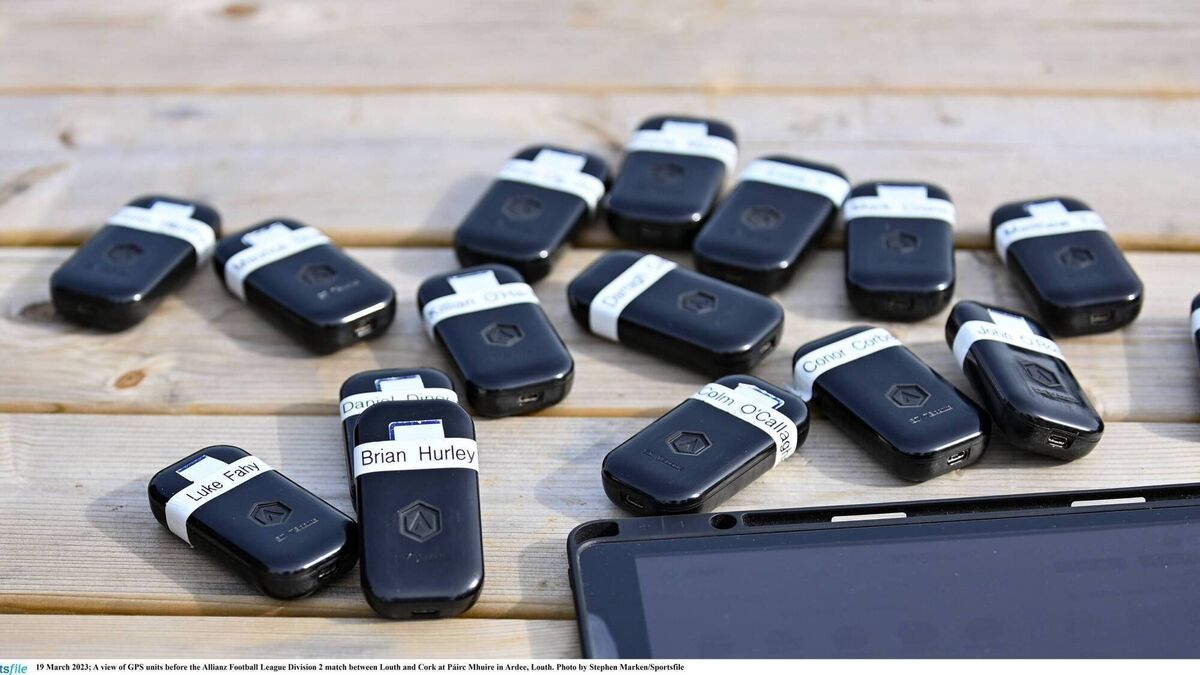
Counties will be required to share their players’ GPS data as part of the proposed inter-county certification programme.
It is envisaged all inter-county set-ups will use GAA-supplied and approved GPS trackers “and abide by a data-sharing agreement with the Association”.
Last year, the Football Review Committee had little success with leading counties providing such information for purposes of devising their rule changes. Donegal manager Jim McGuinness said it was “family business”.
However, ahead of a vote on the devised licensing programme at Congress on February 28, the amateur status review committee are hopeful of securing the co-operation of counties for the greater good.
“Alongside concerns regarding the degree of downward pressure on the GAA’s amateur status due to financial matters, there is considerable unease too surrounding player welfare,” reads the body’s report.
“In this regard, there is a lack of consistency and reliability in the available data on the physical demands associated with training and playing inter-county hurling and football.
“This is explained by the absence of an agreed central repository for such data, a reluctance on the part of many counties to share data they hold, and the absence, too, of protocols (perhaps agreed with the GPA) for gaining informed content on the part of amateur athletes to receive, store and process their personal data.
“Without this anonymised central dataset, a full understanding of the physical demands placed on players, accurate information on injury prevalence and severity, and other such markers are currently placed beyond the reach of the GAA.”
The committee believe the single source supplier for the GPS equipment will also save counties money.
As well as inter-county managers being required to undertake an induction meeting or short course every year, the body believe there should be a limit of 10 paid backroom team members including three qualified medical personnel at Sam Maguire and Liam MacCarthy Cup level.
The David Hassan-chaired group also state it is reasonable that the core management team is limited to four persons – the manager and up to three selectors/assistant managers.
Speaking to GAA.ie, Hassan said the organisation has to enshrine its amateur status.
“The danger is if you don’t act now, then the situation year by year becomes ever more difficult to address. Then ultimately, would we reach a situation where it’s no longer credible to refer to ourselves as an amateur organisation?
“If we reach the 150th anniversary of the Association in 2034 and there remain question marks over whether or not we are still an amateur organisation, then we would have to regret that very much and ask if we could have taken action earlier.
“Because if we move to a semi-professional organisation, then we’d have to accept there’s really no going back from that. That’s what’s at stake here.”
He continued: “We don’t think what we’re proposing is very radical. It’s the beginning of phase one of a process that the counties will have control over every step of the way. It’ll be through agreement.
“Every step of the way through the Central Council or through Annual Congress counties will have the opportunity to speak on these issues and vote on them.”