

Newly elected Alberta NDP MLA Kyle Campbell, representing Calgary-Shaw, speaks to the media in Calgary on Sept. 15, 2026. The Canadian Press/Jeff McIntosh
Commentary
Alberta Premier Danielle Smith has been trying to maintain a delicate political balance between an active provincial separatist movement and dedicated federalists within her base of support as a referendum with unity implications approaches.
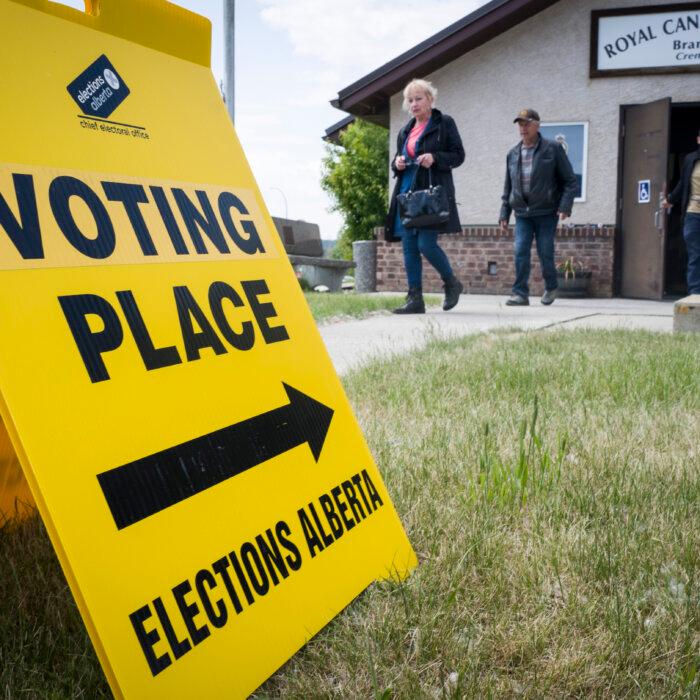
Aside from a single anomalous term in 2015, the provincial constituency of Calgary-Shaw has been solidly in Conservative hands since its creation in 1986. Seeing it go to Naheed Nenshi’s NDP in an upset byelection victory has shaken the UCP. Calgary is considered the provincial battleground electorally, with many seats tightly in play between the NDP and UCP. If Calgary-Shaw can go NDP, any seat could.
There is a risk in reading too much into a byelection outcome, though. Byelections offer electors an opportunity to send a message to the government without risking unseating it. Turnout in the byelection was low, and the result didn’t indicate a surge in NDP support so much as it did a collapse in UCP votes. In other words, many disenchanted UCP supporters decided to stay home. They may emerge and vote for the UCP again in the general election.
Another factor in play was the presence of a candidate for the new Progressive Tory Party (PTP). The party was recently formed by MLA Peter Guthrie after he was tossed from the UCP caucus, and the byelection was its first electoral test. Guthrie’s candidate garnered just over 900 votes, and had those votes gone to the UCP, the NDP would not have won the seat. Ironically, the outcome may harm the fortunes of the PTP, as warnings of potential consequences of vote splitting could scare disenchanted UCP supporters from parking a vote with the new party in a general election. Conservatives in Alberta don’t want a repeat of the 2015 election that put Rachel Notley in power while two conservative parties battled each other for votes.
Related Stories

Not all is bleak for Smith, though. The Abacus poll also found the UCP still holds a comfortable 13 percent lead over the NDP in the province. Citizens may be upset with the governing party, but not so much that they would switch their vote to the NDP.
After the referendum on Oct. 19, Smith will have a year to work on provincial legislative issues without being immersed in a divisive referendum campaign. It could offer her the opportunity to regain support from her divided base. If Albertans choose the option to pursue a binding independence referendum, though, the premier’s job will become more complicated. She would then have been given a mandate to continue with movement toward provincial independence, and if she wavers from it, the sovereigntist element in her party will focus on the premier rather than Ottawa.
Former Premier Jason Kenney learned the hard way what can happen if a leader lets a movement against their leadership fester within their party. Danielle Smith is keenly aware of the risks she faces from within. Leaders in the secessionist Alberta Prosperity Project have already been trying to organize a party coup against Smith to force a leadership race. They have had little success so far, but could gain steam if Smith appears to ignore a mandate to hold a binding independence referendum.
Something Smith desperately needs is a victory under her belt in her negotiations with the federal government. Mark Carney may be federally popular and growing in popularity to a degree within Alberta even, but association with him still comes with risks for an Alberta premier. The electorate is getting more skeptical with each month that passes since an MOU was signed with great fanfare between Smith and Carney to consider approving a pipeline. If a line isn’t approved, Smith will wear the failure.
Premier Smith and the UCP are heading into another tumultuous year and dealing with a grumpy electorate, and now a general election is looming. The Calgary-Shaw byelection upset doesn’t mean the NDP are poised to sweep back into power as they did in 2015, but it does show that the provincial government is vulnerable. Voters sent the UCP a warning shot, and if Smith doesn’t heed it, her government majority may be at risk in 2027.
Views expressed in this article are opinions of the author and do not necessarily reflect the views of The Epoch Times.