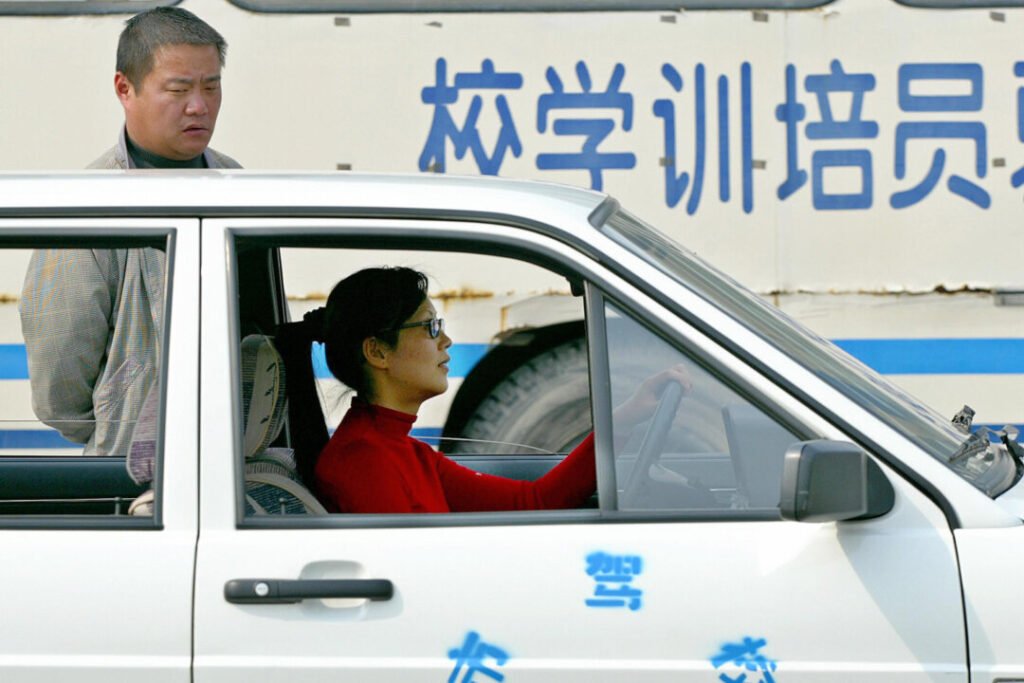
Driving schools in several Chinese cities are closing or scaling back after years of expansion as fewer people enter the driver-training system and schools struggle with excess capacity.
In Zhongshan, Guangdong Province, the transportation bureau said in a May 30, 2025, market notice that the number of main driving schools fell from 103 in 2021 to 65 in 2025—a decline of about 37 percent in four years. The bureau said some schools had already left the market and that training capacity still far exceeded demand.
The number of newly licensed drivers nationwide has also fallen for two straight years. Ministry of Public Security data released Jan. 26 show China issued 24.29 million new licenses in 2023, 22.26 million in 2024, and 20.51 million in 2025. That amounts to a decline of about 16 percent in two years.
China still had 559 million licensed motor-vehicle drivers at the end of 2025, including 525 million licensed to drive automobiles. The automobile fleet reached 366 million even as the flow of new drivers declined.
New Schools as Students Drop
In Jinan, the capital of Shandong Province, the transportation bureau said in a Dec. 18, 2025, market warning that 110 registered driving schools had enough vehicles to train about 390,000 students a year but enrolled about 90,000.
Related Stories


Enrollment has generally fallen since 2022, the bureau said. At the same time, 35 new schools entered the market after China changed driving-school entry from a licensing system to a registration system in 2021, adding more capacity as demand weakened.
The number of schools also dropped in Guangzhou, but the business they handle decreased more sharply.
The city’s registered training fleet fell from about 12,900 vehicles in 2019 to almost 9,100 in 2024, a 29 percent decline. New student registrations fell from about 584,000 in 2021 to 266,600 in 2024.
Guangzhou’s transportation bureau said schools face rising costs for training grounds, salaries, fuel, and vehicle maintenance in a market where supply exceeds demand.
In Wuhan, transportation authorities published a March 12 list of 72 driving schools that had either left the market or were operating abnormally. Of those, 41 had been deregistered, and three had applied to stop operating and were no longer accepting students. Others had been suspended from taking new students after failing to maintain registration requirements.
Driving Schools in China
Driving schools have traditionally played a much larger role in China’s licensing system than they do in much of the United States.
In many U.S. states, beginners can practice in a family car with a parent or another qualified licensed driver before taking a state driving test.
China has had no comparable route for decades. Although Chinese law did not explicitly require applicants to enroll in a driving school, road practice had to take place in a training vehicle with an instructor. In practice, that channeled learners through the commercial driver-training system.
That began to change in 2016, when China began testing a self-study, direct-test program for small cars in 16 cities. The program was later expanded.
The alternative is still far more regulated than learning in the United States. Learners must use a vehicle fitted with required safety equipment and practice with an eligible supervising driver. On public roads, practice is limited to routes and times set by traffic police.