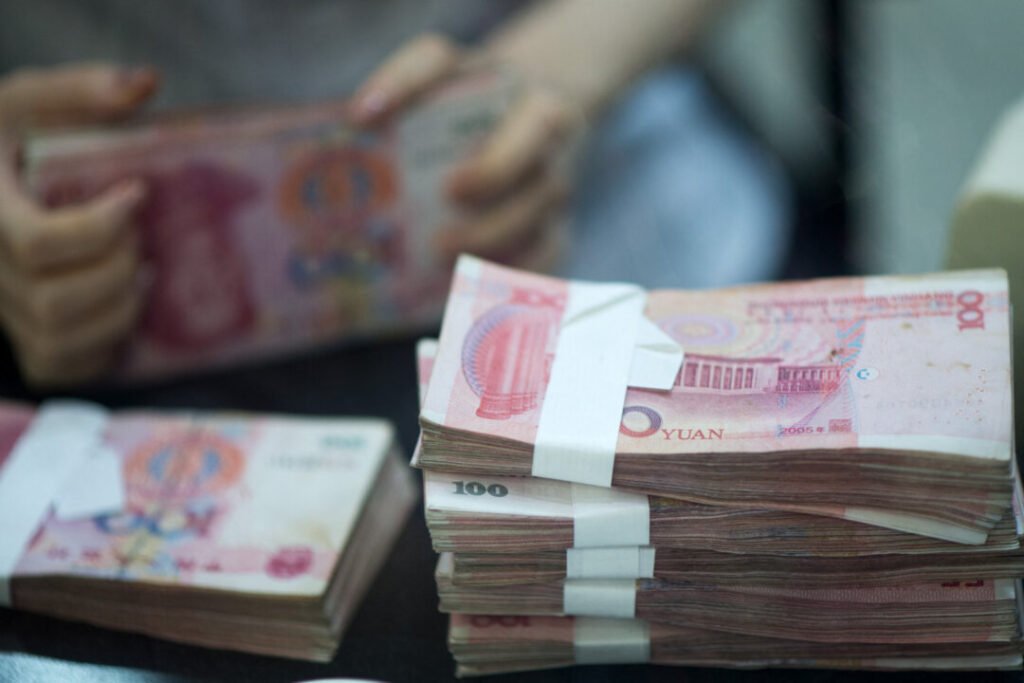
China’s cash-strapped local governments are stepping up tax collection, fines, and other penalties while tightening controls on petitioners, online speech, travel, and neighborhood activities, according to an insider familiar with local government operations.
The insider and a resident spoke to The Epoch Times on condition of anonymity out of fear of reprisal.
The moves come as the CCP faces worsening local government finances and growing concern over potential social unrest, according to an insider close to China’s local governments.
The insider said the CCP’s central authorities have instructed local governments to pursue a “two-pronged approach” before the end of the year, which means finding ways to raise money while preventing protests.
“One hand is to solve the problem of money, and the other hand is to maintain stability,” he said. “The higher authorities are asking local governments to find their own solutions. Tax inspections and fines are all methods.”
At the same time, the regime is intensifying surveillance of people considered potential sources of unrest, including petitioners and dissidents.
Related Stories

“What they fear most is that ordinary people will make trouble, so petitioners and dissidents are the key people being watched,” the insider said.
Fiscal Pressure Drives Tax Collection
The insider alleged that some tax authorities manipulate records to create additional liabilities for businesses.
“If the CCP wants to fine you, is that difficult?” he said. “In some places, they change the amount of tax you paid in the system, and you become a taxpayer who has underpaid. Then you have to pay back taxes and late fees.”
He said some tax officials engage in such practices to meet revenue targets.
The Epoch Times cannot independently verify the insider’s accounts.
A China-based economist, surnamed Li, told The Epoch Times that the underlying problem is a widening mismatch between local government revenues and expenditures.
“Once the government has no money, when it is behind on civil servants’ salaries and cannot come up with money to maintain stability, it issues regulations to impose fines,” he said. “The way the CCP authorities legalize collecting money through fines is by issuing regulations and a series of administrative rules.”
Li said the regime had expected a strong wave of consumer spending after China ended its pandemic restrictions but did not see the rebound they had anticipated.

People protesting censorship raise white paper amid China’s strict zero-COVID measures in Beijing on Nov. 27, 2022. Getty Images/Kevin Frayer
Tightening Social Controls
The protests, which began with anger over China’s draconian COVID-19 restrictions, spread to several major cities and became one of the most significant displays of public dissent against the CCP in years.
The local government insider said the Cyberspace Administration of Hebei Province has also issued notices to county- and city-level authorities instructing them to strengthen control over their jurisdictions, including tighter monitoring of people who post comments online.
The local government insider linked the restrictions partly to the authorities’ desire to keep money inside China.
“On the surface, it looks like closing the country off, but actually it is about locking up ordinary people’s wallets and making them keep their money in the country for consumption,” he said.
The system has long been used to collect information about residents, rental properties, and migrant workers. However, some residents say the scope and frequency of checks have increased.
A Shanghai resident surnamed Wang told The Epoch Times that inspections of migrant residents have become more frequent during the second half of this year and that officials are collecting more detailed information.
“The main thing they check is the migrant population. People who come from other places have to register, and if someone stays overnight at your home, that also has to be registered. There is also facial recognition,” Wang said.
Grid workers also ask about private matters inside residents’ homes, he said.
“They will ask residents about their family situations, such as whether a husband and wife have been arguing recently,” he said. “In the past, they mainly registered ID cards and phone numbers. Now they want to know whether there are conflicts in the family.”
Wang said the system has created a sense that authorities are attempting to map out every household in a neighborhood.
“You feel that every family has been put into a grid. They want to know in advance what is happening in each household,” he said. “Their work is very detailed, and it makes people feel terrified.”
Zhou Yu contributed to this report.