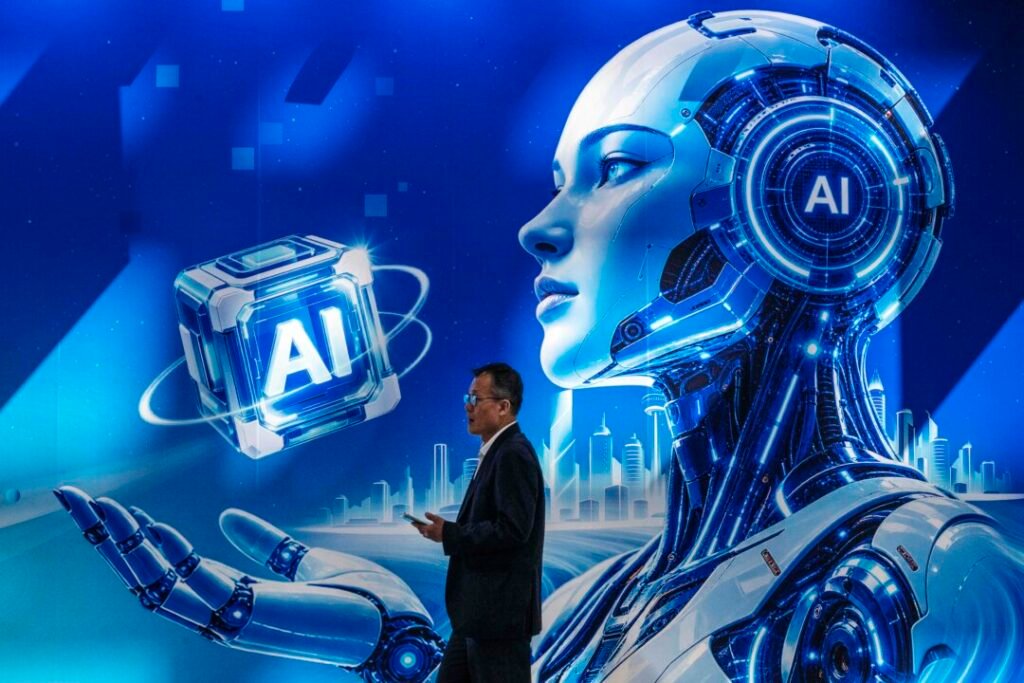
Beijing is considering adding artificial intelligence (AI) and other technologies to its export controls list, aiming to tighten controls on the strategic industry amid rivalry with the United States.
The Chinese Ministry of Commerce unveiled the plan on Oct. 16, covering 40 technologies across three categories Beijing considers important.
The proposed measures identified 23 AI-related technologies subject to export controls, including large AI models, AI agents, AI chip design, computing clusters, voice recognition, high-performance translation, deepfake detection, and hacking-related technologies.
In addition to AI, it listed five biopharmaceutical technologies—such as cell and gene therapies—and 12 photovoltaic technologies, including those used to make polysilicon, a key raw material for solar panels.
“We want to ensure that AI technologies remain safe and controllable,” a spokesperson for the commerce ministry said in a separate statement on Oct. 16.
The ministry said China has simultaneously introduced a temporary registration requirement that covers all the listed technologies.
Related Stories

Starting Oct. 16, exporters must register with the authorities if they plan to transfer intellectual property to overseas entities, grant licenses to foreign companies to use Chinese technology, or transfer ownership of Chinese technology to any foreign party, according to the ministry.
The temporary registration rules also apply to transactions that have already commenced but have not yet been completed, the ministry said.
AI technology already released into the public domain, including through open-source projects or academic papers, will be exempt from the new restrictions, it said.
Certain technologies related to open-source activities and international cooperation may qualify for streamlined licensing procedures, but the decision will depend on the activity and the technology involved, according to the ministry.
The deployment of a restricted AI model on an overseas server or other infrastructure may fall within the scope of the new export controls, Beijing said. However, streamlined licensing procedures may apply if the deployment was to a Chinese company’s own overseas cloud infrastructure, or in other “relatively controllable-risk circumstances,” the ministry said.
The move “can be seen as a response to Western countries posting sovereignty requirements on AI, robotics, telecommunications, and other key technologies,” said Lian Jye Su, chief analyst at technology research and advisory group Omdia. The aim would be to better regulate access to Chinese technologies, he said.

A screen with AI on it as a host and visitors gather at a display for a Chinese telecom company at the PT Expo in Beijing on Sept. 22, 2026. Kevin Frayer/Getty Images
In the Sept. 8 alert, the FBI, the National Security Agency, and the Cybersecurity and Infrastructure Security Agency said the Chinese AI companies’ practices are “likely with Chinese government awareness.”