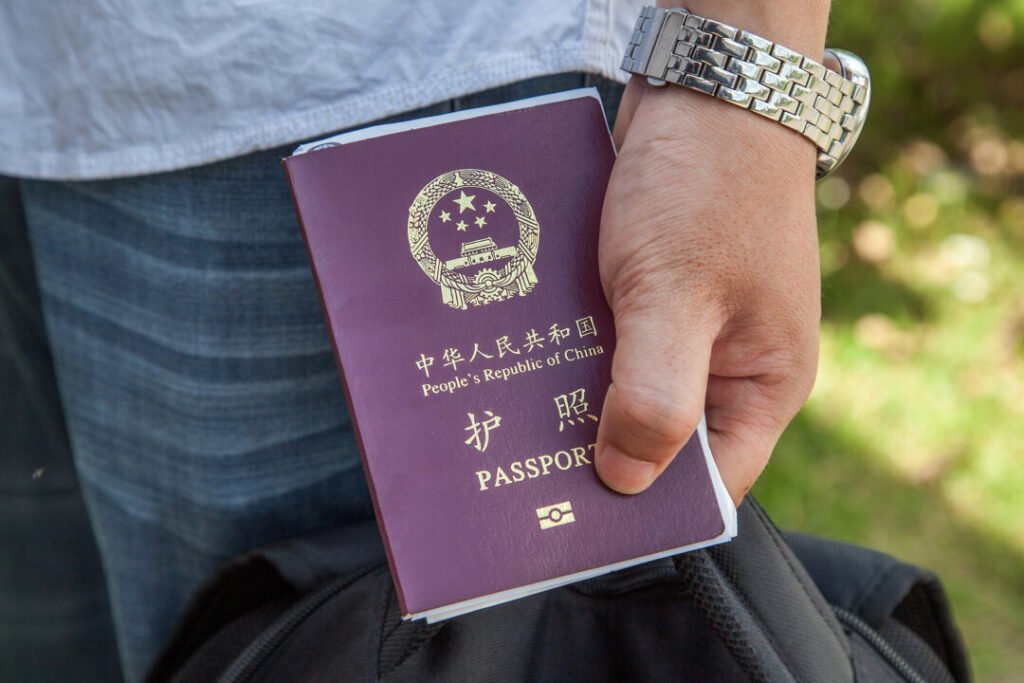
The Chinese regime is expanding its surveillance of ordinary citizens’ overseas travel, with local police and officials asking for details about foreign employment, residences, and travel plans.
Locals also told The Epoch Times they were warned that their ability to leave China in the future would be at risk if they failed to accurately disclose their overseas activities.
Chinese students with valid travel documents for overseas study have reported being stopped at airports before their departure from China, with authorities citing concerns about them remaining overseas.
The surveillance measures fall into two categories: Local authorities have used the questioning to obtain information about people’s activities and connections overseas, while border authorities have used that information to impose exit bans on some citizens.
Collecting Detailed Information
Several Chinese citizens told The Epoch Times, on condition of anonymity out of fear of reprisal, that their overseas activities have been under increased scrutiny ahead of new regulations in China’s Exit and Entry Administration Law, which are scheduled to take effect on Sept. 15.
Related Story

A resident of Liaoning Province, surnamed Liu, told The Epoch Times that he purchased a flight online on Aug. 25 to travel from Beijing to Los Angeles. The following day, a local police officer called him to enquire about the purpose of his trip.
Liu said he told the police that he was traveling to visit relatives. The officer then asked him to complete a form containing his name, destination, flight number, the name and occupation of the person he planned to visit, and whether his home in China was owned or rented.
“I find it very strange. Why are they asking about the identifying information of my relatives?” he said.
Liu said he had traveled to the United States several times two years ago, and had not encountered similar questioning.
“This time, they are more interested in my relatives’ identities and housing than in me,” he said. “I don’t know why they are targeting the property of Chinese people in the United States.”
A Chinese academic told The Epoch Times that the regime appears to be using anti-fraud campaigns as a justification for conducting broader investigations of citizens traveling or working overseas.
The information being collected, he said, goes well beyond what would be necessary to verify someone’s employment.
“I heard from friends in China that after they returned, the police station checked everything from the storefront photos of their companies in the United States to photos at landmarks and their specific addresses,” the academic said.
He said the information could potentially allow authorities to build detailed profiles of where Chinese citizens live and work abroad, and to reconstruct their overseas movements.
“This may be because the Chinese Communist Party (CCP) wants to use big data to establish a map of the distribution of Chinese people on the map of the United States and piece together the overseas activity of those involved,” he said.
A retired Shanghai government employee, surnamed Feng, told The Epoch Times that since early August, numerous residents in his neighborhood had been asked by local officials to complete forms before traveling abroad.
“Anyone who isn’t traveling abroad as part of a tour group has to fill out the form,” Feng said.
He said officials had also advised residents to avoid traveling to Japan, citing security concerns, and to avoid the United States if possible.
The Chinese regime has long restricted overseas travel, but the measures targeted particular groups. Human Rights Watch had documented severe travel restrictions on ethnic Uyghurs since 2016, including passport confiscations and additional requirements for those seeking to travel abroad to “sensitive countries.” Some Uyghurs who were permitted to travel were told by the regime that their speech and associations were restricted while overseas, threatening repercussions for their family members in China or upon their return.
Chinese law also gives authorities broad grounds to prevent people from leaving the country. Article 12 of the Exit-Entry Administration Law bars citizens from leaving if their departure is deemed potentially harmful to national security. The law also allows authorities to refuse to issue a passport if they determine that the applicant’s departure could endanger national security or cause major losses to national interests.
Students Questioned at Airports
The expansion of China’s exit controls has also affected some Chinese college students.
In mid-August, screenshots circulating online showed that two Chinese college students with valid airline tickets for travel overseas were stopped at Chinese customs. The reason reportedly given by border officers for the action was that “they are college students, [so it is] unsafe.”
The screenshots did not identify the airport or destination, and did not indicate how the incident was ultimately resolved.
On Aug. 16, a video circulating online showed a female college student who said she had been stopped for questioning at Nanning Airport in southern China.
According to her account, she attempted to pass through an automated immigration channel on Aug. 15, but the machine displayed a red warning. She was then taken to a room where officials inspected her cellphone, chat records, bank transactions, return flight ticket, hotel booking, and luggage.
She said border officials told her that some students from her college in China had traveled to Spain and not returned, and that authorities had therefore restricted overseas travel for all students at the college, which she said had about 60,000 students.
The claims in the video could not be independently verified by The Epoch Times.
New Regulations
The reports come as Beijing prepares to implement its new regulations for citizens exiting China. Despite the reports, none of the regulations explicitly require Chinese citizens to disclose their own personal information or the information of their overseas relatives.
The Chinese academic said the broader surveillance reflects an effort by China’s public security apparatus to extend its domestic surveillance mechanisms to Chinese expats overseas.
Even after Chinese people leave China, he said, the regime can potentially use financial and other digital records to track their activities.
“You use the UnionPay [payment] system to shop, withdraw money, and consume, and all of this data will be fed into big data,” the academic said.
“When you return to China one day, they can then use the several pieces of information they already have to test you. If you lie to them, they won’t let you leave the country.
“Ultimately, they still want to control you.”
Ye Zilong contributed to this report.