China is using big data analytics to identify and enroll workers who lack state pension coverage amid mounting fiscal strain due to an aging population and economic downturn.
The initiative, announced by Vice Minister of Human Resources and Social Security Li Zhong on Oct. 10, also seeks to move more migrant workers, gig workers, and others in flexible employment into a pension plan that requires substantially higher contributions.
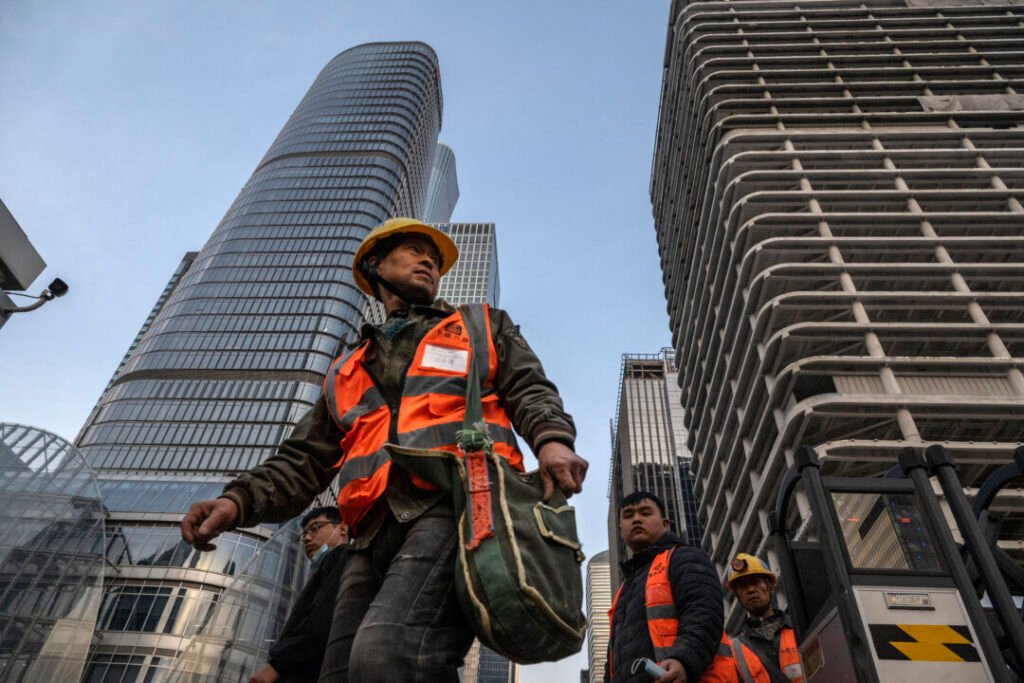
These workers in China are those without stable employment and often are the low-income population. Analysts who spoke to The Epoch Times say Beijing is targeting this vulnerable group to raise revenue.
Xu Zhen, a veteran figure in China’s capital markets, told The Epoch Times that the shift could significantly increase the amount workers pay into the system, even as many struggle with unstable employment and stagnant incomes.
“Because of this transition, ordinary people go from paying several hundred yuan a year to nearly 10,000 yuan [$1,500] a year,” Xu said.
Xu pointed out that the move would bring more money into pension funds by increasing the contribution burden on workers.
Related Stories


“This is drawing blood from ordinary people’s money for their livelihood to fill the pension funding gap,” he said.
A Push for Higher Contributions
The Chinese regime also wants to move more workers from a voluntary, basic state-backed pension program—which generally requires relatively small contributions—to an employee pension plan that requires much higher payments.
Authorities are exploring ways for employers, platform companies, and workers to share the costs of contributions. Currently, the individual contribution rate among the targeted group is 8 percent, and employer contributions may reach 20 percent, according to official data.
U.S.-based China current affairs commentator Wang He told The Epoch Times that the regime’s recent measures—including raising the retirement age, extending the minimum pension contribution period, and requiring contributions based on actual wages—are aimed at expanding the pool of contributors and increasing pension revenue.
However, Wang said the number of people who can be added to the system is limited. Many workers may not be able to afford the higher payments, particularly if they lack stable jobs or regular incomes.
Aging Population, Economic Weakness
Economic weakness adds to the pressure, according to Xu. Unemployment, wage cuts, and interruptions in social insurance payments can reduce the flow of money into pension funds.
The regime has already introduced measures that require workers to contribute for longer before receiving a pension.
In September 2024, Beijing announced a gradual increase in the retirement age, raising it from 60 to 63 for men, from 50 to 55 for female blue-collar workers, and from 55 to 58 for female professionals.
Beginning in 2030, the minimum contribution period required to receive a basic monthly pension will also gradually increase from 15 years to 20 years.
Meanwhile, a Supreme People’s Court interpretation issued in August 2025 clarified that employers and workers cannot legally agree to forgo mandatory social insurance contributions.
These policies could strengthen pension funding, but they also increase the potential burden on workers and employers.
Xu said that for Beijing, the challenge is not simply identifying people who are outside the pension system. It’s getting them to contribute consistently.
Li Jing and Luo Ya contributed to this report.