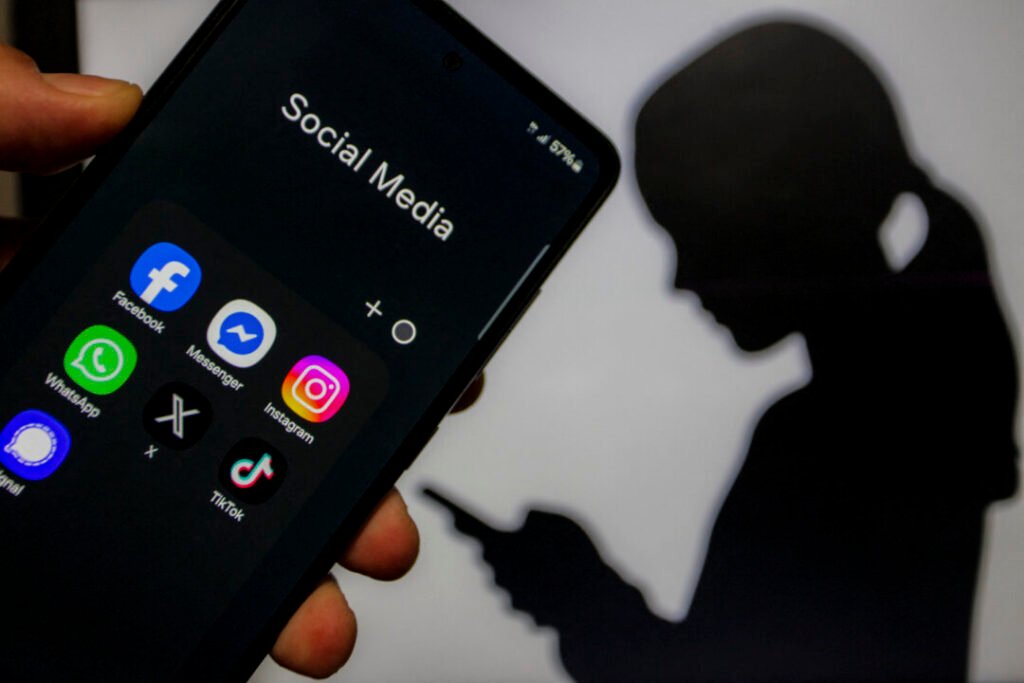

Children holding a smartphone displaying social media applications, in Tunisia, on June 20, 2026. Imen Ben Youssef / Hans Lucas / AFP via Getty Images
Labor has left the door open to changing its planned digital duty of care laws to overcome opposition to the contentious measures.
Under the proposed bill, social media companies would be forced to identify and prevent potentially harmful content being shown to users who are younger than 18.
The barred material would include content encouraging disordered eating, as well as pornography, violence against women, bullying and life-endangering stunts.
But the coalition said it would oppose the laws on the basis that ministerial discretion to designate harmful content could pave the way for political censorship online.
Communications Minister Anika Wells said she was surprised by the opposition’s “eruption” over the laws, but she was willing to give the parliament the power to decide the definition of harmful material in order to get the changes passed.
“I would be prepared to work with the coalition on the wording to make that work that meets the urgency requirement of the intent of that measure,” she told the ABC’s Insiders program on Sunday.
Related Stories


The minister added she had not received a single phone call about the laws or any proposed amendments from her opposition counterpart, Sarah Henderson.
“I just had an outright rejection of an exposure draft communicated by a press conference by the leader of the opposition,” Wells said.
“It’s extraordinary.”
For adult users, illegal content would need to be monitored and quickly removed, along with posts that promote terrorism, child exploitation, and sexual violence.
Social media users would also be able to decide if they want to keep algorithm-driven feeds or revert to linear feeds that only featured posts from their friends and other accounts they follow.
Laws to strengthen the existing under-16s social media ban recently passed parliament, allowing eSafety Commissioner Julie Inman Grant to compel access to information for investigating social media use by children.
Tech companies face an increased maximum fine of $100 million for non-compliance.
No platforms have been penalised for breaches of the laws to date, despite children reporting being able to easily skirt age-verification measures.
By Tess Ikonomou