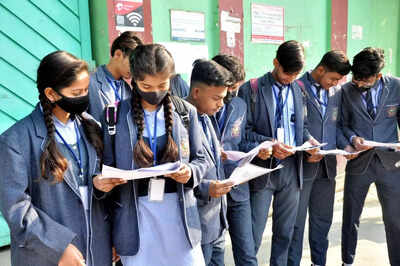
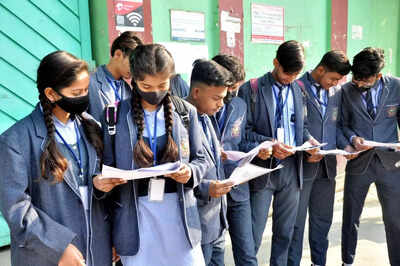
CBSE Class 10 Maths exam 2026: Every board examination carries weight, but Mathematics often carries more than most. On Tuesday, the Central Board of Secondary Education (CBSE) conducted the Class 10 Mathematics paper across the country, leaving lakhs of students assessing not just their answers, but what the exam might mean for their academic path.Outside several centres, the immediate reaction was concern over the length and structure of the paper.Abhhisek Sen, a Class 10 student, told TOI, “The paper set 430/2/2 was extremely lengthy and also difficult, especially when it is a Basic paper. CBSE should shed its ego and reconduct the exam and this time must set the difficulty level equivalent to basic level.”Another student from Mumbai told TOI, “Section E was difficult while the rest of the paper was moderate. Many students looked tense, and some were even crying after coming out of the exam hall.”For a subject already seen as high pressure, the perception of a lengthy paper added to anxiety. But unlike previous years, the 2026 batch is operating under a revised examination structure that changes what one difficult paper can mean.
The new two-exam structure
Beginning with the 2025-26 academic session, CBSE has introduced a two-exam system for Class 10. All students must appear for the first board examination, which serves as the main examination. That was the paper conducted yesterday, February 17, 2026.However, the Board will now hold a second board examination within the same academic year, expected in May 2026. This creates a structured opportunity for improvement and compartment without waiting an entire year.Students who feel their Mathematics paper did not go as planned can choose to appear for the second examination to improve their scores. Improvement is permitted in up to three subjects, including Mathematics, Science, Social Science, and languages. The application process for the second examination will begin after the completion of the first exam cycle.
Compartment and eligibility rules
The second examination also functions as a compartment opportunity. Students who fail in one or two subjects in the first exam can reappear under the compartment category. This ensures that a single setback does not automatically delay progression to the next academic stage.However, the Board has clarified limits. Students who miss or fail in three or more subjects in the first examination will be marked as “Essential Repeat.” These candidates will not be eligible for the second exam and must reappear in the next year’s main board examinations.The first examination includes fresh candidates, second-chance compartment candidates, essential repeat students from the previous year, and improvement category students. The second examination will be open to those seeking improvement in up to three subjects, students appearing for their first or third compartment attempt, candidates combining compartment and improvement, and those who passed with a replacement subject but want to improve their original subject.The syllabus, examination pattern, and question format will remain the same for both examinations.
Results and what comes next
Results of the first board examination will be declared in April. The second examination results will be announced in June. Students satisfied with their first attempt can proceed with Class 11 admissions using digitally available results through DigiLocker. Final marksheets and official certificates will be issued only after the second examination cycle concludes.For students who found the Mathematics paper lengthy or difficult, the system now provides a defined next step. As reactions from examination centres indicate, stress remains real. But under the revised structure, one paper does not automatically close academic options. The second board examination ensures that performance can be reassessed within the same academic year.