A bipartisan group of lawmakers in both chambers of Congress is pressing the State Department to toughen its travel warning for mainland China as two American academics remain detained there in cases Washington has classified as wrongful detentions.
Sens. Edward Markey (D-Mass.) and Ted Budd (R-N.C.), joined by Sens. John Curtis (R-Utah) and Adam Schiff (D-Calif.), introduced S.Res. 865 on Sept. 17.
A House counterpart, H.Res. 1549, was introduced a day earlier by Rep. Stephen Lynch (D-Mass.) for himself and Reps. John Moolenaar (R-Mich.) and Young Kim (R-Calif.). It was referred to the House Foreign Affairs Committee the same day.
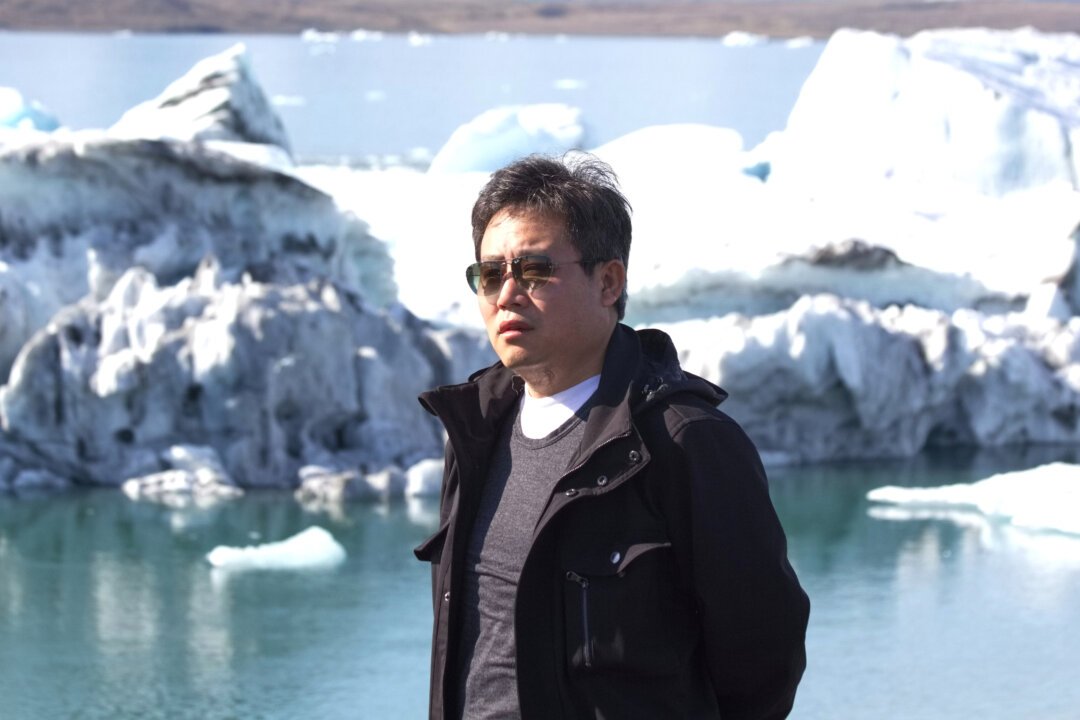
Both measures center on Youlin Chen, a Massachusetts-based seismologist detained since 2024, and Min Zin, a scholar of Burma politics detained in June after traveling to China for an academic event.
The lawmakers want the State Department to consider adding the “D” indicator used to warn Americans about wrongful detention and to review whether mainland China should be raised from Level 2—“Exercise Increased Caution”—to Level 3—“Reconsider Travel.”
The department updated its China advisory on Sept. 4 but kept mainland China at Level 2. It warns of arbitrary enforcement of local laws, exit bans, and the risk of unjust arrest or detention. The advisory currently carries an “Other (O)” risk indicator.
Related Stories


Held for Nearly 2 Years
A Chinese-born American seismologist, Chen had worked with researchers in China for years. Markey said his work was academic, publicly reported, and transparent, and that Chen had never held a security clearance.
Chinese authorities accused him of espionage. He has remained in pretrial detention without trial or contact with his family.
Chen went 434 days without access to a lawyer and was interrogated more than 100 times about his work without counsel present.
Secretary of State Marco Rubio has formally designated Chen as wrongfully detained.
Markey has also raised Chen’s case with Chinese Ambassador Xie Feng.
Invited to China, Then Detained
Min Zin was detained June 3 at Kunming Changshui International Airport after traveling to Yunnan Province for an academic conference.

U Min Zin, a scholar who studies Burma, also known as Myanmar, in a file photo. Courtesy of ISP-Myanmar
Min Zin is executive director of the Institute for Strategy and Policy–Myanmar and a doctoral candidate in political science at the University of California–Berkeley.
Chinese authorities accused him of espionage activities that endangered national security but have publicly provided little detail about the allegation.
Min Zin has not had access to legal counsel.
Lynch said Chen and Min Zin had gone to China for academic exchanges that could benefit both countries.
“They were doing honest and noble work and should never have been detained,” Lynch said.
He accused Beijing of using detained Americans as “diplomatic bargaining chips.”
Moolenaar said the cases should prompt American academics to reconsider collaborating with Chinese institutions and traveling to China.
“American professors and researchers must realize the CCP is not interested in an open exchange of ideas,” he said.
The resolutions also support Trump raising Chen’s and Min Zin’s cases with Xi.
“The risks outlined in the China Travel Advisory are not hypothetical,” the office said.