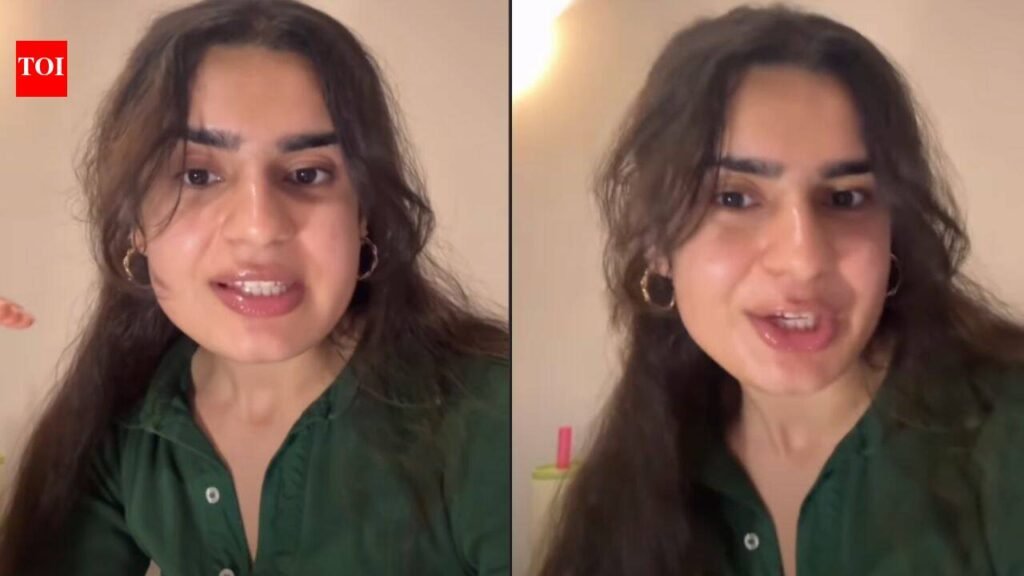

Losing a job or struggling to find employment is often associated with financial uncertainty, anxiety and emotional exhaustion. But one woman has offered a different perspective, arguing that unemployment, despite being a deeply stressful experience, can also teach people resilience, confidence and the ability to cope with rejection. Anisha Arora shared her views in an Instagram video, describing unemployment as a difficult period that can force people to develop skills and emotional strength they may not have discovered otherwise. Her comments have since resonated with people who have experienced the uncertainty of looking for work without knowing when their next opportunity will arrive.
‘Being jobless brings out the best version of you’
Arora began her video by acknowledging that unemployment can be extremely difficult, before explaining why she believes the experience can also have a positive side. “Unpopular opinion: being jobless brings out the best version of you. I know it’s brutal, I know the mental stress kills you, and I hope you never have to go through it, but if you have, you know exactly what I’m talking about,” she said. Her argument is not that unemployment is easy or that people should want to experience it. Instead, she focused on the skills people may develop while trying to find another job. According to Arora, unemployment can create a situation where a person has to continue working towards a future despite having little certainty about what that future will look like.“You wake up every single morning with no reason to, but you still get up anyway. You work hard for a future you don’t even know exists,” she said. She also pointed to the networking and communication skills that job seekers often have to develop. Asking someone for a referral, reaching out for a coffee chat or approaching a professional for advice can feel uncomfortable, particularly for people who are not accustomed to asking others for help. “You learn how to talk to people, you learn how to ask for a referral, for a coffee chat. Most people go their entire lives not learning how to ask for something,” Arora said.
Repeated rejection can change how people see failure
One of the strongest points in Arora’s message was about rejection. Job searches can involve numerous applications, interviews and conversations that ultimately lead nowhere. After repeated rejection, however, she believes people can gradually become less emotionally affected by each setback. “Then you learn how to be rejected, over and over and over, until one day rejection stops meaning anything,” she said. She added, “It stops defining your potential, and it just becomes another email that you ignore.” The idea is that repeated setbacks can eventually separate a person’s sense of self-worth from individual outcomes. Not getting a particular job does not necessarily mean that someone lacks talent or potential. It may simply mean that the opportunity was not the right fit or that another candidate was selected.Arora also described the experience as a lesson in dealing with uncertainty. “Being jobless gives you grit, gives you delusional positivity that nothing in life can teach you,” she said. She continued, “So eventually you stop being scared, because you know time passes, and nothing can break you anymore.” Her comments suggest that resilience can emerge when people repeatedly face situations they cannot completely control but continue moving forward anyway.
Her message resonates with people facing unemployment
Arora’s video struck a chord with viewers, particularly those who have experienced the emotional pressure of unemployment. Several people responded by describing the difficulty of remaining hopeful while dealing with uncertainty and rejection. One user wrote, “Unemployment really tests your patience and resilience.” Another commented, “The mental stress is the hardest part,” while another simply wrote, “Needed to hear this today.” A further viewer described the message as “painfully relatable,” suggesting that Arora’s experience reflects a reality familiar to many job seekers. At the same time, it is important not to romanticise unemployment. Being without work can create serious financial and psychological pressure, and resilience does not automatically emerge from hardship. People experience unemployment differently depending on their financial situation, support system, career stage and personal circumstances.Arora herself appeared to acknowledge this tension in the caption accompanying her video: “But god please, one experience of this kind is enough.” Her message, therefore, is less about suggesting that unemployment is beneficial and more about finding something constructive in an experience that can otherwise feel overwhelming. For someone repeatedly hearing “no”, continuing to apply, learn, network and try again can become a form of resilience. And while unemployment may not be a phase anyone chooses, Arora’s perspective suggests that surviving it can leave some people less afraid of rejection and more confident in their ability to handle uncertainty.