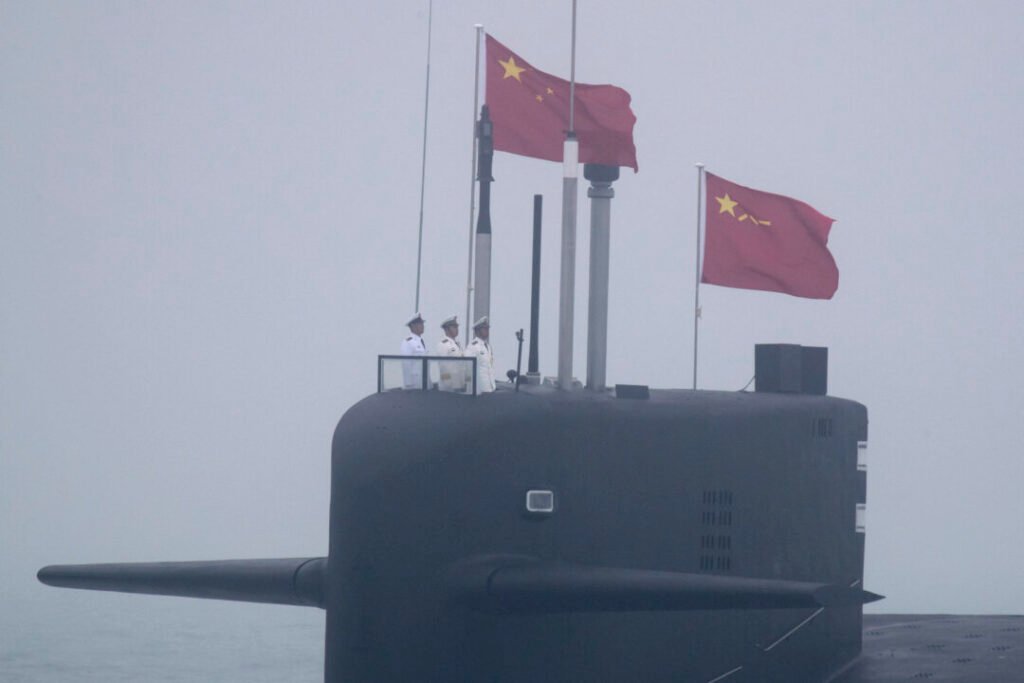
Beijing is unlikely to attack Taiwan in the near term even as a window of opportunity narrows, opting instead to attempt to coerce the island into a bloodless surrender, analysts say.
Taiwan is a self-governed democracy that the Chinese Communist Party (CCP) has never renounced the use of military force to annex.
An Aug. 17 analysis in The National Interest—a magazine published by the U.S. think tank Center for the National Interest—assesses that 11 of 13 indicators make a near-term assault on Taiwan more advantageous for Beijing than waiting two or three years.
These accelerating factors span shifting Taiwanese identity, Taiwan’s semiconductor dominance, growing U.S. commitment to Taiwan, and souring U.S.–China relations, lowering the bar for war.
Related Stories
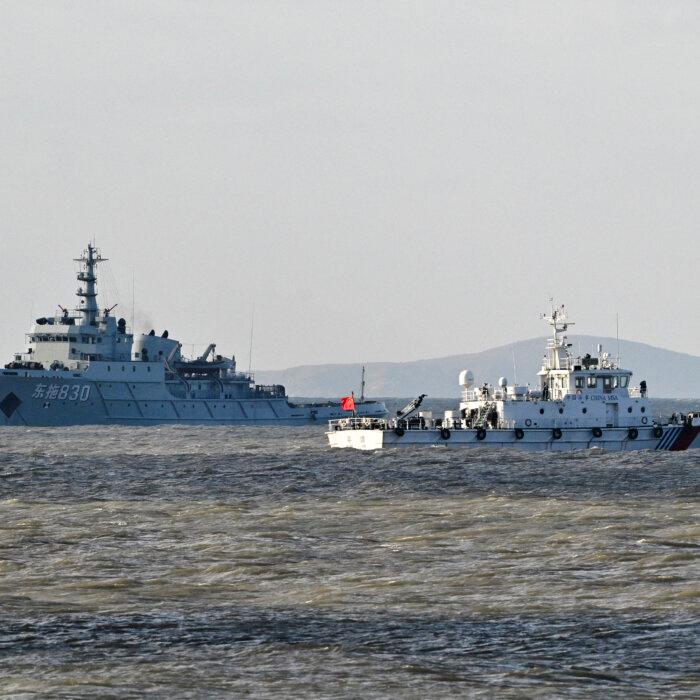
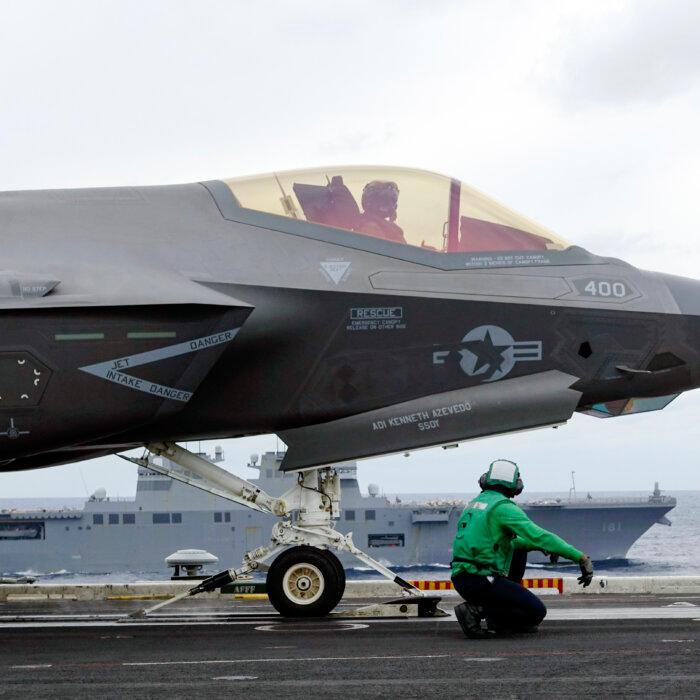
The analysis stopped short of predicting Beijing will certainly attack, saying “only God and [Chinese leader] Xi Jinping” know whether that will happen, and Xi himself ”may not even know for certain.”
Ian Tsung-yen Chen, a professor at the Institute of Political Science at Taiwan’s National Sun Yat-sen University, told The Epoch Times that while these indicators point to a shrinking window of opportunity for Beijing, an immediate assault remains unlikely.
“The U.S. and the international community are growing more prepared to counter China’s military threat against Taiwan, and Beijing may calculate its odds of prevailing are higher now than in the future,” Chen said.
“But in reality, could China actually seize the island if a conflict breaks out soon? I don’t believe they are certain of winning such a war.”
William Chih-tung Chung, an assistant research fellow at Taiwan’s Institute for National Defense and Security Research, said a vast array of shifting domestic and global variables, alongside Xi’s personal calculations, makes any imminent confrontation improbable.
“Treating a complex conflict as a simple checklist misses the reality of how state decisions are actually made,” Chung told The Epoch Times.
“Additionally, rather than seizing Taiwan by force, China would prefer to pressure the island into capitulating without a fight.“
US Deployment
The United States has used approximately 30 percent to 40 percent of ground attack and air and missile defense munitions since the war launched in February, it states.
Given “the several years needed to rebuild that arsenal, Washington may not have sufficient resources to mount a strong and durable defense of Taiwan,” the analysis said.
“Don’t forget U.S. forces stationed in South Korea and Japan, along with the substantial logistics and munitions capacity on U.S. soil itself,” he said.
“At the same time, Taiwan is continuously strengthening its own munitions stockpile.”
Taipei on Aug. 20 proposed an 18 percent increase in next year’s defense budget to fund drones, missiles, and other military hardware, marking the first time annual spending has topped 1 trillion New Taiwan dollars ($31.41 billion).

Taiwanese special operations troops take part in an air-infiltration drill during the Han Kuang 42 military exercises in Taoyuan, Taiwan, on Aug. 12, 2026. Courtesy of Taiwan Ministry of National Defense
In a similar vein, Chen said the United States is equipped to fight on multiple fronts, meaning the Middle East tensions will not create a defense vacuum around Taiwan.
“China cannot easily seize Taiwan just because the U.S. is preoccupied with another conflict,” Chen said.
“Furthermore, the U.S. has first island chain allies such as Japan and the Philippines, and their military capabilities haven’t been weakened by the Iran war.”
Economy and Military Readiness
The PLA’s need for more preparation time and China’s struggling economy are the two indicators that could delay Chinese plans, according to the analysis.
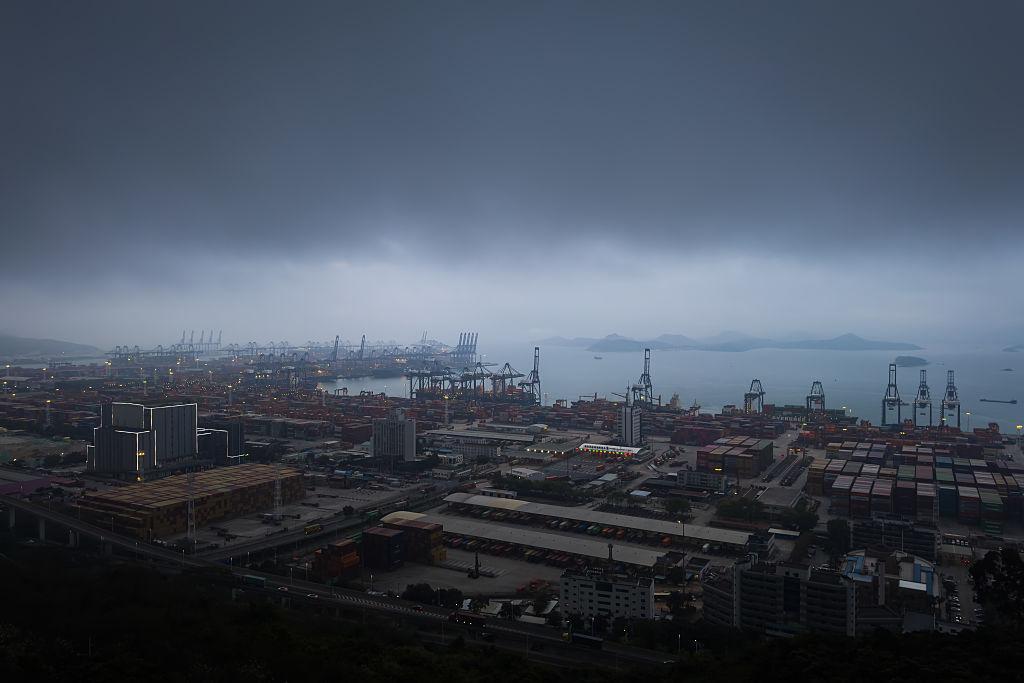
Yantian International Container Terminals under heavy storm clouds in Shenzhen, China, on April 11, 2025. Cheng Xin/Getty Images
Chung agreed with the analysis, saying Xi is unlikely to launch an attack without absolute certainty in the PLA’s combat readiness.
“I don’t believe Xi has a complete grasp of the PLA’s actual capabilities, Taiwan’s defense preparations, or the potential for U.S. intervention,” he said.
“No leader would start a war if they lack the confidence to win.”
Chung said that if Beijing failed to secure a swift victory over Taiwan, the economy would become a decisive factor in a protracted campaign.
“With the Ukraine conflict dragging on, the CCP is weighing the realities of a drawn-out struggle,” he said.
“Should an invasion become prolonged, economic resilience will ultimately dictate whether China can sustain the fight,” he said.
But Chen warned that under China’s authoritarian system, leaders often receive filtered information, which increases the risk of miscalculation and makes a potential conflict harder to predict.
“Internal intelligence flowing up the chain of command shapes Xi’s calculations, but those assessments are not always objective or accurate,” Chen said.
“China could resort to force purely to serve political needs—regardless of its economic or military constraints—meaning Taiwan cannot let its guard down.”