The Gateway to Poorvanchal
Nestled in the heart of Uttar Pradesh, approximately 27 kilometers east of Lucknow, lies the historically rich district of Barabanki. Known as the “Entrance to Poorvanchal,” this land has witnessed the ebb and flow of numerous civilizations, from the mythological eras of the Ramayana and Mahabharata to the tumultuous periods of medieval invasions and the heroic struggle for Indian independence.
The history of Barabanki is not merely a chronicle of dates and events; it is a vibrant tapestry woven with threads of spirituality, resilience, and cultural fusion. It is a land where ancient sages meditated, where epic battles were fought, and where the flames of freedom were fiercely guarded. This blog post delves deep into the rich and layered history of Barabanki, uncovering the stories that have shaped its unique identity.
The Mystical Origins: How Barabanki Got Its Name
The very name “Barabanki” is steeped in legend and folklore, with several fascinating theories explaining its origin. Understanding these stories is the first step in appreciating the district’s deep-rooted history.
The Legend of ‘Bhagwan Baarah’
One of the most popular mythological beliefs is that the name is derived from the incarnation of ‘Bhagwan Baarah’ on this sacred land. According to local lore, the area was originally known as ‘Baanhanya’ in reverence to this divine event. Over centuries, the name “Baanhanya” evolved through linguistic corruption to become “Barabanki”. This theory highlights the region’s ancient significance as a place of spiritual importance.
The Tale of the ‘Twelve Shares’ and the ‘Quarrelsome Men’
Another widely accepted theory, particularly mentioned in British-era gazetteers, links the name to the Muslim conquest period. Before this era, the area was known as Jasnaul, named after Raja Jas, a Bhar tribe king who ruled around 1000 AD.
After the Muslim conquest, the land was divided among twelve proprietors. The local Awadhi word ‘Banka’ means a “bully” or a “brave but quarrelsome man.” Because these twelve owners were constantly embroiled in disputes and bickering, the area came to be known as ‘Barah Banke,’ meaning “twelve quarrelsome men.” This term eventually became synonymous with the place, morphing into “Barabanki.” Another similar interpretation suggests the name comes from ‘Barah Banki’, which translates to “twelve shares of jungle” (ban meaning forest), reflecting the land’s division among twelve families.
The Administrative Choice: A Name of Convenience
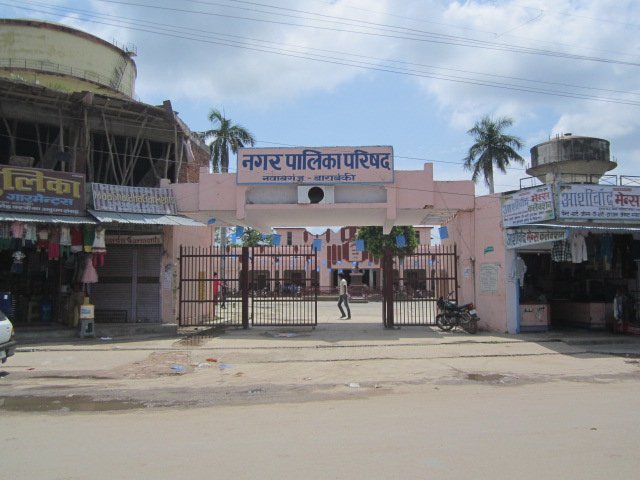
When the British East India Company formally established the district in 1856 after annexing the state of Oudh (Awadh), the administrative headquarters were initially at Daryabad. However, in 1859, the headquarters were relocated to the town of Nawabganj.
At that time, the British chose to name the district “Barabanki” for two practical reasons:
-
Avoid Confusion: “Nawabganj” was a common name for towns across India, and using it would have created administrative confusion.
-
Administrative Precision: The civil station was technically located in the small revenue village of Barabanki, rather than within the main town of Nawabganj itself.
Thus, the name “Barabanki,” with its rich and sometimes conflicting mythological and historical origins, was officially adopted by the British and continues to define the district today.
Barabanki in the Mythological Eras
The history of Barabanki is deeply intertwined with Hindu mythology, finding mention in the two great epics of India: the Ramayana and the Mahabharata.
The Ramayana Connection: The Land of Sage Vashisht
According to tradition, the district was part of the ancient kingdom of the Suryavanshi (Solar Dynasty) kings, whose capital was Ayodhya. This was the dynasty of King Dashrath and his son, Lord Ram.
The small town of Satrikh, located in the district, holds immense mythological significance. It is believed to have been the ‘Saptrishi’ ashram, the hermitage of the great sage Guru Vashisht. As the royal preceptor (Kulguru) of the Ikshvaku dynasty, Guru Vashisht is said to have preached and taught the young royal princes, including Lord Ram and his brothers, at this very location. Satrikh thus stands as a timeless link to the epic era of the Ramayana.
The Mahabharata Link: Pandavas in Exile and the Parijaat Tree
The region’s connection to the Mahabharata is equally profound. During that period, the area was part of the ‘Gaurav Rajya’ and was known as a holy land.
It is said that the Pandava brothers, along with their mother Kunti, spent a part of their 13-year exile in this region, residing on the banks of the river Ghaghra.
The village of Kintur (also known as Kunteshwar) on the banks of the Ghaghra is central to this legend. It is named after Queen Kunti. The Kunteshwar Mahadev Temple, established by Kunti herself, is a major attraction. But the most famous artifact is the world-renowned, ancient ‘Parijaat’ tree (a sacred Baobab tree) located here.
-
The Legend of the Parijaat Tree: According to myth, this divine tree emerged from the ashes of Kunti’s funeral pyre. It is believed that Arjuna, one of the Pandavas, brought this tree from heaven (Indralok) to please his mother. The tree is unique because it is said to be one of only four of its kind in the world and is famous for its fragrant flowers that bloom only for a few days. For centuries, it has been a place of great reverence, believed to be over 5000 years old.
Further archaeological and folk evidence, such as the Lodheshwar Mahadeva’s Shivling, points to the region’s importance as a spiritual and cultural center dating back over five millennia.
The Medieval Period: Invasions and the Establishment of Muslim Rule
The ancient tranquility of the region was disrupted with the advent of foreign invasions. The medieval period saw a power shift from Hindu kingdoms to the establishment of Muslim dominance in the area.
Sayyed Salar Masood’s Campaign
Historical documentation suggests that in 1030 AD, the region was attacked by Sayyed Salar Masood, the brother of the famed invader Mahmud of Ghazni. This marked the beginning of a period of conflict and change.
Annexation and Mughal Rule
Later in the same century, Qutubuddin Gaha of Madina is said to have annexed the local Hindu princely states, firmly establishing Muslim control over the region. From then on, the area became an integral part of various Sultanates.
During the reign of the great Mughal emperor Akbar, the district was administratively divided between the sirkars (administrative units) of Awadh and Manikpur. This period brought a degree of stability and a new administrative structure to the region. The Awadh region, in particular, began to prosper under the Mughals.
The Rise of the Nawabs of Awadh
As the Mughal Empire began to decline in the 18th century, the province of Awadh asserted its independence. The Nawabs of Awadh became powerful rulers, and the area that would become Barabanki district was integrated into their domain. Under the Nawabs, the region was divided into five main administrative units or chaklas: Daryabad-Rudauli, Ramnagar, Dewa-Jahangirabad Raj, Jagdispur, and Haidargarh. This was the structure that the British encountered when they began to expand their influence.
The Advent of the British and the 1857 Uprising
The arrival of the British East India Company marked a watershed moment in the history of Barabanki, as it did for the rest of India. The region became a hotbed of resistance against colonial rule.
Annexation of Oudh and the Creation of the District
In 1856, the British East India Company annexed the state of Oudh, citing gross misgovernance by the last Nawab, Wajid Ali Shah. This act was met with widespread discontent among the local nobility and the common people.
As a result of the annexation, the Barabanki district was formally established. Initially known as the Daryabad district with its headquarters at Daryabad (the town founded by Dariab Khan, a general under Mohammed Shah Shariqi), it was renamed and its headquarters shifted to Barabanki (then called Nawabganj) in 1859.
The First War of Independence: A Fierce Resistance
The annexation of Oudh was a primary catalyst for the Indian Rebellion of 1857, also known as the First War of Indian Independence. The people of Barabanki, under the leadership of their local kings and talukdars, played a valiant role in this uprising.
-
United Front: The talukdars of Barabanki and their forces joined the mutineers and fought bravely against the British. Raja Balbhadra Singh Chehlari is a legendary figure from this period. Along with approximately 1,000 revolutionaries, he is said to have sacrificed his life in the fight for independence from British rule.
-
The Last Battle: The last significant battle of the 1857 rebellion was fought in this district in December 1858. The revolutionaries made their final stand at a front in Bhitauli.
-
The Escape: Facing the overwhelming might of the British forces, the revolutionaries, along with iconic figures like Begum Hazrat Mahal and Nana Saheb, were forced to retreat. They left behind the Bhitauli front and entered the territory of Nepal to continue their struggle from there.
This period cemented Barabanki’s reputation as a land of courageous warriors who refused to bow down to colonial oppression.
The Ghadar of 1942 and Participation in the Freedom Movement
While the 1857 rebellion was a direct armed conflict, the Indian freedom struggle in the 20th century was characterized by mass movements of civil disobedience, in which the people of Barabanki participated with immense zeal and patriotism.
Gandhi’s Call to Action
When Mahatma Gandhi launched the Non-Cooperation Movement in 1921, it ignited the flame of independence across the nation, and Barabanki was no exception. The district actively participated by boycotting foreign goods and institutions.
-
A significant protest was organized against the arrival of the Prince of Wales in India.
-
At the Government High School in Nawabganj (now Barabanki), a large number of freedom fighters courted arrest. Among them was the prominent Congress leader, Shri Rafi Ahmad Kidwai.
The Salt Satyagraha and Khilafat Movement
The momentum continued to build. The district’s residents actively took part in the Khilafat Movement in 1922 and the Salt Movement (Namak Satyagraha) in 1930 as part of Gandhi’s civil disobedience campaigns.
The Quit India Movement: A Spirited Insurgency
The most explosive phase of the freedom struggle was the Quit India Movement of 1942. The people of Barabanki responded to Gandhi’s call of “Do or Die” with a revolutionary spirit.
-
The local leaders carried on their protests even when the District Congress Office was sealed by the British. They went underground and continued to organize resistance.
-
On August 24, 1942, in a bold act of defiance, revolutionaries looted the Haidergarh Post Office. This was a direct attack on a symbol of British authority.
-
Similar protests and attacks took place at the General Post Office (GPO) in Barabanki and in Satrikh.
The Barabanki Outpost Bomb Case also occurred on October 26, 1942, where revolutionaries like Brij Bahadur and Hans Raj planted a bomb at a police outpost. These were desperate and courageous acts of rebellion that played a crucial role in weakening British control.
Throughout these movements, countless people of Barabanki courted arrest and endured hardship for the cause of freedom. Their sacrifices culminated in the long-awaited independence of India on August 15, 1947, which was celebrated with great enthusiasm in every home.
Post-Independence Barabanki and Its Modern Identity
Since gaining independence, Barabanki has transformed from a small town into a significant administrative, economic, and cultural center in Uttar Pradesh.
From a Village to a Thriving City
When the British shifted the headquarters, the town was primarily comprised of the small revenue village of Barabanki and the nearby town of Nawabganj. The city has since grown and now includes several suburbs and villages, such as Banki, Barel, Satrikh, and Kurauli, forming a large municipal area. The city is the administrative headquarters of the Barabanki district and is part of the Ayodhya division.
Economic Hubs and Agriculture
The district’s economy has historically been agrarian. The principal crops cultivated include rice, wheat, pulse, sugarcane, and vegetables. Post-independence, the agricultural base has been strengthened with research institutions like the branch of the International Rice Research Institute (IRRI) located in Kursi, Barabanki.
The district is also known for its small-scale industries, handicrafts, and the production of traditional items. In recent years, it has seen growth in sectors like:
-
Menthol Farming: Barabanki is famous for its menthol farming, which has become a significant contributor to the local economy.
-
Bio-gas Plants and Animal Husbandry: Livestock-based farming and bio-gas plants are increasingly common economic activities.
A Hub for Education and Pilgrimage
Barabanki is gradually becoming an educational hub, with several professional and engineering colleges established in the city. Institutions like the Seth Vishambhar Nath Institute of Engineering and Technology and the Jahangirabad Institute of Technology are prominent examples.
The city also remains a major center for religious and cultural tourism. It serves as a base for pilgrims visiting:
-
Satrikh: The ashram of Guru Vashisht.
-
Dewa Sharif: The shrine of the revered Sufi saint Haji Waris Ali Shah, who preached “Jo Rab Wahi Ram” (The God is the same as Ram), promoting communal harmony.
-
Kintur: The famous Parijaat tree and Kunteshwar Mahadev Temple.
-
Mahadeva Temple in Ram Nagar and Lodheshwar Mahadev with its ancient Shivling, which continue to draw thousands of devotees.
Major Attractions: A Testament to the Rich Heritage
The history of Barabanki is not just confined to books; it is alive and well in its numerous historical and religious sites. A visit to these places offers a tangible connection to the district’s glorious past.
1. Parijaat Tree and Kunteshwar Mahadev Temple (Kintur)
-
Significance: A major mythological site linked to the Mahabharata. The 5000-year-old Parijaat tree is a rare botanical wonder and a sacred pilgrimage site. The adjacent Kunteshwar Mahadev temple, built by Queen Kunti, adds to the religious importance of this place.
2. Dewa Sharif (Dewa)
-
Significance: The birthplace and final resting place of the 19th-century Sufi saint, Haji Waris Ali Shah. The annual ‘Urs’ fair at the shrine attracts devotees from all faiths, reflecting the saint’s message of spiritual unity and communal harmony.
3. Satrikh (Saptrishi)
-
Significance: Believed to be the ancient hermitage of Sage Vashisht, the preceptor of Lord Ram. For followers of Hinduism, this is a site of immense historical and religious importance, directly connected to the Ramayana.
4. Masoli Village
-
Significance: The native village of the legendary Congress leader and former Union Minister, Rafi Ahmed Kidwai. Visiting his ancestral village provides a glimpse into the life of one of India’s most prominent freedom fighters and politicians from the region.
5. Dhanokhar Hanuman Mandir
-
Significance: A famous temple dedicated to Lord Hanuman, located right in the heart of the city. Known for its large gathering of devotees on Tuesdays and Saturdays, the temple is a major spiritual center for locals.
6. Shahid Smarak and Kotwali
-
Significance: The historic Barabanki Kotwali and the Shahid Smarak (a World War II memorial) are potent symbols of the city’s colonial past and its brave freedom fighters.
Conclusion: The Unfolding Story of Barabanki
The history of Barabanki is a compelling saga that spans from the mists of ancient mythology to the modern era of progress. It is a land that has been shaped by the footsteps of gods and sages, the battles of legendary warriors, the resilience of its people against colonial rule, and the forward march of development in independent India.
From the legendary “Bhagwan Baarah” to the “Barah Banke,” from the ashram of Sage Vashisht to the battlefield of 1857, from the protests of the Quit India Movement to the construction of the Purvanchal Expressway, the district of Barabanki has stood as a silent witness to the ebb and flow of time. It remains a living museum of Indian history, a testament to the spirit of its people, and a vibrant gateway to the culturally rich region of Poorvanchal.
Today, as you travel through Barabanki, you are not just passing through a city in Uttar Pradesh; you are traversing a timeline of the very soul of India. The echoes of its glorious past continue to resonate in its temples, dargahs, trees, and the hearts of its people, promising an intriguing story for anyone willing to listen.
External Resources
-
District Barabanki Official Website – History Section: For official historical records and facts.
-
Barabanki District Courts – History: For the legal and administrative history of the district.
Frequently Asked Questions (FAQs) on Barabanki History
1. What is the mythological origin of the name ‘Barabanki’?
The most popular mythological legend suggests the name derives from ‘Baanhanya,’ a place where ‘Bhagwan Baarah’ was incarnated. This name gradually corrupted to Barabanki over time.
2. How did the British establish the Barabanki district?
The British established the district in 1856 after annexing the state of Oudh. Initially called the Daryabad district, its headquarters were moved to Barabanki (Nawabganj) in 1859 to avoid confusion with other towns named Nawabganj.
3. What is the significance of the Parijaat Tree in Barabanki?
The Parijaat tree in Kintur, Barabanki, is a sacred Baobab tree believed to be over 5000 years old. Legend says Arjuna brought it from heaven for his mother Kunti, and it is one of only four of its kind in the world.
4. What was Barabanki’s role in the Indian freedom struggle?
Barabanki played a very active role. It saw fierce resistance in the 1857 rebellion under leaders like Raja Balbhadra Singh Chehlari. Later, its people actively participated in the Non-Cooperation, Salt, and Quit India Movements, with figures like Rafi Ahmed Kidwai leading from the front.
5. Which famous personalities hail from Barabanki?
Barabanki has produced many notable figures, including freedom fighters like Rafi Ahmed Kidwai, the politician Mohsina Kidwai, the legendary Urdu poet Khumar Barabankvi, the Sufi saint Waris Ali Shah, and the famous actor Naseeruddin Shah, among others