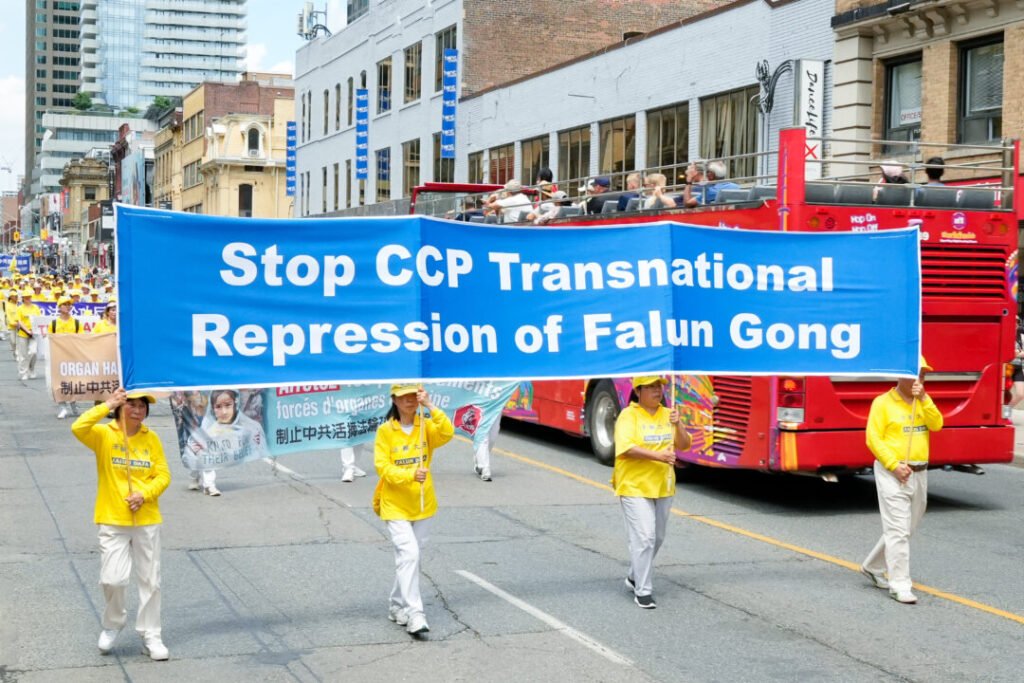

Falun Gong practitioners parade through downtown Toronto on July 13, 2025, to commemorate the 26th anniversary of the Chinese Communist Party’s persecution against Falun Gong. Vincent Du/The Epoch Times
Diaspora communities and dissidents in Australia facing threats and oppression from foreign governments will have the opportunity to make a submission about their concerns to parliament.
An inquiry is a detailed investigation conducted by a group of senators into a specific policy or issue, and will require evidence be gathered from public and private stakeholders—the process is often conducted publicly and allows for open scrutiny.
“We have heard about officials filming protests, families overseas hauled in for questioning over a relative’s social media post, and fake accounts set up to harass community leaders. This inquiry is a chance to get answers.
“Many diaspora share the common thread of different governments reaching into Australia to watch, threaten or silence those speaking out.”
Related Stories


The inquiry will assess:
-
the nature, scale and methods of transnational repression activities affecting individuals and communities in Australia;
-
the impact on diaspora communities, democratic engagement and public advocacy of transnational repression;
-
the adequacy of current legislative and institutional frameworks to address transnational repression in Australia;
-
existing and needed protection and support mechanisms for affected individuals and communities including education and community engagement strategies;
-
how to support individuals and targeted communities to effectively respond to transnational repression with both community and government collaboration;
-
international cooperation and global best practice to address transnational repression;
-
recommendations for legislative and policy reforms
Submissions close on Oct. 19.
What is Transnational Repression?
Groups that have reported alleged transnational repression include Pakistani, Tibetan, Kurdish, Indian, Palestinian, West Papuan, Chinese, Uyghur, Tibetan, and the spiritual practice Falun Gong.
The Department also said it believes transnational repression or community interference to be under-reported as a crime-type due to its sensitivity, and that people will self-censor to avoid upsetting foreign governments.
Foreign Interference Now a Major Focus
Falun Gong practitioners outside of China have been subjected to transnational repression from the CCP since the practice was banned in China in July 1999.
“Meanwhile, activities which already carry great risk within China—such as promoting minority languages, documenting human rights abuses, or campaigning for the release of those detained because of their expression of culture, opinion or belief—could be further criminalised.”