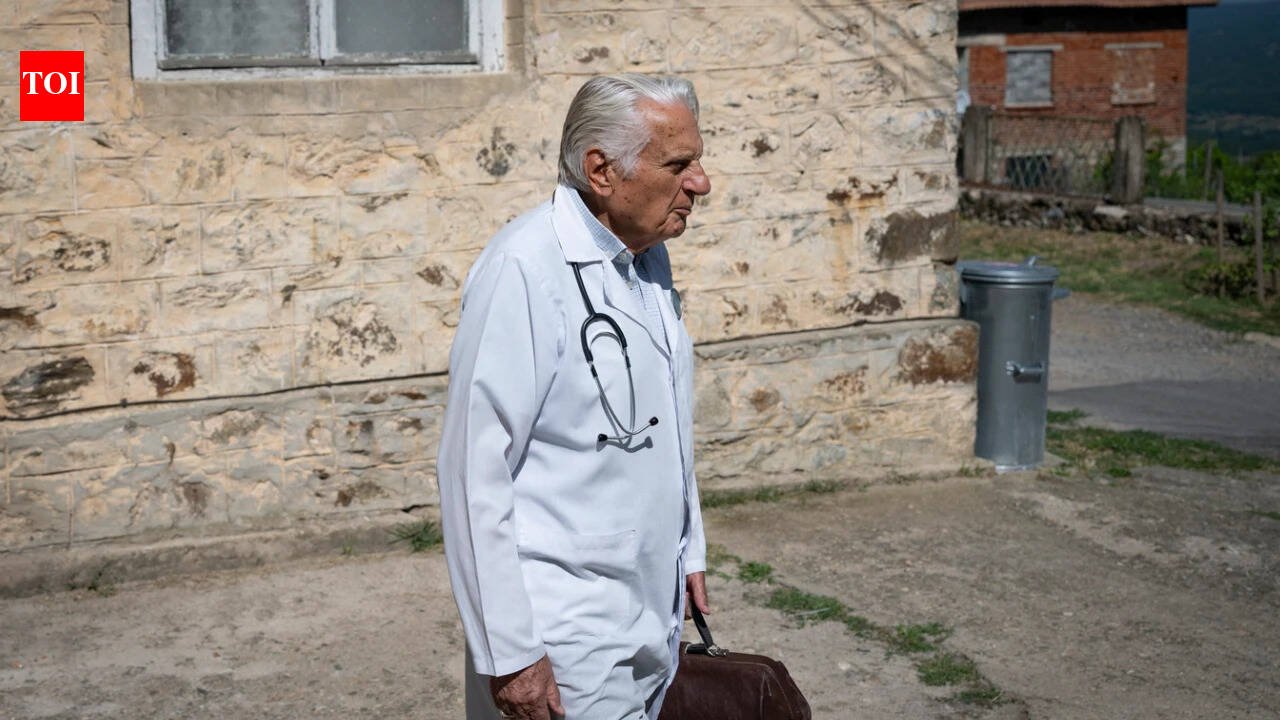
A 90-year-old doctor in a Bulgarian mountain village is continuing to see patients, make home visits and travel between rural communities, even as much of his generation has long retired. Dr Kiril Apostolov works in Skrat, near the borders with Greece and North Macedonia, and has more than 1,500 patients spread across several villages. His story, however, is not simply about an unusually long career. It also reveals what happens when an ageing healthcare workforce has too few younger doctors to replace it.
His working day begins early
Apostolov starts his day at around 7am. He drives roughly 16 kilometres from his home in Petrich to his clinic in Skrat, where patients may already be waiting.He opens the practice at 8am. His patients include people dealing with common chronic conditions such as high blood pressure and diabetes. Around midday, he leaves the clinic for home visits, particularly for elderly or less mobile patients. Later, he travels to nearby villages to see others.The image is striking: a 90-year-old doctor carrying his medical bag up steep village roads because some patients cannot make the journey themselves.
Six decades of medicine behind him
Apostolov began practising medicine in 1962. Over the years, he worked as a district doctor, headed a hospital department in Petrich and later ran a cardiology practice.He moved to Skrat in 2000, when he was already over 60. More than two decades later, he is still sitting behind the same kind of old wooden desk, examining patients and making house calls.He has acknowledged that medicine has changed greatly during his career. But he also points to something that cannot be learnt quickly: experience.
Why is he still working at 90?
Apostolov has been clear about his reason. “For the moment, I feel fine. The work doesn’t weigh me down,” he said, adding that he will continue as long as he is well and his patients are satisfied.There is another side to the story, though. Apostolov has said he would gladly step aside for someone willing to take over. The problem is that younger doctors are not coming.That makes his story less about retirement and more about necessity. His patients need a doctor, and the village has struggled to find another one.
Bulgaria’s rural healthcare problem
Eurostat data show how unusual Bulgaria’s ageing medical workforce has become. In 2023, 54.5% of practising doctors in Bulgaria were aged 55 or older, the highest share among EU countries with available data. The average age of general practitioners in the country is now above 61.Rural communities feel this shortage particularly strongly. Young doctors can be reluctant to choose remote practices because of workload, bureaucracy, pay and limited career opportunities, according to the Bulgarian National Association of General Practitioners.