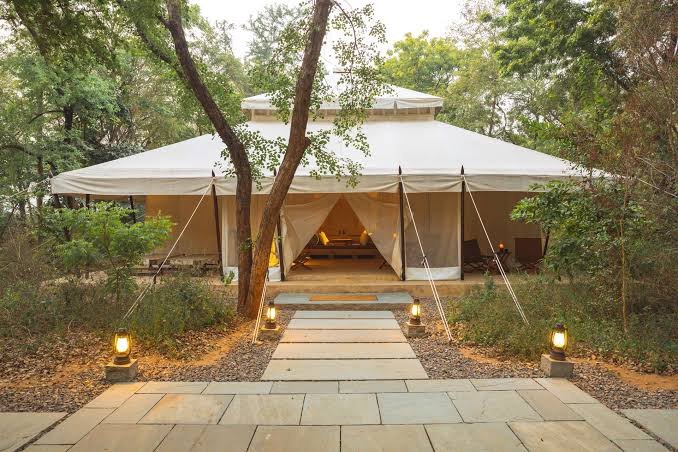
The Unspoken Allure of Aman
In the vast and often ostentatious world of luxury travel, one name stands apart, whispered among discerning travelers with a reverence usually reserved for sacred spaces. That name is Aman. Derived from the Sanskrit word for “peace,” Aman is more than a hotel brand; it is a philosophy, a feeling, a state of being . It’s the feeling of warm sand between your toes on a private island in the Philippines, the serene silence of a Japanese Zen garden, or the breathtaking view of ancient temples from a hilltop in Indonesia. It is the antithesis of the crowded, hurried, and impersonal. An Aman is a sanctuary—a place where the outside world melts away, replaced by an immediate sense of calm and belonging.
Since its founding in 1988 with the opening of Amanpuri in Phuket, Thailand, Aman has strategically evolved from a collection of intimate, remote retreats into the world’s most pioneering and intuitive lifestyle brand . This journey, now spanning over three decades, has been guided by a singular and original intent: to provide a level of service and experience that is peerless in every way.
Today, the group boasts a portfolio of 36 hotels, resorts, and residences in 21 countries, with a robust pipeline of new projects that continue to push the boundaries of hospitality . But what is the secret to Aman’s enduring mystique? Why do “Amanjunkies”—loyal guests who travel the world to stay at every property—remain so devoted? This comprehensive guide delves into the heart of the Aman brand, exploring its rich history, its unparalleled design ethos, its commitment to wellness and sustainability, and the exciting future that awaits.
The Genesis of Peace: The Aman Story
From Adrian Zecha’s Vision to a Global Phenomenon
The story of Aman is the story of a singular vision, brought to life by a man who saw luxury not as a display of wealth, but as a state of mind. Adrian Zecha, a journalist turned hotelier, was the visionary architect behind the Aman concept. In the late 1980s, he sought to create a new kind of hospitality—one that prioritized space, privacy, and a profound connection to the local environment over the glitz and glamour of traditional five-star hotels . His idea was simple yet revolutionary: build small, intimate resorts in breathtaking locations that were largely undiscovered, and make the guest feel as if they were arriving at a private home.
This philosophy was perfectly realized in the first Aman, Amanpuri, which opened on the west coast of Phuket, Thailand . The name itself, meaning “place of peace,” set the tone for everything that followed. Instead of a towering hotel complex, Amanpuri offered a cluster of secluded pavilions overlooking the Andaman Sea. The architecture was a sublime blend of traditional Thai design and minimalist modernity, and the service was intuitive, anticipating guests’ needs before they even arose.
This early success spawned a new brand, defined by a set of core principles that remain unwavering today. The “Spirit of Aman” is an intangible quality, a narrative informed and enriched by culture, community, and nature . It is a story not told, but felt. As the brand grew, this spirit was carefully cultivated by its staff, many of whom have been with the company for decades, creating an unbroken chain of authenticity and deep-rooted connection to the communities in which they operate .
The Evolution of a Brand: From Retreats to Lifestyle
In 2014, Adrian Zecha sold his stake in the company, ushering in a new era of expansion under the leadership of Chairman and CEO, Vlad Doronin . While some long-time loyalists have questioned whether the brand’s rapid growth has diluted its original intimate spirit, Doronin has steered the company with a vision to evolve, not abandon, the founding principles .
This evolution has seen Aman expand from its remote roots into vibrant urban centers with properties like Aman Tokyo, Aman New York, and the recently opened Aman Nai Lert Bangkok . These urban sanctuaries prove that the Spirit of Aman can thrive in the heart of a bustling metropolis, offering an “oasis of calm” just steps away from some of the world’s busiest streets.
Furthermore, the brand has extended its philosophy beyond the physical confines of its properties. The introduction of Aman Skincare, Sva supplements, and Aman Fine Fragrance allows guests to bring the spirit of serenity into their own homes . The launch of The Essentials by Aman, a ready-to-wear collection, and the creation of a sister brand, Janu, which translates to “soul,” signal a significant shift . Aman is no longer just a hotelier; it is a holistic lifestyle brand, crafting experiences and products that embody a way of life centered on peace, wellbeing, and understated elegance. This is further cemented by the upcoming “Aman at Sea,” which will bring the Aman spirit to the world’s oceans with the launch of its inaugural yacht, Amangati, in 2027 .
The Architecture of Serenity: Aman’s Design Philosophy
A Global Portfolio of Architectural Masterpieces
An Aman is as much a work of art as it is a place to stay. The brand’s architectural and design philosophy is unwavering: to create buildings that are in complete harmony with their environment . Each property is “created holistically and evolves organically, the architecture always true to each destination” . You will find no two Amans alike because they are not a template but a response to a specific place, its history, its climate, and its culture .
Aman has collaborated with some of the world’s leading architects, many of whom have become synonymous with the brand’s aesthetic. From the early days, the influence of Ed Tuttle, who designed Amanpuri and many of the first properties, established the brand’s love for clean lines and local materials. This legacy was carried forward and expanded upon by masters like Jean-Michel Gathy of Denniston and Kerry Hill Architects .
-
Jean-Michel Gathy’s Influence: Gathy, a Belgian architect, brought a dramatic, palatial scale to certain Amans, as seen in Amanzoe in Greece, a modern-day Acropolis overlooking the Aegean, and Aman Venice, a 16th-century palazzo on the Grand Canal . His design for the newly opened Aman Nai Lert Bangkok is a masterclass in spatial intelligence, where Thai heritage and Aman’s minimalism converge in a “dialogue of texture and quiet authority” .
-
The Legacy of Kerry Hill: The late Australian architect Kerry Hill and his firm (Kerry Hill Architects) are responsible for some of the most iconic Aman properties, including Aman Tokyo, Aman Kyoto, and the highly anticipated Aman Dubai . Their signature style is a refined interpretation of local architecture—think light timbers, minimal furnishings, and the strategic use of traditional elements like Japanese bathhouses (onsen) or Middle Eastern mashrabiya screens.
Spotlight: Aman Dubai – A Case Study in Cultural Sensitivity
The upcoming Aman Dubai serves as a perfect example of how the brand’s design philosophy is applied to new, culturally rich contexts. Located on the newly formed Dubai Peninsula, the resort and residences are designed by Kerry Hill Architects . Director Tanuj Goenka describes the concept as “a living oasis,” drawing inspiration from the region’s rich architectural and cultural heritage, from its Bedouin roots to its vibrant present .
The design features a “solid rostrum of stone walls and gardens that step down toward the beach,” a deliberate nod to the region’s geography . The architects have woven in culturally significant elements, from ancient weaving techniques that inspire shade structures to the use of local materials like limestone and palm leaves . The goal is to “seamlessly integrate the past…to its vibrant present,” creating a strong sense of place that honors local traditions while providing a sanctuary of modern comfort . In three words, Goenka sums up the spirit of the project: Coastal, Verdant, and Crafted .
https://example.com/aman-dubai-architecture.png
This commitment to cultural sensitivity is the bedrock of every Aman design. Whether it’s the “spatial archive” of crafted wood, leather, and gold at Aman Nai Lert Bangkok , the “raw, authentic” feel of Amangiri in the Utah desert, or the “sandy cushion” of the island that is Amanpulo, the architecture never fights the landscape—it enhances it .
The Aman Experience: A Journey Beyond Hospitality
36 Destinations, 21 Countries, One Spirit
Aman is a global collection of unique destinations, each offering a distinct narrative while remaining tethered to the brand’s core philosophy of peace. From the heights of the Himalayas to the depths of the desert, the Aman map is a testament to the brand’s pioneering spirit and its quest for the world’s most extraordinary locations .
https://example.com/aman-world-map.png
-
Asia: The Soul of Aman: Home to the brand’s first and most iconic properties, Asia is where the Aman philosophy was born. This includes Amanpuri (Thailand), the legendary Amanjiwo in Java overlooking the UNESCO-listed Borobudur temple , Amankora in the spiritual kingdom of Bhutan, and the serene retreats of Aman Tokyo and Aman Kyoto in Japan .
-
The Americas: Aman’s presence in the Americas is marked by dramatic natural landscapes. Amangiri in Utah is a masterpiece of desert minimalism , while Amangani in Wyoming offers a mountain retreat. Aman New York is a pinnacle of urban sanctuary . The brand is expanding its footprint with Aman Beverly Hills, Aman Miami Beach, Amanvari in Mexico, and the newly announced ranch resort, Amansanu, in the Texas Hill Country .
-
Europe & Africa: From the canals of Aman Venice to the dramatic Adriatic coast of Aman Sveti Stefan in Montenegro and the slopes of Aman Le Mélézin in France and Aman Rosa Alpina in the Italian Dolomites, Europe is a testament to the brand’s versatility . Africa is represented by the stunning Amanjena in Morocco. The brand is expanding with a groundbreaking safari retreat, Aman Karingani, in Mozambique’s Karingani Game Reserve .
Exclusive Experiences: Aman’s Way of Immersion
What truly sets Aman apart is the nature of the experiences it curates. It’s not just about seeing a place; it’s about living it. Aman provides “unprecedented access to some of the world’s most storied wonders,” with 14 of its properties bordering or near UNESCO-protected sites .
The “Wonders of Aman” include experiences that are often impossible for the average traveler. At Amanjiwo, guests can join local monks for a Pradakshina procession, a meditative walk around the ancient Borobudur temple before it opens to the public . At Amanpulo, one can swim beside the world’s second-largest population of whale sharks . You can receive a morning water blessing at the sacred Tirta Empul temple in Bali, or enjoy a private sunrise yoga session at the deserted Maharaja’s fort in India .
These experiences are not tourist activities but deeply transformative, immersive journeys. They are “tales informed and enriched by culture, community, nature,” an inimitable narrative that guests become a part of . This commitment to authenticity is what makes the “Spirit of Aman” so powerful.
The Art of Service: Intuitive and Personal
The heart of the Aman experience lies in its people. The service is legendary because it is not a scripted performance; it is an intuitive, almost telepathic anticipation of a guest’s needs. Aman staff are encouraged to be themselves, to build genuine relationships with guests, and to treat the resort as their own home. Many have been with the company for years, creating a deep institutional knowledge and an unwavering commitment to the brand’s values .
This level of service is what transforms a stay into a feeling of “belonging” . The staff don’t just serve you; they welcome you as a personal guest into their sanctuary. This is the essence of the “Spirit of Aman,” gracefully shared by the staff in everything they do.
Wellbeing and Sustainability: The Core of the Aman Ethos
A Holistic Approach to Wellness
Aman’s commitment to wellbeing is not a recent addition but a core pillar of its philosophy. It is woven into the fabric of every resort, from the peaceful architecture to the farm-to-table cuisine and, most importantly, the world-class spas.
Aman’s spas are not just treatment rooms; they are sanctuaries designed to restore balance to the “body, mind, and spirit” . They draw on ancient healing traditions from around the world, from the Ayurvedic treatments in India to the Japanese onsen bathing rituals in Kyoto and the thermal healing waters of Salsomaggiore Terme in Italy .
Key Wellness Programs:
-
Individual Wellness Immersions: These are results-driven, multi-day programs designed for transformation. A minimum of four nights, these immersive retreats focus on everything from detoxification to stress management, with expert guidance .
-
Signature Treatments & Rituals: Each spa offers a menu of treatments, from Aman’s signature Grounding, Purifying, and Nourishing journeys to locally inspired therapies .
-
Partnerships with Experts: Aman has partnered with global wellness icons like tennis legend Novak Djokovic, who is Aman’s Global Wellness Ambassador and has curated specialized programs like the Mobility and Recovery Programme and Detoxification Programme at various resorts .
-
Thermal Journeys: Many Amans feature extensive hydrotherapy facilities, including the famous flotation pavilion at Amangiri and the banya and hammam treatments at Amanoi in Vietnam .
Sustainability and Social Responsibility
Aman’s commitment to preserving the world’s most precious environments is not a marketing ploy but a foundational principle. As stated on their sustainability page, “Our ethos has always been to support the well-being of people, society, and our planet, Earth” . The company aligns its strategy with the United Nations Sustainable Development Goals and the four pillars of the Global Sustainable Tourism Council: local heritage, local culture, environment protection, and social responsibility .
Key Sustainability Initiatives:
-
UNESCO Protection: With 15 properties near UNESCO sites, Aman actively supports these protected areas both financially and in-kind .
-
Culture & Craftsmanship: They are dedicated to preserving indigenous traditions, employing local artisans, and celebrating local cuisine .
-
Environmental Protection: Aman is committed to protecting native ecosystems, waste management, water conservation, and eliminating single-use plastics . Many properties have kitchen gardens to grow organic produce .
-
Social Responsibility: The group prioritizes hiring locals, supports education, orphanages, and female empowerment, and promotes gender equality and diversity .
The Future of Aman: Expansion and New Horizons
The brand’s journey is far from over. Under the leadership of Vlad Doronin, Aman has an ambitious pipeline that continues to redefine what is possible in luxury travel. The expansion plans are robust, with a clear strategy to solidify its presence in key markets while venturing into new and exciting territories.
Amansanu: Redefining the American Ranch Experience
One of the most anticipated announcements is Amansanu, a ranch resort in the Texas Hill Country . This marks a first for the brand, venturing into the “ultra-luxury ranch” category that has been dominated by a few key players. Located 90 minutes from Austin, the resort is designed by Seattle-based Olson Kundig, a firm known for its sensitivity to natural settings . With a main lodge, a creekside spa, stables, and private residences, Amansanu is set to redefine the Texas weekend getaway, offering a seclusion and sophistication that the region has yet to see . As travel advisor Elizabeth Benson noted, “I think it will redefine what a weekend in Texas can look like” .
The Boldest Venture: Aman Karingani in Mozambique
Aman is finally answering the call of its loyalists for an African safari retreat with the announcement of Aman Karingani in Mozambique . Situated within the 150,000-hectare Karingani Game Reserve, the resort will feature 30 standalone pavilions and a central lodge, offering an immersive experience in one of Africa’s most pristine and diverse ecosystems . This marks the brand’s first foray into the safari space, signifying its commitment to offering transformative experiences connected to nature . Chairman and CEO Vlad Doronin emphasizes that this is a “milestone for the brand,” bringing its hallmarks of “peace, genuine hospitality, and intuitive service” to “Africa’s wild heart” .
Expanding the Urban Portfolio
Aman’s success in cities like Tokyo and New York has shown the universal appeal of its sanctuary concept. The brand is continuing this momentum with high-profile urban projects .
-
Aman Miami Beach: Set to open in 2026 on Miami Beach, this project is a collaboration between Jean-Michel Gathy (Denniston) and Kengo Kuma, promising a stunning juxtaposition of minimalist design and the vibrant Miami skyline .
-
Aman Beverly Hills: Slated for 2027, this property on Wilshire Boulevard, designed by Kerry Hill Architects, will offer a sophisticated urban retreat with a hotel, branded residences, and an Aman Club .
A New Frontier: Aman at Sea
Perhaps the most ambitious new venture is Aman at Sea. The brand is extending its vision onto the open water with the launch of its first yacht, Amangati, in 2027 . This reimagines ocean travel through the lens of Aman’s core values: privacy, peace, and genuine hospitality. With expansive suites and immersive wellness at sea, Amangati promises to bring the Spirit of Aman to the world’s oceans .
Conclusion: An Inimitable Legacy of Peace
From a single vision on a Thai beach to a global empire of 36 sanctuaries and a burgeoning lifestyle brand, the journey of Aman is a testament to the power of a powerful, unwavering idea. It is the idea that true luxury is a feeling of peace and belonging, a profound connection to a place and its people, and an escape from the noise of the ordinary world.
While the brand has evolved and expanded, its guiding principle remains constant: to instill peace in everyone it touches . This is the “Spirit of Aman”—a narrative emulated by many but delivered by Aman, it remains inimitable.
Whether you are a seasoned “Amanjunkie” or discovering the brand for the first time, the world of Aman offers a portal to places of extraordinary beauty and profound calm. It is more than a place to stay; it is a way of being. It is a promise of serenity, offering an oasis of peace in a world that needs it more than ever.
Frequently Asked Questions (FAQs)
1. What does “Aman” mean?
Aman is derived from the Sanskrit-derived word for ‘peace’ . This single word perfectly encapsulates the brand’s entire philosophy of creating sanctuaries of tranquility and serenity for its guests .
2. Who is the owner of Aman Resorts?
Aman Resorts is chaired and owned by Russian entrepreneur Vlad Doronin, who acquired a controlling stake in the company in 2014 . Prior to this, the brand was founded and owned by Adrian Zecha.
3. What is the sister brand of Aman?
Aman’s vibrant sister brand is Janu. Deriving its name from the Sanskrit word for ‘soul’, Janu encompasses hotels, residences, and lifestyle experiences that are alive with energy and social connection, offering a complementary but more dynamic experience than the serene peace of Aman .
4. How many Aman resorts are there worldwide?
Currently, Aman has a portfolio of 36 hotels, resorts, and private residences located in 21 countries around the world . This number is set to grow significantly with their robust pipeline of future projects.
5. Where is the most famous Aman resort?
This is subjective, but several are legendary. Amanpuri in Phuket, Thailand, is the original property and is thus incredibly famous. Amangiri in Utah, USA, is iconic for its stark desert beauty and has been featured extensively in popular culture. Aman Tokyo and Aman Venice are also highly acclaimed for their masterful urban transformations.