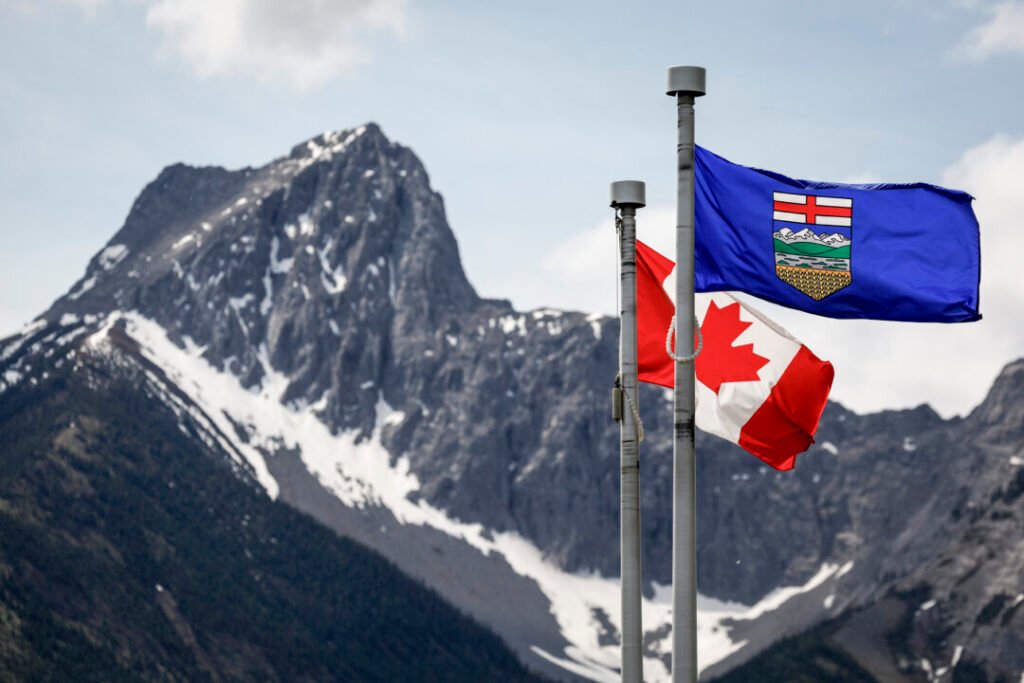

A Canada flag, left, and an Alberta flag flap in the breeze with Wedge Mountain in the background at the site of the G7 Leaders meeting in Kananaskis, Alta., June 2, 2025. The Canadian Press/Jeff McIntosh
Separating from Canada could cost Alberta up to $170 billion over the first five years, a report commissioned by the province suggests.
The report’s estimate takes into account the cost of building new infrastructure, hiring an estimated 70,000 civil servants to manage state functions, and assuming Alberta’s share of the federal debt.
The report also examines two scenarios for separation. The first describes a relatively seamless process in which negotiations with Ottawa are “quick and favourable” to Alberta. The second describes a longer and more challenging transition if the federal government takes a hardline stance during negotiations.
Scenarios
Under the first scenario, in which Alberta retains access to major trade markets, the province would eventually have a higher gross domestic product and lower taxes, but the report forecasts that these outcomes would take several decades to materialize.
“Any potential economic recovery could take many years following the disruption of separation and would depend on very specific conditions, including sustained high oil prices, that could not be guaranteed through negotiations,” the report said.
Under the second scenario, in which the separation process is lengthy, the report projects “lasting economic and fiscal challenges for both Alberta and Canada.” The scenario includes a long-term reduction in GDP, higher unemployment and taxes, and a potential ongoing annual budget deficit of more than $30 billion for Alberta.
Related Stories

“Even after 20 years, employment could be nearly five percent lower and Alberta’s economy more than 16 percent smaller than if the province remained in Canada,” the report found.
Other Considerations
The report also said the short-term consequences of separation could result in “significant economic disruption and costs for Albertans,” even if negotiations were amicable.
“Alberta separating from Canada and becoming an independent country involves far more than just drawing new borders and building a new state, picking new politicians and deciding on new policies,” the report says. “It completely changes how public services, trade, taxes and laws work.”
Separation would mean Alberta would no longer make equalization payments, but the province would also assume additional responsibilities and expenditures, including immigration, defence and federal public services. It would also take on responsibility for programs such as Old Age Security, employment insurance and pensions, while assuming an estimated $208 billion to $327 billion in additional debt, according to the report.
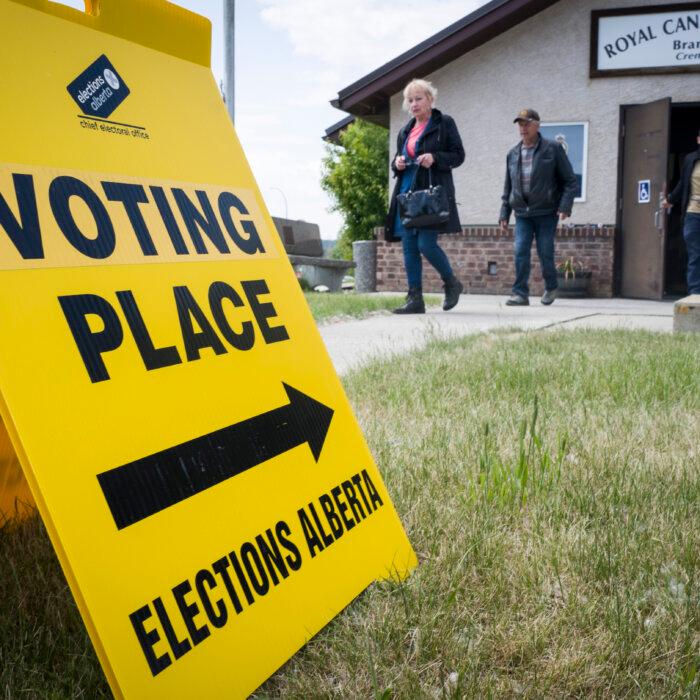
Premier Danielle Smith’s government commissioned the report in June to provide Albertans with information on the potential costs of separation ahead of an Oct. 19 vote on whether residents want to remain in Canada or hold a binding referendum on secession.
Finance Minister Jason Nixon said in a statement that the costs and logistical challenges outlined in the report support the province’s position that Albertans should vote to stay in Canada.
Other Reports
Pro-separation group the Alberta Transition Council released a 214-page report on separation in September that featured a more optimistic outlook on leaving Canada, estimating the total transitional cost of separation to be roughly $6 billion.
Meanwhile, the public policy think tank Canada West Foundation released a report the same month that placed the setup cost of separation at more than $200 billion and ongoing costs of at least $50 billion annually.
The Canadian Press contributed to this report.