NR | 1h 43m | Comedy, Drama, Romance | 1949
By 1949, the country had just survived a major depression and a full-scale world war, yet other problems now emerged, as seen in “Letter to Three Wives.”
Returning veterans were trying to find homes, young couples were getting married in huge numbers, lots of babies were being born, and American factories had returned to making things people could buy for their homes.
People worried about the little things. Once food was on the table and bad people were no longer shooting at them, husbands considered it a problem that their wives made more money than they did. A rich couple worried that their marriage may not be as secure as they thought it was the day before.

Brad Bishop (Jeffrey Lynn) talks with his wife, Deborah (Jeanne Crain), in “A Letter to Three Wives.” 20th Century-Fox
“A Letter to Three Wives” was released amid that postwar rush toward domestic normalcy. Its suburban-New York setting belongs to an America filling up with new families and many people trying to climb social ladders.
One of the couples featured met during wartime service, which gives the movie an historical proximity to everything that had just happened. Uniforms, overseas duty, and global war were recent memories. The conversation has moved on to salaries, outfits, dinner dances, and whose spouse has been paying too much attention to whom.
Related Story
Writer-director Joseph L. Mankiewicz apparently knew there was plenty of combat happening around the average dinner table. His screenplay can be nasty, funny, and occasionally cruel about the little calculations people make inside marriages.
Hollywood rewarded him with Oscars for writing and directing, and he repeated the trick one year later with “All About Eve,” a remarkable achievement that hasn’t been matched in the decades since.
Three Wives, One Missing Husband

Porter (Paul Douglas) and his wife Lora Mae Hollingsway (Linda Darnell) have a misunderstanding, in “A Letter to Three Wives.” 20th Century-Fox
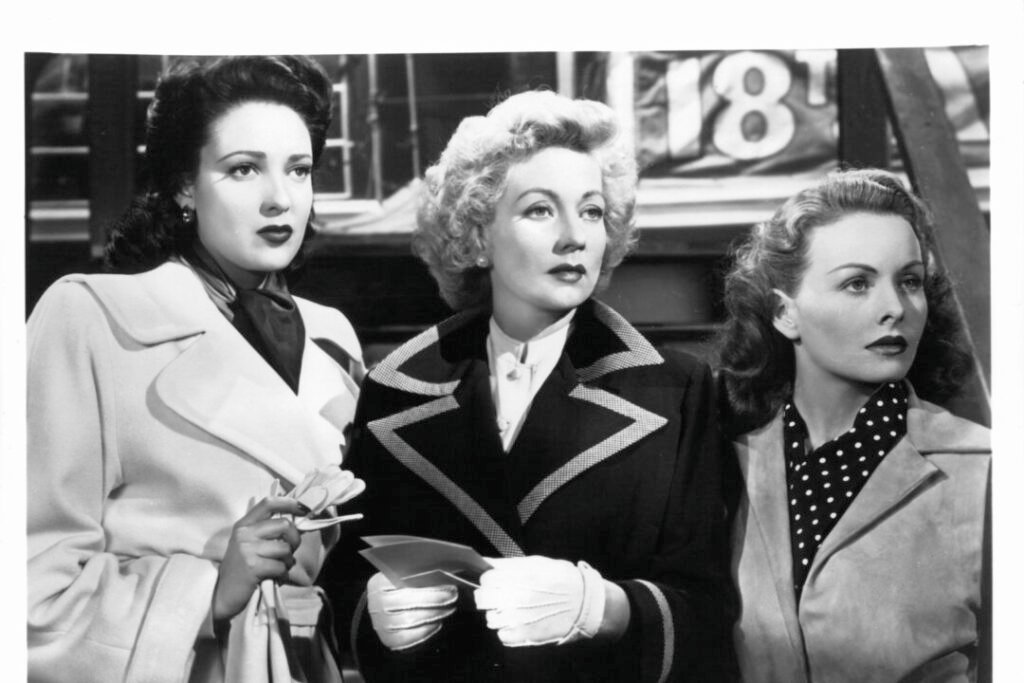
Deborah Bishop (Jeanne Crain) still feels like the farm girl who somehow wound up married into money. She met her husband, Brad Bishop (Jeffrey Lynn), while both were serving during the war.
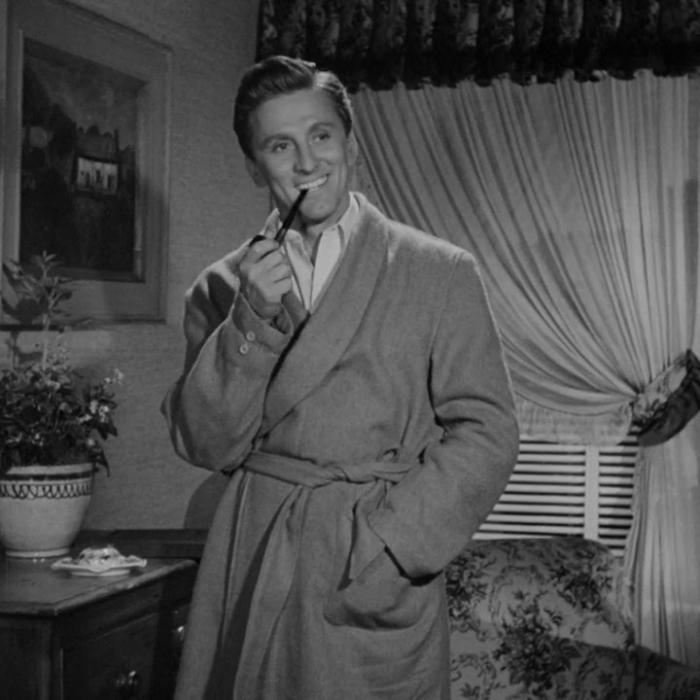
Civilian life dropped her into his country-club crowd, where she’s painfully aware that she lacks their polish. Rita Phipps (Ann Sothern) has a different headache at home. She writes successful radio programs and earns more than her husband, George Phipps (Kirk Douglas); George, a high-school teacher, thinks much of what she writes for a living is commercialized nonsense.
Lora Mae Hollingsway (Linda Darnell) grew up beside the railroad tracks and married her wealthy former boss, Porter Hollingsway (Paul Douglas). Although they’re crazy about each other in their own prickly way, money and suspicion manage to slip into nearly every argument.
The three women are chaperoning children on a Saturday boat trip up the Hudson River when a letter arrives. It’s from Addie Ross (Celeste Holm, heard only in voiceover), the polished woman everybody in town seems to know, and who’s a little too familiar with all three husbands.
Her message says she has left town with one of them, but of course (cue the drama), she leaves out which husband. Stuck on the outing for the day and unable to simply call home, Deborah, Rita, and Lora Mae start going over their marriages in their heads, each finding more than enough reason to wonder whether Addie might be talking about hers.
Marriage, Money, and Mischief

Rita Phipps (Ann Sothern) earns more than her husband, George (Kirk Douglas), in “A Letter to Three Wives,” 20th Century-Fox
In the development process of the film, the material behind “A Letter to Three Wives” originally involved five wives, which eventually became four, and then three before filming. That trimming gives each marriage enough room to develop its own share of problems, and Mankiewicz lets those problems creep into the narrative.
Lora Mae and Porter have some of the film’s liveliest scenes. She grew up poor enough to have trains rattling the family home and has no shame about wanting something better. Porter knows money is part of her interest in him, which gives their courtship a wonderfully combative edge. Darnell and Douglas keep their scenes playful even as they try to wound each other. Lora Mae can be selfish, funny, calculating, affectionate, and furious within the same conversation, and Darnell clearly enjoys every part of it.
Addie’s letter ends up dragging a lot of marital garbage into the open. After all, class differences, jealousy, and wounded pride have been sitting around in these houses for quite a while.
Mankiewicz understood how much trouble a group of civilized adults could create without ever leaving the dining room, especially once somebody decided to say exactly what he or she was thinking.
For all the scheming and marital warfare, the movie also has a decent streak running through it. I enjoyed seeing which of these couples could finally get out of their own way.
“A Letter to Three Wives” is available on Amazon, Apple TV, and YouTube.
‘A Letter to Three Wives’
Director: Joseph L. Mankiewicz
Starring: Jeanne Crain, Linda Darnell, Ann Sothern
Not Rated
Running time: 1 hour, 43 minutes
Release Date: Feb. 3, 1949
Rated: 4 stars out of 5