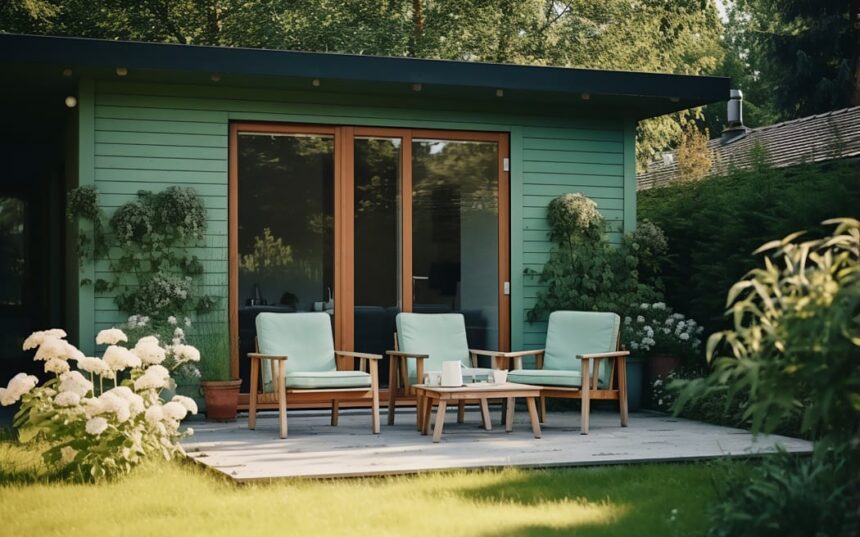

Experts say that the real rule change is simply that when things go wrong, the burden of responsibility will be on the homeowner, not the council.
Photo: 123rf
Rule changes for putting a granny flat on your section cut very little red tape, but move questions of liability from councils to homeowners
No garage conversions, no house extensions, no old materials or relocated cottages, no DIY practitioners, no mezzanine floors and no accessible showers.
And no building consent needed.
The government’s new rules for building a granny flat, or ‘minor standalone dwelling’, on your own property cut through one layer of paperwork and will likely save plans from being clogged up at council level, but they’re still complex, full of restrictions and just as expensive as they always were.
The real change these rules bring, say experts, is that when things go wrong, they shift the burden of responsibility from the council to homeowners.
Karel Boakes is the president of the Building Officials Institute of New Zealand, an organisation with around 1200 members who deal with building surveying, controls and regulations in both the private sector and in councils.
From what she’s seen in the month or so since the law came in, there’s been no rush to build these standalone dwellings – she says licensed building practitioners appear to be wary of shouldering the burden of responsibility for any failures.
“They’re concerned,” she says.
“They’re concerned for the homeowners and potentially the risks that they might be taking on if they choose to follow this route.”
“Obviously they’re not against efficiencies where they can be made. That’s common sense and we’re all on board with that. But we’re also trying to weigh up the level of risk that people could be exposed to if buildings are built in a way that’s not compliant or in a way that [poses problems] financially with insurance or what have you.”
Boakes says officials want to make sure people go into these processes with their eyes wide open, understanding the risks.
“There’s definitely a shift of liability.”
Before the regulation changed there was a level of surety in council checks, but we saw from the leaky building crisis that meant that councils were often the “last man standing” – the only organisation still around answering questions of liability when builders and developers went bust. Now the responsibility for any issues down the line falls on the homeowner, and those licensed building practitioners who supervised the job.
The only council responsibility comes right at the start of an application for a standalone dwelling when it issues a PIM – a Project Information Memorandum – which details information about the land or the project that they need to take account of, such as unstable land or flood plains.
“The council won’t be taking any liability any more in terms of assessing, or checking, or inspecting,” says Boakes.
The Ministry of Business, Innovation and Employment has put out comprehensive information about the processes involved.
It says the granny flats building consent exemption allows small standalone dwellings of up to 70 square metres to be built without a building consent, if it has a simple design and meets the building code; homeowners notify the council before they start building and when they’re finished; the work is carried out or supervised by licensed building professionals; and all the exemption conditions are met.
You can download the seven forms required from the site, read the three checklists, five step-by-step guides and five fact sheets, and there are links to 12 professional groups that might be involved.
So there’s no excuse for winging it.
Bill McKay, a senior lecturer at the School of Architecture and Planning, University of Auckland, tells The Detail that when the rules came out, he was taken aback by the level of requirements – “all the things that you do and have to worry about”.
“One of the questions I’m mostly commonly asked is, ‘can I build it myself?’
“Short answer – absolutely not,” he says.
He says not having to get a building consent will save time, with the council unable to put off its issuing of a PIM. But a building consent is one thing – “you’ll still need building advice from someone who can draw up plans for you and that sort of thing. We might still need a resource consent, and this is a pitfall for lots of people.
“You can’t build just anywhere you want in your back yard. We have certain rules about minimum permeable and impermeable area so that rainfall will soak away, which is all good. And we have distances that we have to keep from neighbours … all that sort of thing as well.
“The government will change that with a thing called the new National Environmental Standard, but work on that is still ongoing and that won’t kick in till who knows when.
“I think a lot of people will just sort of leap into it without doing their homework first and doing it properly, and that could get them in trouble from various angles.”
Then there’s the sting at the end – while it varies throughout the country, most councils will charge a development fee, and in some places that could be around $25,000. Your rates will go up too, having added another bathroom and more square metres to your estate.
Meanwhile McKay has picked out an aspect of the regulations he calls ‘ironic’ – even if your little house is for granny, you can’t have a recessed shower, where you could wheel in or get in without tripping over if you were unstable on your feet.
“The reason for that is, they haven’t developed a class of LBP who can do that.”
That means the supervisory aspect of the project couldn’t be met – so accessible showers are on the no-go list.
Check out how to listen to and follow The Detail here.
You can also stay up-to-date by liking us on Facebook or following us on Twitter.