

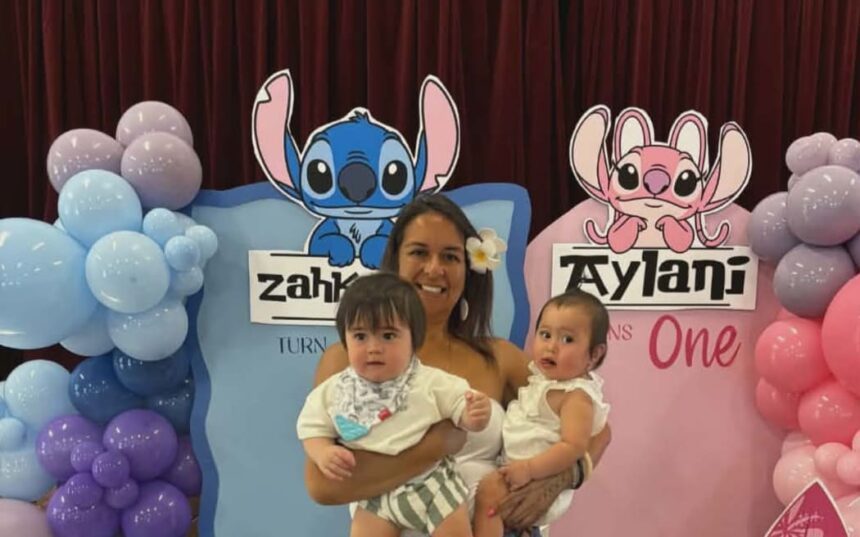

Biddy Tai Ahmu and her twin grandchildren, Aylani and Zahkani.
Photo: Supplied
Biddy Tai Ahmu says bariatric surgery in Turkey, funded with money withdrawn from her KiwiSaver, saved her life.
She had the surgery three years ago after being on the waiting list in New Zealand for years. Diabetes was a problem in her family and, having seen it kill two grandmothers and watching her mother battle it, she knew she needed to do something.
“If I didn’t do something I was going to die.”
Her GP was supportive and she made an application to her KiwiSaver provider, which was approved. The procedure meant she was now not diabetic any longer.
She had started a Facebook page, I left my stomach in Turkey, to share her story to help others. It now has about 7000 members. Many wanted to be able to tap into their KiwiSaver accounts to fund the surgery, too.
She said the bar seemed to be shifting and providers were putting more hurdles in place for people to access their money. “It’s really unfair. If your GP says it’s going to save your life, what’s the problem? It should be a no-brainer.”
She said New Zealand did not have enough space in the public system to help people with diabetes or obesity to get the treatment they needed. “The government needs to look at that so people don’t need to go overseas.
“A lot of people are against people doing this and they shouldn’t be. I have six children and three grandchildren and if I didn’t do it, I would be dead. KiwiSaver providers need to understand that and have a bit more empathy.”
She said many people contemplating surgery were trying to support families and dealing with rising costs for other essentials, like food.
Most common reason
A debt solutions charity that helps six KiwiSaver providers, including Milford Asset Management and Simplicity, with their hardship withdrawal applications said bariatric surgery was now the most common reason that people applied for their money.
Debtfix chief executive Christine Liggins said the top three reasons she saw for hardship withdrawals were bariatric surgery, a new car and the cost of living.
The number of people seeking to withdraw money from KiwiSaver on hardship grounds had increased sharply in recent years, to almost 60,000 last year.
Withdrawals for bariatric surgery would usually only be possible under significant financial hardship grounds, if it was needed to treat a medical condition and people did not have another way to pay for it.
“We know there’s a problem with bariatric surgery in New Zealand.”
She said Debtfix was working to compile data so it could show the government the problem.
“We can say, there’s a problem with health here. We need to be addressing it over there. And then it doesn’t come back and bite us when they turn 65 and they’ve no money … we need some cross party conversations and decisions so that we can actually preserve KiwiSaver for people’s retirement and not doing the here and now.”
She said it was rare to see requests for other surgeries.
“I think we just need to get a few people around and talk about hardship and how we can reduce the number of hardships, but also make hardship withdrawals actually work better for the people experiencing hardship.”

Rupert Carlyon, founder of Koura KiwiSaver.
Photo: Supplied
Rupert Carlyon, founder of Koura KiwiSaver, said there was “clearly interest” in borrowing for bariatric surgery.
The scheme had had a few people asking questions recently, he said. “We haven’t paid one out.”
He said it was driven by social media and people on platforms like TikTok talking about what people needed to do to get their money out.
Kernel founder Dean Anderson said he was aware some KiwiSaver members tried to “shop around” providers to find one that would give them access.
A spokesperson for Public Trust, a supervisor for many KiwiSaver schemes, said people should talk to their KiwiSaver providers or other trusted sources of information for guidance on applying for medical costs.
“When we look at the cases we see as a supervisor, surgery and medical care are cited in a relatively small number of financial hardship applications that come to us for assessment. “
Tai Ahmu said it was important that Polynesian people in particular felt able to make their health a priority “to be there more for their grandchildren”.
She said the government and KiwiSaver providers needed to recognise the importance of whakapapa and support for people seeking help.
Sign up for Money with Susan Edmunds, a weekly newsletter covering all the things that affect how we make, spend and invest money.