

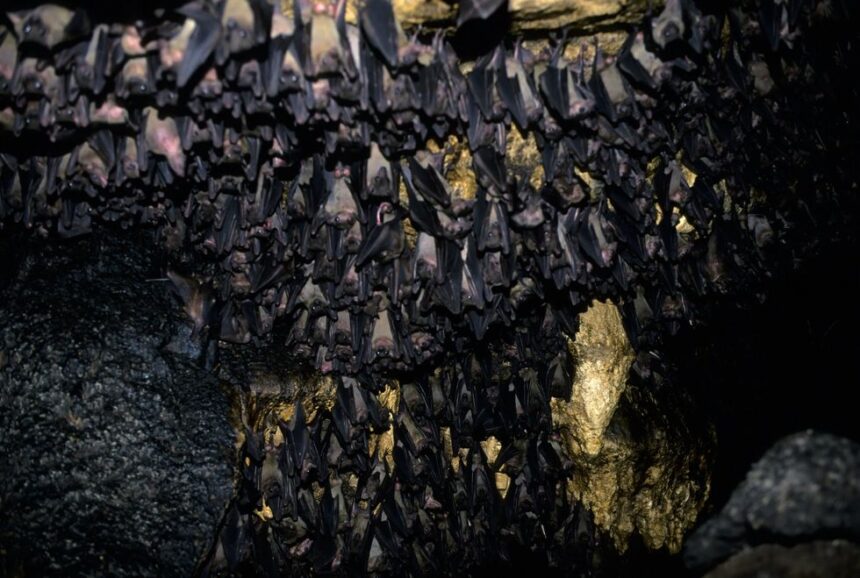
A cave which could be ground zero for an outbreak of a deadly eye-bleeding virus has been caught on camera for the first time ever.
Researchers in Uganda have captured footage of animals feeding on bats infected with Marburg virus, which can cause haemorrhages, fever, and other symptoms similar to Ebola.
The observations were filmed on camera traps outside Python Cave in Queen Elizabeth National Park in the country’s west.
The cave, home to an estimated 56,000 Egyptian fruit bats, is situated in an area long important to the study to the virus – which can have a fatality rate as high as 90 per cent, and has no vaccine available.
Researchers described the cave as a “spillover crucible”, with many of the species seen eating the bats going on to be eaten by humans as bushmeat.
The virus can leave patients with blood streaming from their eyes, nose and gums in its later stages.
Researchers, in a preprint of their findings, said the new footage marks the first confirmation “of a dynamic, multispecies exposure network at a known Marburg virus site”.
Researchers filmed at least 14 different species of animal visitng the cave to feed on bats, including leopards, several species of primate. birds of prey, and monitor lizards.
Footage from the Maramagambo Forest site showed a troop of monkeys feeding on the bats.
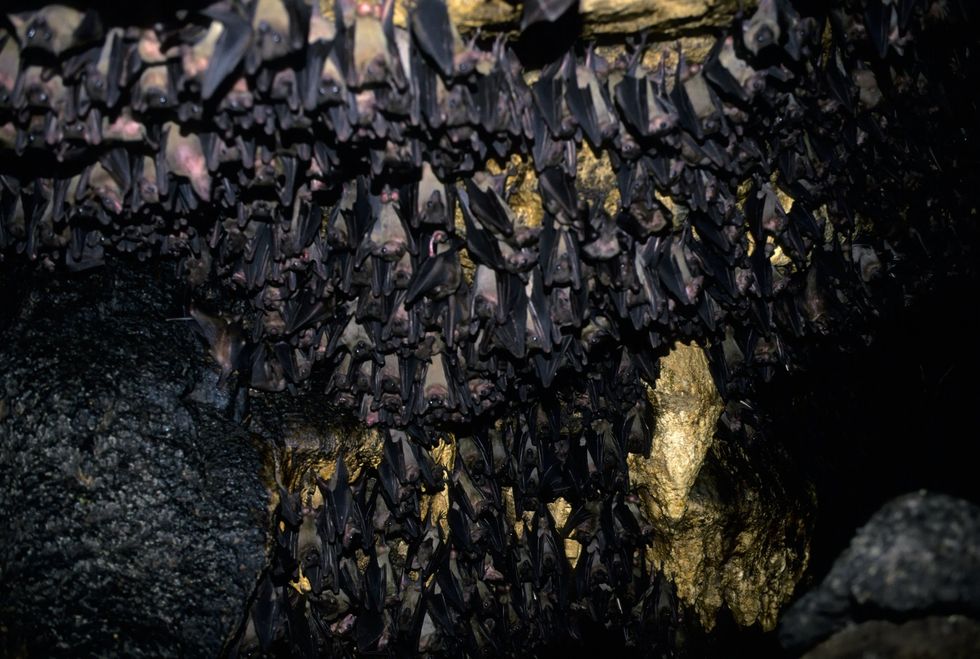
Swarms of bats at Queen Elizabeth National Park
|
GETTY
Another clip showed an adult leopard striking the bats as they flew out in large numbers before leaving with a bat in its mouth.
The camera traps were initially placed at the site as part of a project to gain data on lions and hyenas living in Queen Elizabeth National Park.
Orin Cornille, field coordinator at the Kyambura Lion Project, said it was surprising to see such a variety of species feasting on the bats.
He told The Telegraph: “What surprised me is we were seeing blue monkeys, baboons, vervet monkeys, going in there and snatching bats. From a virological standpoint, I think that’s the crazy part.
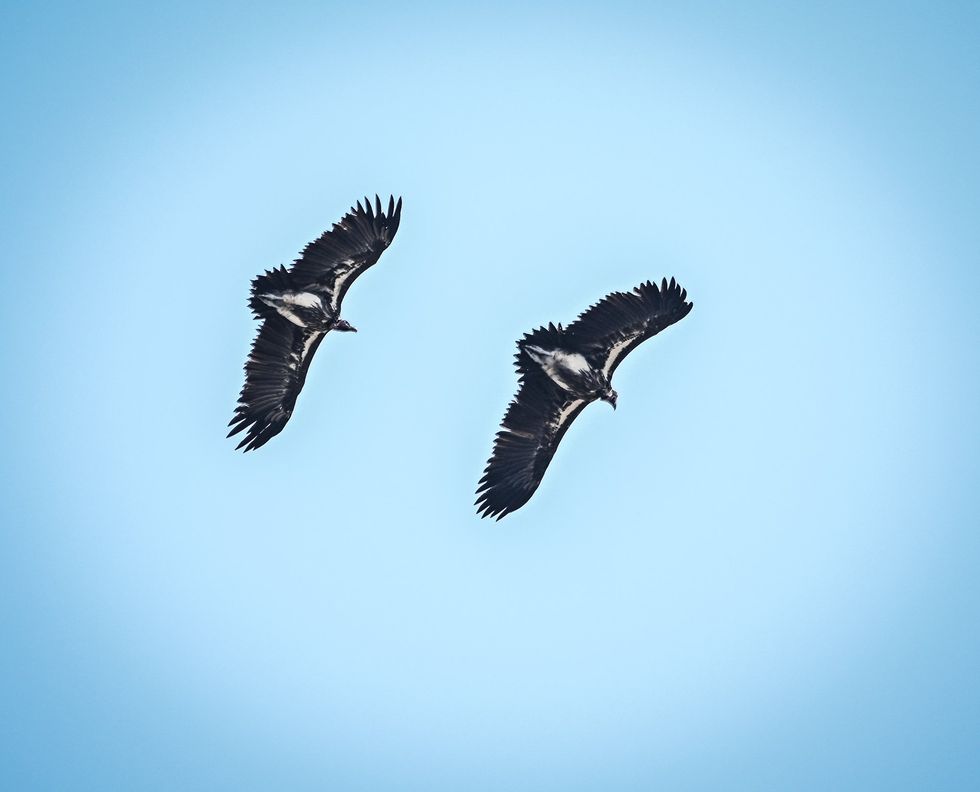
Vultures at Queen Elizabeth National Park, home to Python Cave
|
GETTY
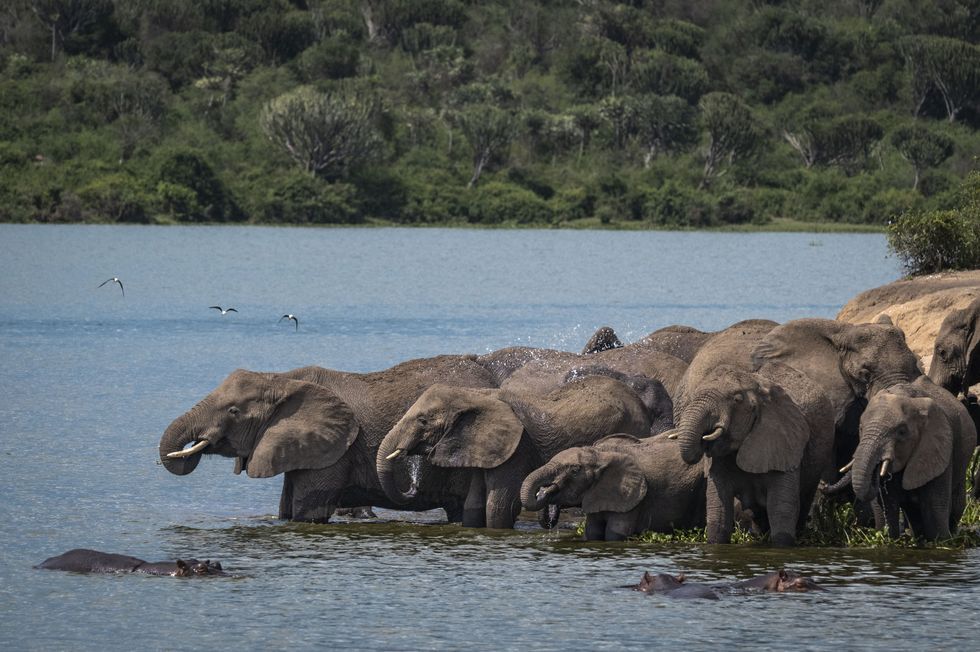
The wildlife park is home to a wide variety of species, such as elephants, hippos, and birds of prey, all pictured here
|
GETTY
“The leopard is really cool, and all the genet cats and the civets – and all the different avian species are really cool to watch. But I think from a virus point of view, it’s probably the monkeys which are the scariest thing.”
The footage has been used to assess virus spillover risk, but researchers cautioned that there has not been any signs of it across the five months they were filming.
Alexander Braczkowski, scientific director at Kyambura Lion Project said: “This could be something that’s been taking place for millennia – the Rift Valley and the Albertine Rift, these are ancient systems.
“We are seeing a lot of the same species, and, in fact, some of the same individuals going to this cave and feeding, you know, for months and months and months on end.”
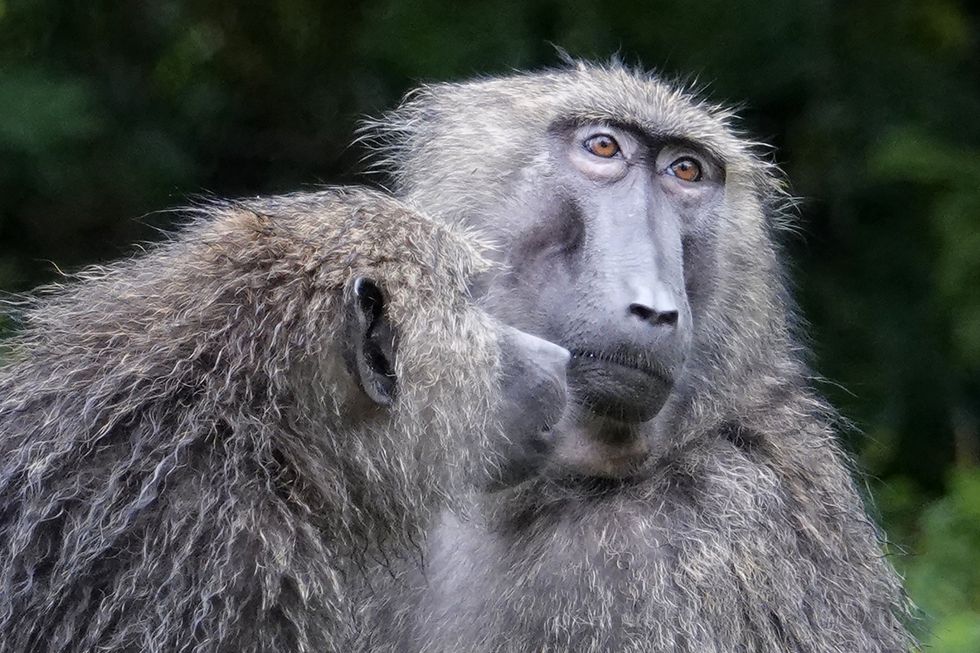
Several species of primate were seen to be eating the bats, potentially spreading the Marburg virus
|
GETTY
One particular leopard returned to the cave several times during their research and was dubbed “Akahaya”, which means untouchable in a local language.
The researchers now plan to use the findings for further investigation into spillover risks.
Dr Braczkowski added: “We’re going to be working with some collaborators in future to potentially try and map out more of this whole interface, and figure out if animals are getting infected.”
“There are very many pathways through which a disease of international concern can actually spread to a population unnoticed,” Bosco Atukwatse, another field coordinator at Kyambura Lion Project said.
The footage also showed schools groups, tourists, and local trainees visiting the cave, many with no personal protective equipment, despite warning signs outside the entrance to the cavern.