Irish Rail is to invest €1.8bn in Cork’s commuter rail network, which will form a key element of the transition to electrified railway systems nationwide.
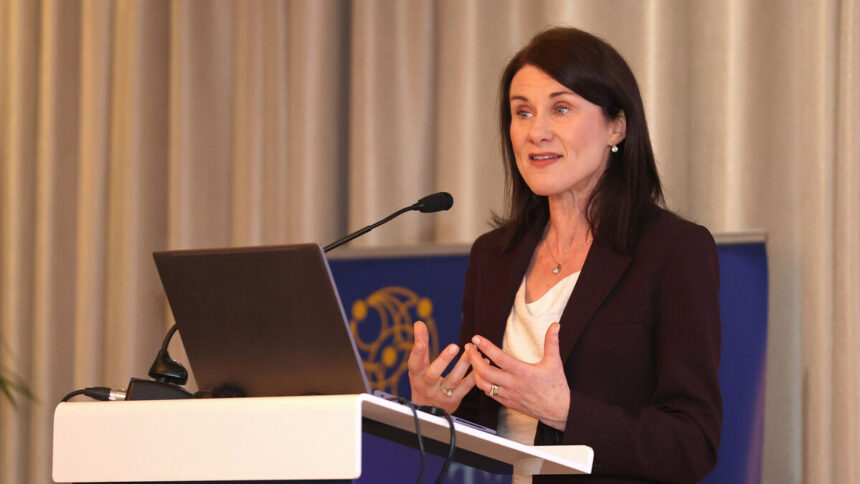
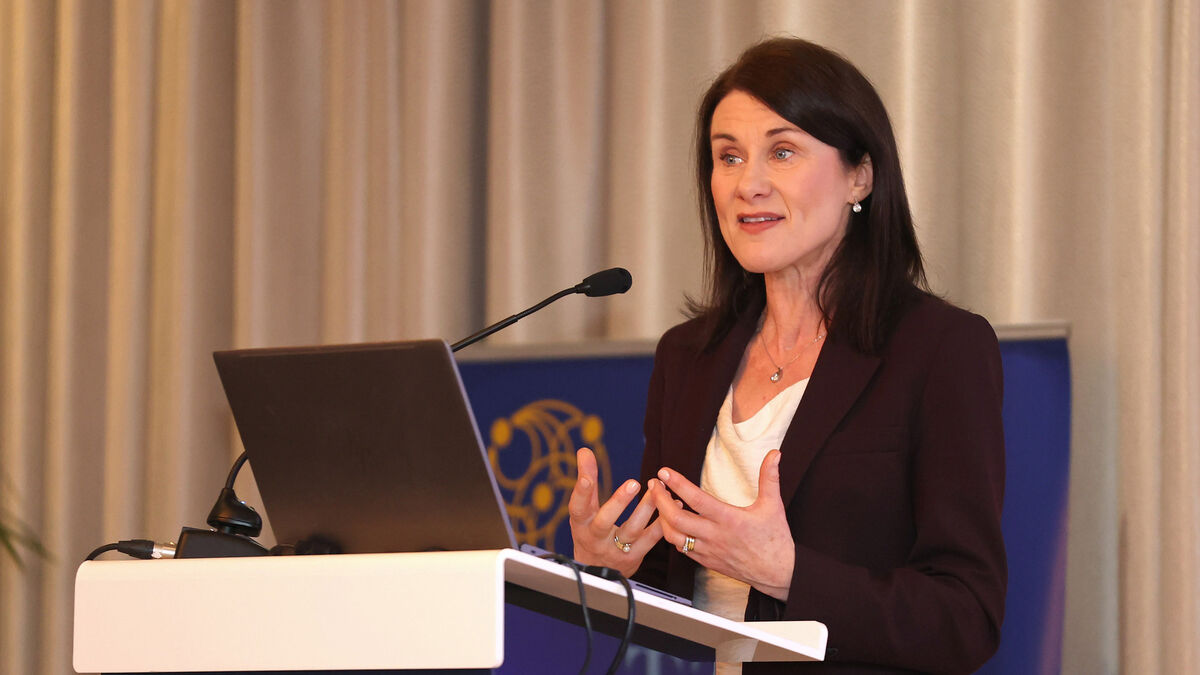
The transport network’s chief executive, Mary Considine, was speaking in Cork, where she outlined the capital investment planned for the city and county over the coming years.
Work is progressing on the Cork Area Commuter Rail (CACR) programme that will connect Mallow, Cork, Cobh, and Midleton, with increased train capacity, frequency, and new stations.
Speaking at the Cork Chamber Business Breakfast, Ms Considine said eight new rail stations will be built on the route, which will be fully electrified, providing 10-minute, all-day frequencies.
The first phase of the project has seen the completion of a new platform at Kent Station, along with signalling and junction upgrades. Ms Considie said work to install twin tracks between Glounthaune and Midleton will be completed this year.
She said the next phase will include planning for the first two new stations at Blackpool and Dunkettle, which will include a park and ride service.
Cork’s electrification will be paired with a new train fleet, initially using trains freed by the Dublin Dart+ expansion from 2027 before a dedicated electric fleet arrives.
It is planned to ultimately build further new stations in Blarney, Monard, Tivoli, Ballynow, Carrigtwohill West and Water Rock.
“There’s a once-in-a-lifetime opportunity now to address historic underinvestment in rail and make rail the sustainable backbone of transport,” Ms Considine said, referring to the nation’s wider rail network.
“We’re gearing up to deliver €1bn a year in investment.”
Cork’s Kent Station is now the fifth-busiest on the national network. Ms Considine said demand in Kent is up about 50% compared to pre-covid. Nationally, Irish Rail carried 55m passengers in 2024 and targets 60m this year, with a Rail 2050 plan to triple journeys to roughly 180m.
There are further plans to electrify other parts of the rail network. Ms Considine, who previously served as CEO of the Shannon Airport Group up until late last year, said the ultimate goal is to increase train frequencies between Cork and Dublin to every 30 minutes and reduce travel times to 90 minutes between the cities.
She framed rail as an enabling infrastructure, which should be planned like water or energy. Ms Considine said rail development was essential to unlock areas for much-needed housing.
Taking questions from attendees, she accepted issues around parking at Kent Station. “Rail car parks across the network are full, and Cork is no exception. We’re working with the NTA on a nationwide review to identify where capacity can be increased.”
“In some locations, parking spaces are being used by non‑rail users. We need to get better at policing car parks so they are available to people actually taking the train.”