

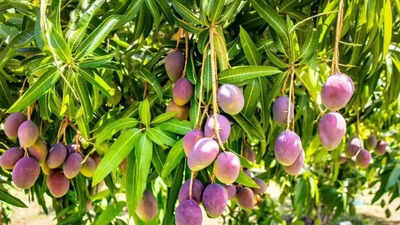
Growing the world’s most expensive mango, the Miyazaki mango, often called “Eggs of the Sun,” on a terrace roof might sound unusual. However, a farmer from Udupi, Karnataka, has successfully done just that. The Miyazaki mango is a type of Japanese mango that is very sweet, smooth, and worth a lot of money. People in Japan think of it as a luxury fruit, and in some markets, it can cost between Rs 2.5 lakh and Rs 3 lakh per kilogram. The variety is prized for its flavour and appearance, but is considered difficult to grow outside its native climatic conditions. According to The Better India, the terrace-grown Miyazaki mango success story comes from Udupi, where gardener Joseph Lobo shared his experience of cultivating the rare Japanese variety on his rooftop.The farmer, Joseph Lobo, successfully grew his first Miyazaki mango plant on his terrace by treating it much like other fruit plants but giving it consistent care and a nutrient-rich soil mix. He initially did not know the variety’s market value, enjoying the first harvest with his family. A reporter later identified the fruit as Miyazaki, which brought the value of the crop to wider attention. Since then, his terrace garden has drawn interest from others who want to learn how to grow similar plants at home.The Miyazaki mango plant took several years before it produced fruit, demonstrating that patience is essential when growing rare fruit varieties on a terrace. Lobo’s methods indicate that people who live on tropical coasts can grow special mango trees in confined spaces if they have suitable soil, sunlight, and organic care.
Grow world’s most expensive mango: A step-by-step guide to Miyazaki mango
- Choose the right sapling: Instead of seeds, begin with a healthy sapling. Saplings help the plant grow faster and make its roots stronger. Use large pots or grow bags so that the roots can spread out.
- Prepare a nutrient-rich soil mix: Make a mixture that helps plants grow. Because of this, Lobo had to mix regular soil with organic things he made himself, like cow dung, sheep manure, curd, and vegetable scraps. Mixing 50% of your own mixture with 50% of soil gives you a balanced medium that is full of nutrients.
- Careful planting: Once the soil mix and sapling are ready, carefully place the sapling in the grow bag. Put the plant in a sunny spot because mango trees need a lot of sunlight to grow well.
- Keep the area free of chemicals: Don’t use insecticides or chemical fertilisers. Neem oil and other natural products can keep bugs away from the tree without adding chemicals that could be bad for it.
- Give them food and water on a regular basis: Every 30 days or so, you should give the plant the mix of nutrients you made. If you water and feed the tree on a regular basis, it will be healthier and more likely to bear fruit.
- Give it time to grow: Even if you take good care of them, Miyazaki mangoes might not bear fruit for more than three years. According to Lobo’s story, it takes time and consistency to see results.
About the Miyazaki mango variety
The Miyazaki mango is originally from Japan and is known for its distinctive colour and high price in luxury fruit markets. It has a deep red to purple skin when ripe and is noted for its sweet flavour and smooth texture. In India, it has become a subject of interest among gardeners who appreciate rare or exotic fruit varieties.Miyazaki mangoes are one of the most expensive mango varieties in the world and are not commonly grown outside of specialised orchards and controlled climates. The fact that this type of fruit can be grown successfully in a terrace garden shows that it is possible to grow exotic fruit if you are patient and pay close attention to what the plant needs.
Why this matters for home gardeners
More and more people who like to garden in the city are growing fruit trees in terrace gardens. It lets you grow food in a small area and can bring new or rare types of plants to local gardens. The case of Miyazaki mangoes shows that terrace farming can sometimes work for plants that aren’t usually grown in those kinds of places, as long as the right conditions and care are given.