

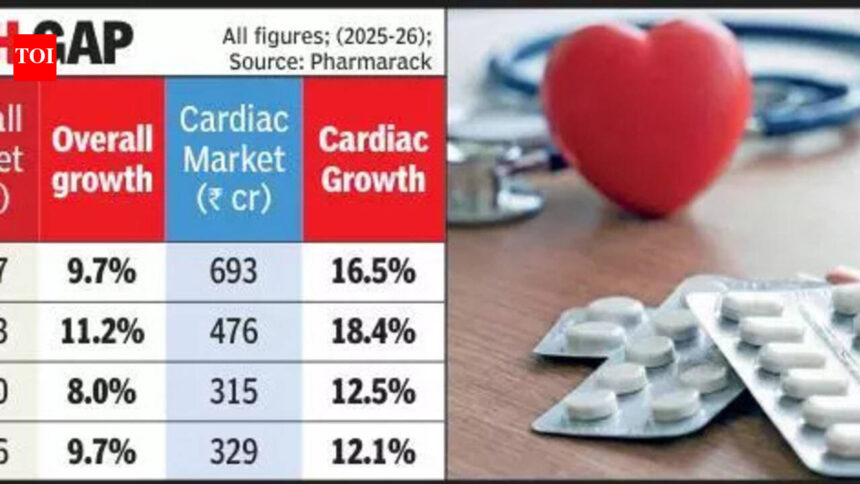
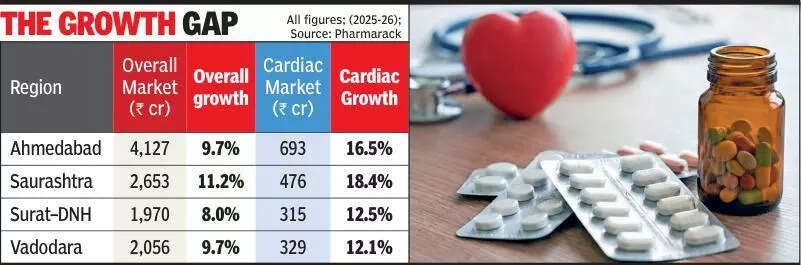
Across the entire Gujarat, cardiac drugs saw a 13% growth. Against this, the overall pharma market of the state grew at 8%.In fact, the trend is similar for the past 2 years as well, when CVD drug sales showed double-digit growth in the range of 10-18% in these key markets of Gujarat.Sedentary routines, rising stress, and the resultant spurt in diabetes and hypertension among young people were already noted. The trend cuts across regions. Ahmedabad accounts for the largest cardiac drug sales in absolute terms, while Saurashtra emerged as the fastest-growing hotspot. Surat, Dadra & Nagar Haveli, and Vadodara also indicate a steady double-digit growth in sales of cardiac drugs.Sheetal Sapale, vice-president (commercial), Pharmarack, said the sustained surge in cardiac drug sales indicates changing lifestyles. “Sedentary routines, poor eating habits, and a lack of exercise are major drivers [of the trend],” she said.Sheetal Sapale, vice-president (commercial), Pharmarack said, “Cardiovascular conditions are increasingly being diagnosed in younger age groups. Since these conditions are chronic and often lifelong, the growth of sales of drugs becomes sustained.“Sapale said that while the use of medicines to treat high BP typically rises with age, more young people are now being put on higher-end cardiac medicines. “They are at the peak of professional and personal responsibility, which improves adherence and compliance.”Medical practitioners warn that rising cardiac drug consumption is a proxy indicator of growing cardiovascular vulnerability. Gujarat already reported an increasing prevalence of diabetes and hypertension in recent surveys.Dr Zeeshan Mansuri, an interventional cardiologist at Narayana Hospital, said that the growth is attributable to a significant increase in acute coronary syndrome diagnoses, especially among younger demographics.“This trend is further supported by heightened awareness within the middle-aged and younger populations regarding routine health screenings,” he said.Mansuri said, “The screenings are now identifying a greater number of cardiometabolic syndromes and cardiovascular diseases prior to the onset of acute coronary events or cerebrovascular accidents.”Dr Jay Shah, an interventional cardiologist with HCG Hospitals, said that more than 1-third of the medicines prescribed even by the GPs relate to lipids and hypertension and are preventive therapies. “Apart from the growing burden of cardiac issues, regular health check-ups and incidental findings often result in non-surgical interventions,” Shah said.