
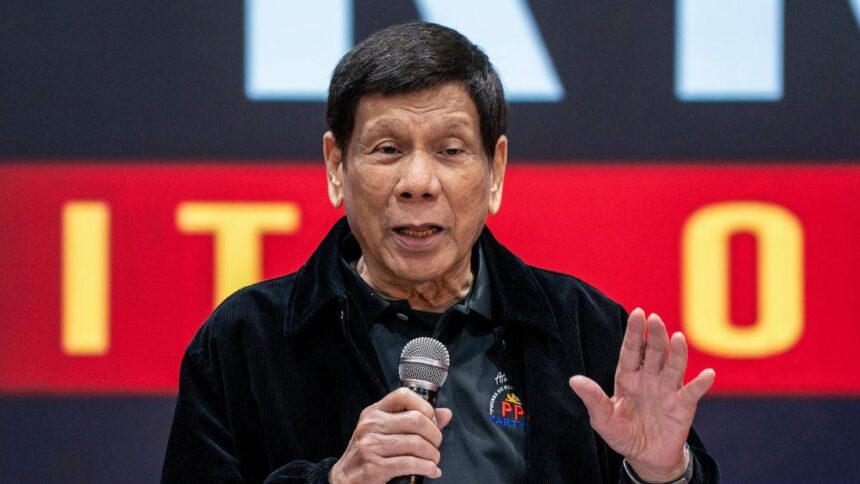
Prosecutors at the International Criminal Court will begin presenting evidence to support their charges against former Philippine President Rodrigo Duterte, detailing his alleged involvement in dozens of killings as part of his so-called war on drugs.
The ex-leader is facing three counts of crimes against humanity for deadly anti-drugs crackdowns he oversaw, first while he served as mayor of the southern Philippine city of Davao and later as president.
Rights groups and families of victims hailed Duterte’s arrest in March, saying it was a step forward for justice.
“We have waited for this for so long, for years we have waited, but we did not relent,” Llore Pasco told reporters at a news conference before the hearing on Monday.
She said both of her sons left for work in May 2017 and never returned.
WA’s biggest courts and crime stories to your inbox
Sign-up to our weekly newsletter for free
Their bodies were later found riddled with bullets.
The hearing is not a trial, but allows prosecutors to outline their case in court.
After weighing the evidence, judges have 60 days to decide whether or not to confirm the charges.
Duterte will not be present for the hearing at The Hague-based court.
He waived his right to appear, writing in a letter to judges that he did not want to attend legal proceedings “that I will forget within minutes. I am old, tired and frail.”
He also called the charges against him an “outrageous lie”.
Judges in January found the octogenarian was fit to stand trial, after postponing an earlier hearing over concerns about his health.
Supporters of Duterte criticised the administration of current Philippine President Ferdinand Marcos Jr, Duterte’s political rival, for arresting and surrendering the former leader to a court whose jurisdiction they dispute.
Detractors include his daughter, current Philippine Vice-President Sara Duterte who announced last week that she would seek the presidency in the 2028 elections.
Prosecutors at the ICC announced in February 2018 that they would open a preliminary investigation into the violent drug crackdowns.
In a move that human rights activists say was aimed at escaping accountability, Duterte, who was president at the time, announced a month later that the Philippines would leave the court.
Judges rejected a request from Duterte’s legal team to throw out the case on the grounds that the court did not have jurisdiction because of the Philippine withdrawal.
An appeal of that decision is still pending.
Estimates of the death toll during Duterte’s presidential term vary, from the more than 6000 that the national police have reported to up to 30,000 claimed by human rights groups.