

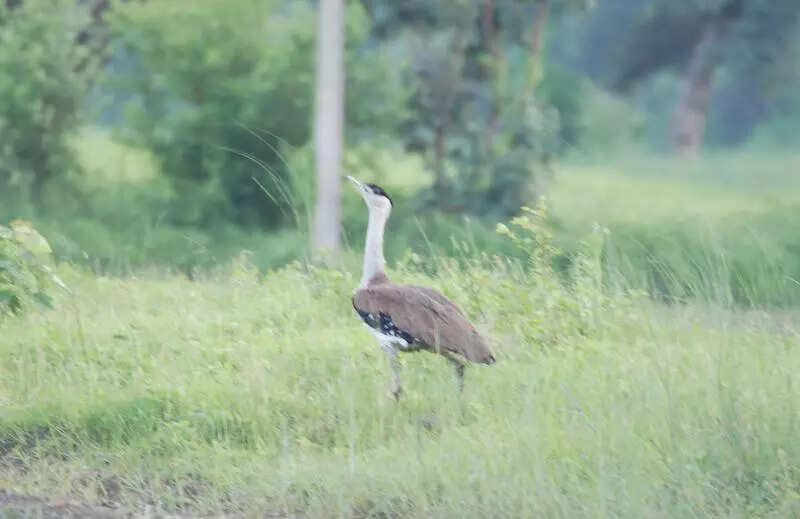
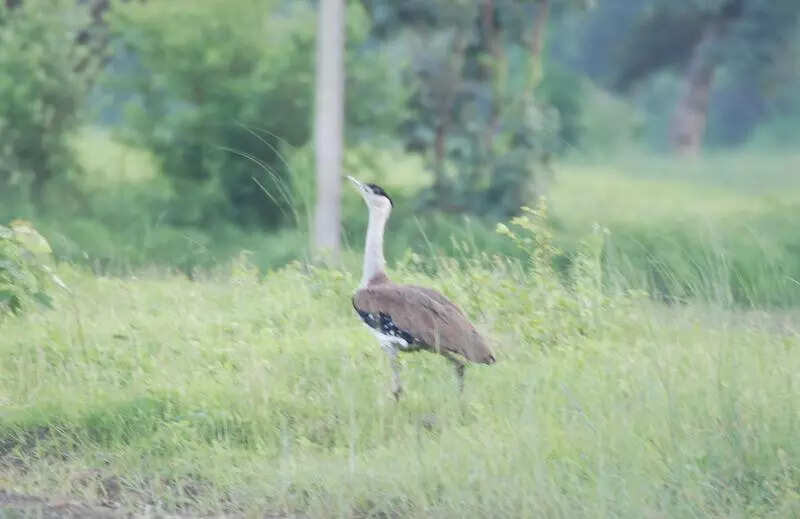
According to information received at official level, the census was conducted from April 7 to April 17, 2025, in Desert National Park, the army’s Pokaran Field Firing Range, and various Great Indian Bustard habitat areas of Jaisalmer. It was carried out under Occupancy and Distance Sampling methodology within 7 days across approximately 22,000 square kilometres. More than 200 volunteers and frontline wildlife workers participated through more than 50 teams.A 2-day training programme was organised before the census. It included scientists from WII, 50 volunteers from Gujarat, Maharashtra, Pune, Bengaluru and Rajasthan, and more than 200 volunteers, forest officers and rangers.Deputy Conservator of Forest B M Gupta of Desert National Park said that WII and the Rajasthan Forest Department conducted the scientific census from April 7 to April 17, 2025, to assess the status of Godawan, other associated wildlife and habitat in the Thar Desert region. He said the census was completed by biological researchers, ornithologists and Desert National Park officials in coordination with the Dehradun-based institute.Gupta said the census started on April 7 and continued until April 17 in Jaisalmer-Barmer, including the Pokaran Field Firing Range area. He said seven ranges, including Myajlar, Sudasari, Ramgarh, Mohangarh, Rasla, Ramdevra, and Pokaran, were identified for the census. He said the entire census was conducted scientifically, with more than 200 people divided into more than 50 teams, and each team included a volunteer, forest ranger and other personnel.Gupta said that after 8 years in Jaisalmer, the census of the state bird Godawan was completed by WII under the guidance of Suthirto Datta, coordinator of the Great Indian Bustard breeding and conservation centre in Jaisalmer and a Great Indian Bustard specialist. He said that after 8 years, the Godawan census was conducted from April 7 to April 17, 2025.Gupta said the figures released by WII recently showed the Great Indian Bustard count in April 2025 in the wild, DNP and Pokaran Field Firing Range as 130 plus minus 21, while in 2017 it was 128 plus minus 19. He said the count in both breeding centres of Jaisalmer was 68 and the total count reached 198 plus minus 21, which he described as good news.He said the census was extremely important from the perspective of Godawan conservation, as approximately 70 percent of the world’s Godawan population was found in the Jaisalmer region. He said various schemes were being operated for the conservation of the endangered species and positive results were emerging. He said special arrangements were made for the wildlife census this time and it was conducted under a well-organised plan.He said the forest department conducted the Godawan census every year on Vaishakh Purnima using the water hole method, in which the number of Godawan, along with various wildlife coming to different water points, was recorded. However, he said WII did not consider the water hole method census correct. He said that due to this, the Godawan’s range area was divided into different blocks and the census was conducted scientifically.