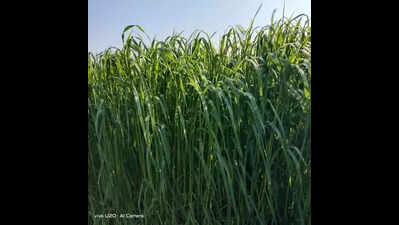
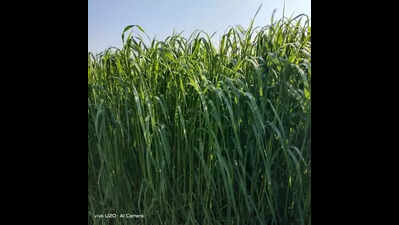
Ludhiana: Three high-yielding oat varieties, including OL 1964, OL 1967-1, and OL 1975, developed by Punjab Agricultural University (PAU) have received national-level identification for release.The announcement came through the proceedings of varietal identification committee (VIC) held under the chairmanship of Dr S K Pradhan, assistant director general (food and fodder crops) of the ICAR, New Delhi, that recognised PAU’s contributions to sustainable crop development and zone-specific adaptability. These varieties, tested rigorously over three years, promise enhanced productivity and disease resistance, offering new hope to dairy farmers across diverse agro-climatic regions.The OL 1964 variety is a single cut variety suited for irrigated areas in the central zone (comprising of states like Uttar Pradesh, Madhya Pradesh, Chhattisgarh, Maharashtra and Gujarat). Over three years of testing, this variety showed strong results with an average green fodder yield of 492.4 quintal per hectare that was superior by 3.5 % and 10.1% to national check and zonal check, respectively. Importantly, it is moderately resistant to leaf blight and exhibited 10% higher crude protein than the national check.The OL 1967-1 is a dual oat variety recommended for irrigated areas in the North East zone having states like eastern Uttar Pradesh, Bihar, Jharkhand, West Bengal, Odisha and NER states. It exhibited the average green fodder yield of 235.2 q/ha which was 13.9% and 21.3% higher than the national and zonal check, respectively. It exhibited moderate to high resistance to Helminthosporium leaf blight and high resistance to Sclerotium root rot in this zone. It also outperformed the national check for seed yield. The OL 1975 is a multi-cut oat variety recommended for irrigated areas in the hill zone having states Jammu and Kashmir, Himachal Pradesh, and hills of Uttrakhand. It exhibited the average green fodder yield of 243.0 q/ha that was 7.7% and 13.2% higher than the national and zonal check, respectively. It also outperformed the national check for dry matter yield, crude protein yield and seed yield. Dr. S.K Sandhu, HoD, Plant Breeding and Genetics, PAU, lauded the achievement and remarked that these improved lines would not only support fodder and grain need, “but also align with our goal of sustainable and climate-resilient agriculture.” Dr S.S. Dhatt, director of research, PAU, remarked that the release of these three oat varieties was the result of dedicated research, field testing, and teamwork.Vice chancellor Dr Satbir Singh Gosal stated, “With higher yield potential and strong resistance to diseases, these oat varieties hold great promise for strengthening dairy industry of the country and enhancing farmers’ income.”