
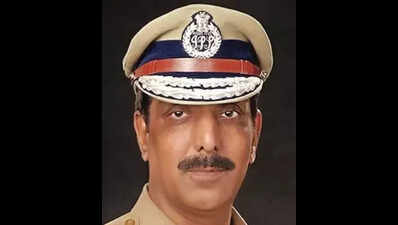
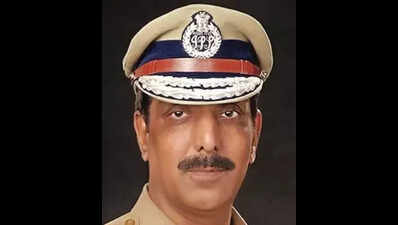
Chandigarh: Highlighting the situation within Punjab Congress, former Punjab director general of police Mohammed Mustafa criticised what he called the “politics of the field” versus “politics of the corridor”, alleging that internal manipulation and back-channel dealings were weakening the party.Mohammed Mustafa, though not a member of the Congress, earlier served as principal strategic adviser when Navjot Singh Sidhu was the Punjab Pradesh Congress Committee president. He shared a strongly worded message on social media reflecting on the state of Congress in Punjab.
Mustafa’s wife, Razia Sultana, was a Cabinet minister in the previous Congress govt in Punjab. Their daughter, Nishat Akhtar, was appointed as the Malerkotla district Congress president.In his message, Mustafa wrote: “Politics is often described as the art of the possible, but for some, it has become the craft of the invisible.” He said a certain brand of “leadership” in Punjab thrived not “in the heat of the field, but in the cooled rooms of back-channel deals and the calculated silence of the quiet schemer.”He further wrote that “we see a dangerous trend emerging where the ‘politics of the field’ is being strangled by the ‘politics of the corridor’,” alleging that the primary talent of this leadership lay not in winning over the public, but in manipulating the internal machinery of the party organisation.Referring to an unnamed individual, Mustafa described a “character among Congress ranks in the state who has mastered the art of the ‘wolf in sheep’s clothing’.” He alleged that this individual was “busy behind the scenes” and “meddled in the selection of DCC presidents” in several districts, influencing observers and panels despite the high command’s vision of a transparent selection process.He also alleged attempts to derail “a bright, budding youth leader” by conjuring a “ghost” criminal case, and described interference in organisational matters of neighbouring districts to block dedicated Congress workers.Mustafa said, “The most damning indictment of such a character is his silence,” alleging that while party workers were on the streets, a “manager” remained mute. He added that “his tongue is tied not by discipline, but by dread.”The message further referred to the “turncoat phenomenon” witnessed during the party’s years out of power and cautioned against what he described as misplaced trust in undeserving individuals. Mustafa concluded by stating: “I place these reflections before the leadership with the utmost sincerity, driven not by personal interest, but by a genuine concern for the party’s future in the state.”