
Google Ranking Booster: In the ever-evolving landscape of digital marketing, one truth remains constant: visibility is currency. If your website isn’t on the first page of Google, it might as well be invisible. This is where the concept of a Google Ranking Booster comes into play. It’s not a single magic button, but a holistic strategy—a synergy of technical precision, high-quality content, and authoritative link building designed to propel your website to the top of the Search Engine Results Pages (SERPs).
This comprehensive guide serves as your ultimate roadmap. We’ll dissect every layer of modern SEO, from foundational on-page elements to advanced off-page tactics like building high Domain Authority and leveraging PBN Backlinks safely. Whether you’re a seasoned marketer or a business owner taking the reins of your online presence, these proven strategies will act as your catalyst for growth.
Ready to transform your website into a traffic magnet? Let’s dive into the mechanics of the ultimate Google Ranking Booster.
Part 1: Laying the Foundation – What is a Google Ranking Booster?
Before we deploy any advanced tactics, we must understand the battlefield. A “Google Ranking Booster” is an umbrella term for any action, technique, or tool that improves a website’s position in Google’s organic search results. It’s the antithesis of quick-fix schemes; it’s a commitment to building a website that Google deems authoritative, relevant, and trustworthy.
The Core Pillars of Ranking Success:
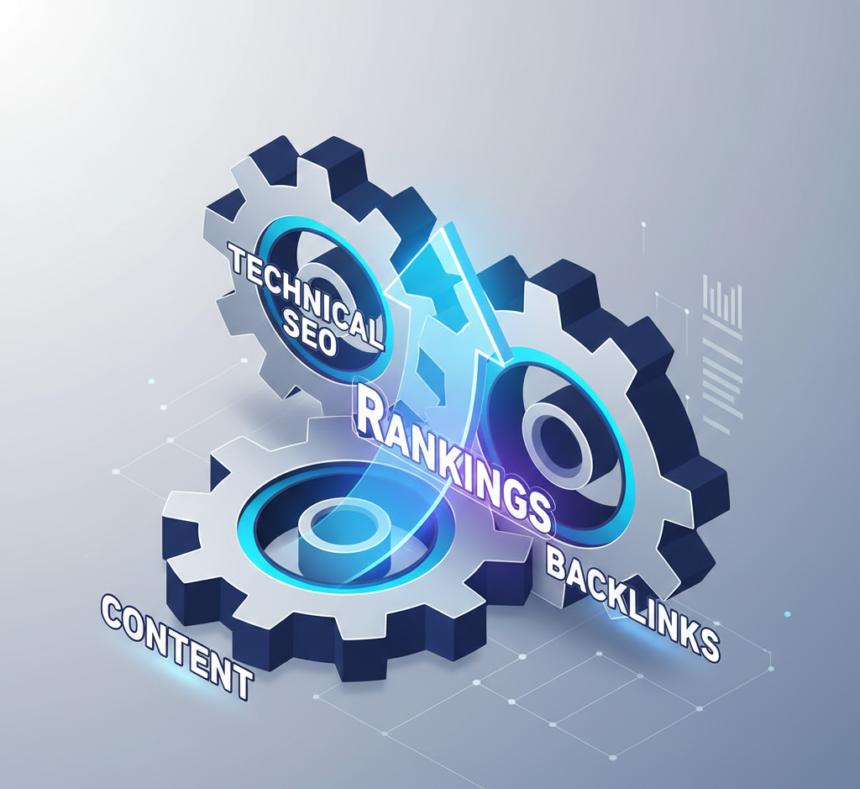
According to Google’s own guidelines and countless industry studies, high rankings are built on three foundational pillars:
-
Technical Health: Can Google crawl, index, and render your site without issues?
-
Content Relevance & Quality: Does your content satisfy the user’s search intent better than any other result?
-
Authority & Trust: Does the rest of the web vouch for your content through backlinks?
A true Google Ranking Booster strategy addresses all three simultaneously. Ignoring one pillar while over-investing in another is like building a house on a cracked foundation—it might look good for a while, but it’s destined to crumble.
Part 2: On-Page SEO – Optimizing Your Content for Humans and Bots
On-page SEO is the practice of optimizing individual web pages to rank higher and earn more relevant traffic. It’s about speaking the language of both your audience and the search engine algorithms.
2.1 Keyword Research: Finding Your Audience’s Language
Your journey begins with understanding what your potential customers are typing into Google. Tools like Ahrefs, SEMrush, or even Google’s own Keyword Planner can help you discover high-volume, low-competition keywords.
-
Focus on Search Intent: Are users looking to buy (“best running shoes”), to learn (“how to tie running shoes”), or to find a specific site (“Nike running shoes”)? Your content must match this intent.
-
Long-Tail Keywords: Phrases with three or more words (e.g., “best vegan protein powder for weight loss”) have lower search volume but much higher conversion rates. They are low-hanging fruit for your Google Ranking Booster efforts.
2.2 Strategic Keyword Placement
Once you have your target keywords, they need to be strategically placed throughout your page:
-
Title Tag (H1): The single most important on-page element. Include your primary keyword naturally.
-
Headings (H2, H3): Use these to structure your content and incorporate secondary keywords and semantic variations.
-
Meta Description: While not a direct ranking factor, a compelling meta description with your keyword improves Click-Through Rate (CTR), which is a strong user signal to Google.
-
Body Content: Use keywords naturally. Keyword stuffing is a penalty-worthy offense. Aim for a semantic richness that covers the topic comprehensively.
2.3 Content is King (and the Kingmaker)
Google’s algorithms, particularly its AI systems like RankBrain and BERT, are incredibly adept at understanding content quality. To boost your rankings, your content must be:
-
Comprehensive: Cover the topic in more depth than any competing page. The “Skyscraper Technique”—making something better, longer, and more useful than what’s currently ranking—is a proven Google Ranking Booster.
-
Original: Avoid thin or duplicate content. Provide unique insights, data, or perspectives.
-
Engaging: Use images, videos, bullet points, and short paragraphs to enhance readability. Dwell time (how long a user stays on your page) is a positive ranking signal.
Part 3: Technical SEO – Ensuring Google Can Find and Love Your Site
Technical SEO is the behind-the-scenes work that ensures search engines can successfully crawl, interpret, and index your website. Without a solid technical foundation, your amazing content may never be seen.
3.1 Core Web Vitals & Page Experience
Google has explicitly made page experience a ranking factor. This centers around Core Web Vitals:
-
Largest Contentful Paint (LCP): Measures loading performance. Aim for under 2.5 seconds.
-
First Input Delay (FID): Measures interactivity. Aim for less than 100 milliseconds.
-
Cumulative Layout Shift (CLS): Measures visual stability. Aim for a score of less than 0.1.
Use Google’s PageSpeed Insights tool to diagnose and fix these issues. A fast, stable site is a fundamental Google Ranking Booster.
3.2 Mobile-Friendliness
With Google’s mobile-first indexing, Google primarily uses the mobile version of your content for indexing and ranking. Ensure your site is fully responsive and provides an excellent user experience on all devices. Test it using Google’s Mobile-Friendly Test tool.
3.3 Site Structure and Internal Linking
A logical site structure helps Google understand the relationship between your pages and distributes “link juice” (authority) throughout your site.
-
Flat Architecture: Ensure any important page is no more than three clicks from the homepage.
-
XML Sitemaps: Create and submit an XML sitemap to Google Search Console to help Google discover all your important pages.
-
Internal Links: Strategically link to your own related content. This keeps users on your site longer and helps search engines crawl it more effectively.
3.4 Structured Data (Schema Markup)
Schema markup is a code you put on your website to help search engines return more informative results for users. Implementing schema can help you earn rich snippets, which include star ratings, prices, or FAQs directly in the SERP. This significantly boosts your CTR, acting as a powerful Google Ranking Booster by proxy.
Part 4: Off-Page SEO – Building Authority and Trust
If on-page and technical SEO are about laying the groundwork, off-page SEO is about building your reputation. The primary currency here is the backlink—a vote of confidence from one site to another.
4.1 The Power of Domain Authority (DA) and Domain Rating (DR)
Metrics like Moz’s Domain Authority (DA) and Ahrefs’ Domain Rating (DR) are not Google ranking factors themselves, but they strongly correlate with ranking success. They are scores that predict how well a website will rank based on the quantity and quality of its backlink profile.
-
Quality over Quantity: One link from a highly authoritative site like Forbes or a major industry publication is worth hundreds of low-quality directory links.
-
Relevance Matters: A link from a site in your industry or niche passes more value than a link from an unrelated site.
A core goal of any Google Ranking Booster campaign is to systematically increase your site’s authority by acquiring high-quality backlinks. Services like those offered at SeoBoost.agency focus precisely on this—optimizing key metrics like Domain Rating, Domain Authority, and Trust Flow through strategic link acquisition.
4.2 Trust Flow: The Credibility Factor
Trust Flow, a metric developed by Majestic, measures the quality of the links pointing to a website. It’s based on the trustworthiness of the linking sites. A high Trust Flow indicates that your backlinks are coming from reputable, established sources, which is a powerful signal to Google that your site is a credible and reliable result to show to users.
4.3 White-Hat Link Building Strategies
Building a strong backlink profile takes time and effort. Here are sustainable, effective strategies:
-
Guest Blogging: Write high-quality articles for reputable websites in your niche. In return, you get a valuable author bio link.
-
Broken Link Building: Find broken links on relevant websites using tools like Check My Links. Create a piece of content that would be a perfect replacement and suggest they link to you instead.
-
The Skyscraper Technique (for links): Find popular content in your niche, create something even better, and then reach out to everyone who linked to the original piece, showing them your superior resource.
-
Digital PR: Create newsworthy stories, original research, or compelling data visualizations that journalists and bloggers will naturally want to link to.
4.4 The Role of PBN Backlinks (A Word of Caution)
Private Blog Networks (PBNs) are networks of websites built specifically to link out to a “money site” to boost its authority. When done with high-quality, aged domains and unique content, PBN backlinks can be incredibly effective. This is a strategy that agencies like SeoBoost.agency leverage to drive high-quality traffic and improve rankings quickly.
However, this is an advanced tactic with significant risk. If Google detects that a network is solely for linking and provides no real value to users, it can penalize both the PBN sites and the target site. It is crucial to work with experienced professionals who understand how to build and manage PBNs safely if you choose this path. For most, focusing on white-hat strategies is the more sustainable long-term play.
Part 5: The Step-by-Step Google Ranking Booster Action Plan
Theory is useless without execution. Here is a practical, phased plan to implement the strategies discussed.
Phase 1: Audit & Foundation (Weeks 1-2)
-
Technical Audit: Run your site through Google Search Console, PageSpeed Insights, and a tool like Screaming Frog. Fix all critical crawl errors, broken links, and speed issues.
-
Content Audit: Identify your best-performing content and pages with high potential but low traffic.
-
Keyword Research: Compile a master list of target keywords for your core pages and new content ideas.
Phase 2: On-Page Optimization & Content Creation (Weeks 3-6)
-
Optimize Core Pages: Update title tags, meta descriptions, and headers for your most important pages based on your keyword research.
-
Create Cornerstone Content: Develop 2-3 “pillar” pieces of content—comprehensive, long-form guides that cover a broad topic in your niche. These become your authority hubs.
-
Implement Internal Linking: Go through your new and old content and build a strong internal link structure, pointing to your cornerstone pages.
Phase 3: Authority Building (Ongoing)
-
Outreach Campaign: Begin reaching out for guest post opportunities and broken link building prospects. Aim for 5-10 high-quality prospects per week.
-
Content Promotion: Share your new content on social media, in newsletters, and on platforms like LinkedIn and relevant industry forums.
-
Profile Backlinks: Ensure your business is listed on high-quality, relevant directories like Google Business Profile, Yelp, and industry-specific platforms.
Phase 4: Monitor, Analyze, and Adapt
SEO is not a set-it-and-forget-it endeavor. You must constantly monitor your progress.
-
Track Rankings: Use tools like Ahrefs, SEMrush, or AccuRanker to track your keyword positions.
-
Analyze Traffic: Use Google Analytics to see which pages are driving traffic and where your users are coming from.
-
Watch Your Metrics: Keep an eye on your Domain Rating (DR), Domain Authority (DA), and Trust Flow. As these rise, your rankings should follow.
Part 6: Conclusion – Your Journey to the Top Starts Now
Becoming a dominant force in Google’s search results is a marathon, not a sprint. It requires a disciplined, multi-faceted approach that combines technical excellence, unparalleled content, and a robust authority-building strategy. The term “Google Ranking Booster” encapsulates this entire ecosystem of tactics.
By following the blueprint laid out in this guide—optimizing your on-page elements, fortifying your technical foundation, and systematically building high-quality backlinks that enhance your Domain Rating and Trust Flow—you are not just chasing algorithms. You are building a valuable, authoritative website that serves your audience’s needs better than anyone else. And that, ultimately, is the only sustainable ranking booster that Google will ever reward.
Start implementing these strategies today, and watch your digital presence soar.
Frequently Asked Questions (FAQ)
Q: How long does it take to see results from a Google Ranking Booster strategy?
A: SEO is a long-term game. While some on-page optimizations can yield quick results, significant ranking improvements from authority building typically take 3 to 6 months to become visible. Patience and consistency are key.
Q: Is buying PBN backlinks safe?
A: This is a high-risk, high-reward strategy. Low-quality, detectable PBNs can lead to severe Google penalties. However, when managed by experts who use aged domains with clean histories and unique content—like the services highlighted on SeoBoost.agency—they can be a powerful tool. For most businesses, focusing on white-hat link building is the safer, more sustainable path.
Q: What’s the difference between Domain Authority and Domain Rating?
A: Both are third-party metrics that predict search ranking strength. Domain Authority (DA) is Moz’s metric, while Domain Rating (DR) is Ahrefs’. They are calculated using different algorithms but are both based on the quality and quantity of backlinks. You can use both to gauge your site’s off-page SEO health relative to your competitors.
Q: Can I be a Google Ranking Booster for my own website, or do I need an agency?
A: Absolutely! Many of the foundational tactics—like improving page speed, optimizing content, and fixing technical errors—can be done in-house. However, as you scale, link building and advanced strategy often require the tools, connections, and expertise that a specialized agency like SeoBoost.agency provides. It depends on your budget, time, and skill set.