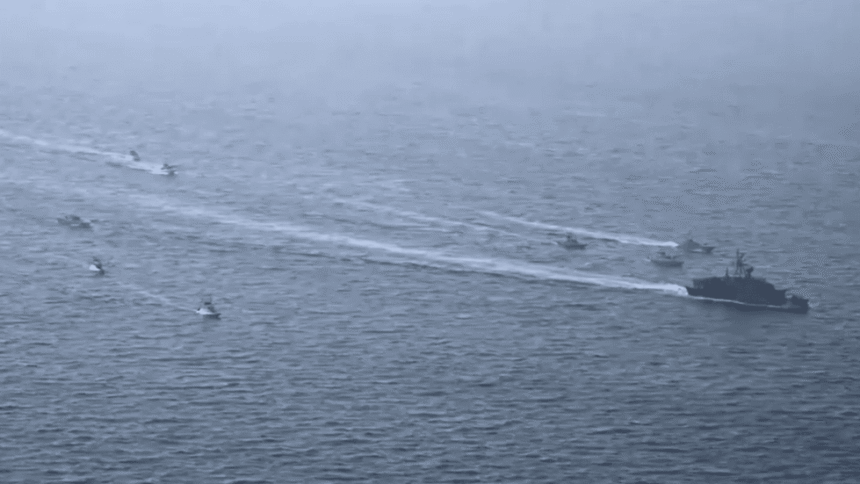
Iran has announced it is shutting off a vital shipping lane for the first time since the 1980s – and is threatening to sink American ships.
The Strait of Hormuz was closed for live-fire naval drills, just as the country’s Ayatollah threatened to send American aircraft carriers to “the bottom of the sea”.
The Islamic Revolutionary Guard Corps (IRGC) partially closed the strait to launch naval drills in the strategic waterway, northwest of the USS Abraham Lincoln strike group, as the USS Gerald R Ford heads towards the region.
Meanwhile, the Supreme Leader issued a grim threat to Donald Trump.
“The US President keeps saying ‘our military is the strongest military in the world’… The world’s most powerful military can sometimes receive such a slap that it can no longer stay on its feet,” Ali Khamenei raged.
He continued: “They constantly say, ‘we have sent an aircraft carrier towards Iran’.
“OK, of course an aircraft carrier is a dangerous device, but more dangerous than the carrier is the weapon that can send it to the bottom of the sea.”
The strait, through which 21 per cent of the world’s oil is shipped, has never been fully closed, but Iran has threatened to do so and have previously taken actions which disrupted shipping.
The water passage is just 24 miles at its narrowest point and has 21 million barrels of oil pass through it daily, with oil exports accounting for the majority of Iran’s revenue.
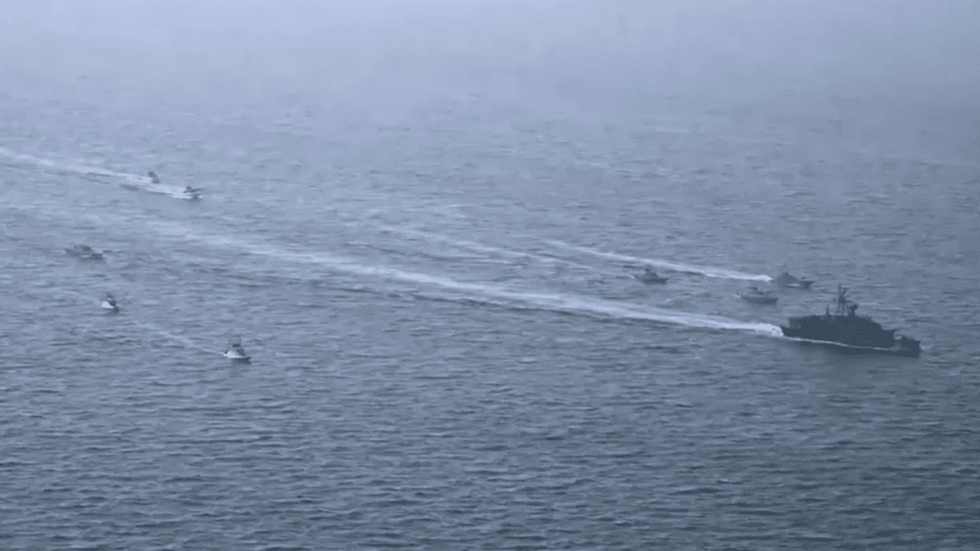
Iranian ships shut down the Strait of Hormuz on Tuesday, closing the passage for the first time since the 1980s
|
REUTERS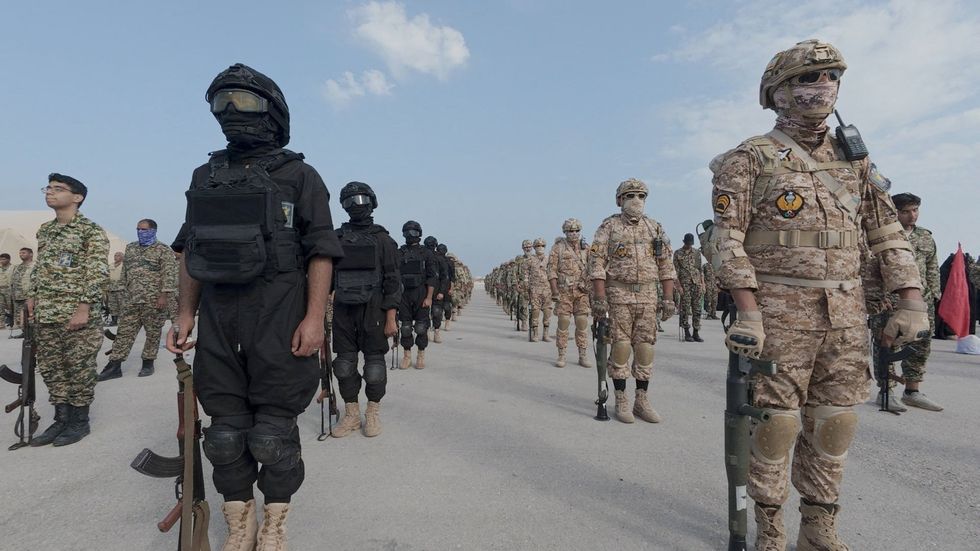
The IRGC is conducting military drills to prepare for ‘potential security and military threats’
|
REUTERSThe military show-off came amid talks between the two countries on Tuesday about Iran’s nuclear programme and sanctions.
The US and Iran agreed on “guiding principles” but failed to reach a deal.
Vice President JD Vance told Fox News: “In some ways, it went well. They agreed to meet afterwards.
“But in other ways, it was very clear that the President has set some red lines that the Iranians are not yet willing to actually acknowledge and work through.”
The Iranians have said they would return to talks in the next two weeks with proposals to address the gaps between their positions, according to one US official.
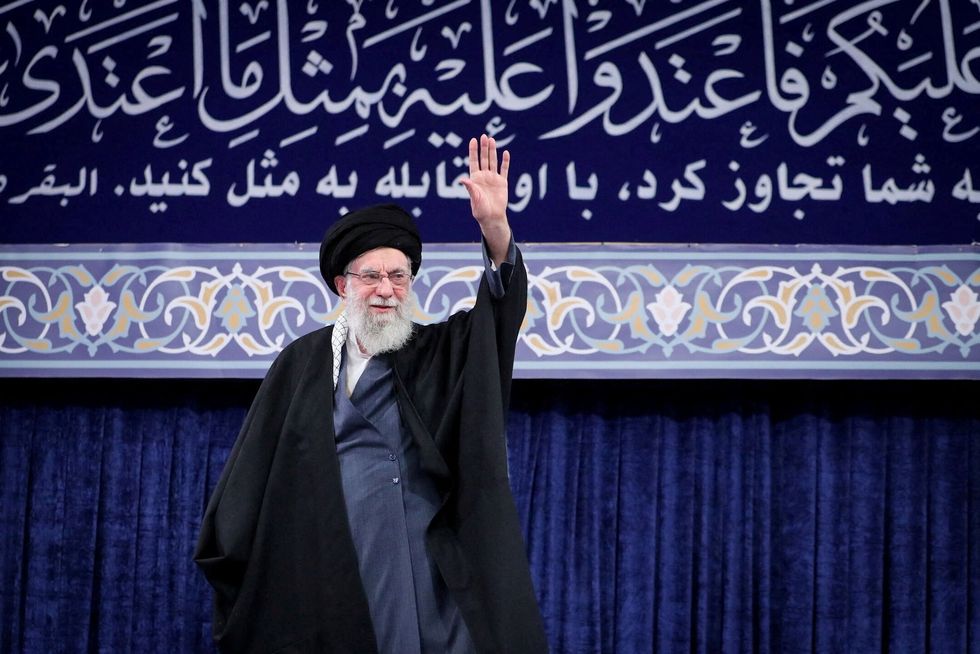
Ayatollah Ali Khamenei threatened to send aircraft carriers to ‘the bottom of the sea’
|
REUTERS
Iran’s Foreign Minister Abbas Araghchi said the talks resulted in an agreement on “guiding principles”.
He told state TV: “The second round of indirect negotiations was held and we had good discussions, and in this round more serious issues were raised compared to the previous round.”
“There was a more constructive atmosphere in this round and different ideas were raised that were discussed seriously,” he added.
At the Oman-mediated talks, the US side was represented by special envoy Steve Witkoff and Mr Trump’s son-in-law Jared Kushner – a duo who have been sent to Russia, Ukraine and Israel for historic peace talks over the last year.
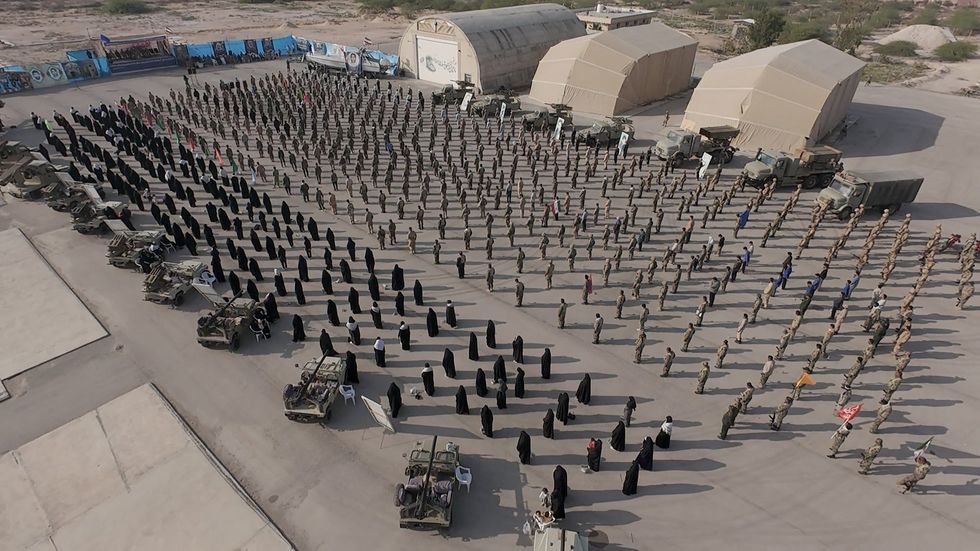 PICTURED: Islamic Revolutionary Guard Corps fighters stand in formation at an exercise in southern Iran | REUTERS
While the President was said he was involved “indirectly”, he added that Iran does not want “the consequences of not making a deal”.
The Iranian Foreign Minister said on Monday that the US position on it nuclear programme had reached a “more realistic one”.
The White House has remained under pressure from Israel to push for limits on Iranian ballistic missile stock and its sponsorship of regional terrorist groups.
The first round of talks between the two nations took place in Oman 10 days ago, with both sides expressing cautious optimism that a deal could be met.