

Collaboration is the essence of life. No single scientist discovered the Higgs boson, built the International Space Station, or mapped the human genome. These breakthroughs emerged from shared effort, shared ideas, and shared ambition.
International research collaborations have led to some of humanity’s greatest scientific achievements. The CMS Collaboration has over 4000 particle physicists, engineers, computer scientists, technicians and students from around 240 institutes and universities from more than 50 countries. In keeping with CERN’s commitment to open access for high-energy physics, the scientific results from CMS are shared openly with the world.
Advancing knowledge and fostering innovation are endeavours well suited to collaboration. Recognising the value of working across borders, governments establish structured partnerships to advance shared research goals.
Every alliance is sparked by a unique vision or need. The US-Ireland Research and Development Partnership Programme is no different. It was inspired by the Good Friday Agreement. Health, the environment and agriculture were recognised by the North-South Ministerial Council that created, as priority areas for cross-border cooperation, as well as for strengthening links with the United States.
The partnership, which is celebrating its 20th anniversary this year, is supported by research funders from across Ireland, Northern Ireland and the United States. To date, the initiative has supported over 100 research projects.
Asked about its benefits to society, Dr Ruth Freeman, research for society director at Research Ireland, says it helps create new ideas, technologies and healthcare improvements that can make life better for people. “It also boosts the economies of all three countries by supporting innovation and attracting investment,” she says.
“When researchers from Ireland, Northern Ireland and the US join forces, they can do more than they could if they were working alone. They share knowledge, skills and access to advanced facilities in each jurisdiction that wouldn’t otherwise be available to Irish teams. This means they can do projects they couldn’t normally do, and those projects can have more significant results and impact.”
Aside from the useful research outcomes, other gains for the researchers, according to Dr Freeman, include gaining new contacts and upskilling in new areas.
“Often, they discover things they didn’t expect at the outset. Some establish long-term professional relationships that occasionally result in the formation of spin-out companies. It’s not uncommon for them to go on to secure further funding so as to continue their work as a team.”
The creation of first-generation malware detection models that are practical and effective for ‘internet of things (IoT)’ devices is being investigated in a project led by University College Cork (UCC) researchers.
Discriminative Adversarial Networks that are General, Efficient, and Robust for IoT Malware Detection (DANGER-IoT) is focused on detecting malware on IoT devices (e.g. sensors, actuators, appliances and machines). Funded to the tune of €1.33 million last March, through the US-Ireland R&D Partnership Programme, it contributes to securing critical infrastructure through protecting IoT devices.
The project involves research partners from University College Cork (UCC), Queens’ University Belfast, Rochester Institute of Technology and Northeastern University. This tripartite research and development (R&D) partnership between the United States of America, Republic of Ireland and Northern Ireland increases collaborations among researchers and industry across the three jurisdictions.
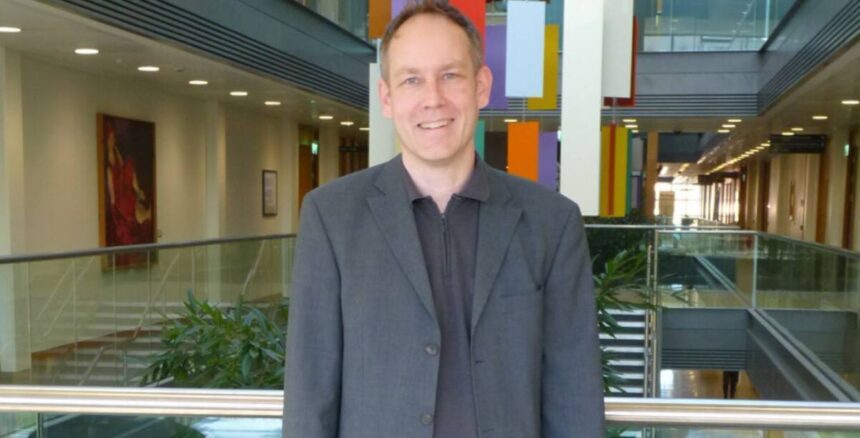
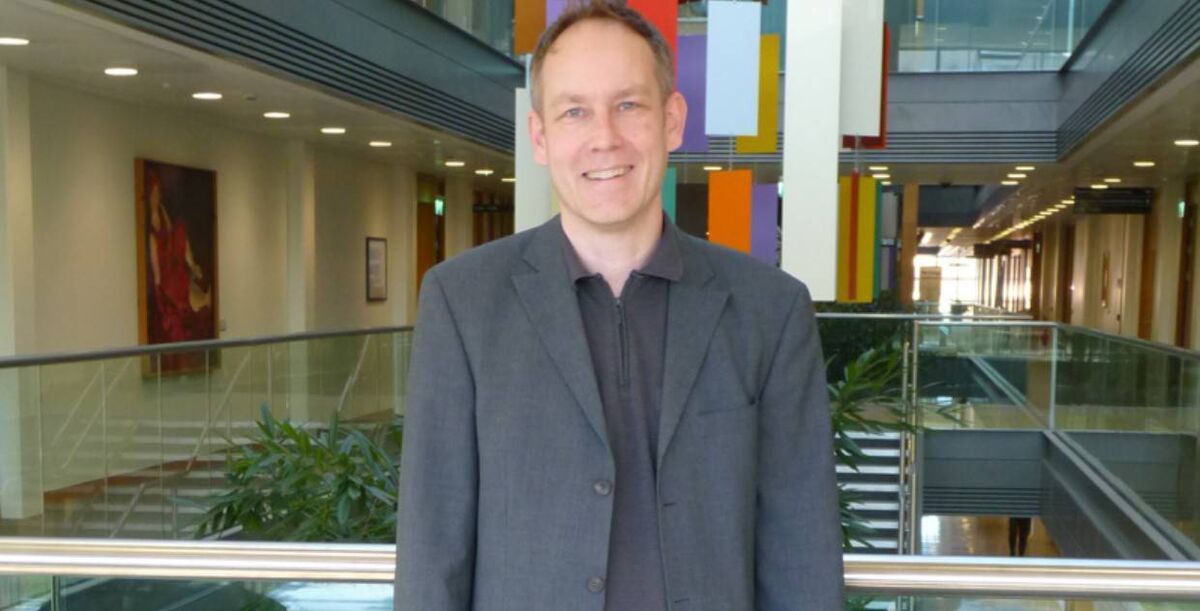
Professor Utz Roedig is a full professor of computer science at UCC. There, he leads the DANGER-IoT project under the US-Ireland Research and Development Partnership Programme. His research addresses the resilience and security of distributed and embedded systems, with a particular emphasis on protecting critical digital infrastructure.
Prior to joining UCC, he was a professor at Lancaster University in the UK, where he led the Academic Centre of Excellence in Cyber Security Research (ACE-CSR). He holds a Dr.-Ing. and Dipl.-Ing. from Darmstadt University of Technology and has authored more than 150 peer-reviewed publications. His work has been supported by major national and international research grants and industry partnerships.
Elaborating on his work on the DANGER-IoT project, he says: “We depend on digital systems in daily life and we need to ensure that they’re always available and protected from attacks. We protect PCs, laptops and phones and ensure they are free of malware. However, most computers that we rely on are not PCs, but small embedded devices running infrastructure in areas such as transport networks, electrical grid, gas networks, factories and hospitals. As critical infrastructure often spans across borders, the defence of those systems requires coordination across jurisdictions.
“Malware detection on traditional PCs, servers and mobile devices is relatively mature, with solutions based on machine learning having become industry standard. These solutions cannot be directly applied to IoT devices due to the wide variety of the types of devices being used and having resource constraints, among other reasons.”
Explaining that existing malware models are also vulnerable to adversarial evasion attacks – where carefully crafted inputs are fed in that can confuse or fool even state of the art malware models, he continues: “Work in the DANGER-IoT project contributes novel protection mechanisms against such malware.”
Dr Freeman says the US-Ireland Research and Development Partnership Programme looks to the future to identify new approaches that can be adopted to increase the value of the research it funds: “This, while it continues to support fundamental research that may one day lead to significant technological breakthroughs. Perhaps because of this – even though there have been some challenges in the international research ecosystem in the past few years – the US-Ireland programme continues to see strong interest from different researchers working in different disciplines, across the island of Ireland and the United States, who want to work together to develop their shared ideas.”
She’s right of course: In recent years, international research collaborations have faced a number of hurdles. The COVID-19 pandemic disrupted travel and in-person laboratory work, causing delays in experiments and data collection. Researchers have also navigated funding uncertainties and evolving priorities in different countries, which sometimes slowed cross-border projects. Supply chain disruptions and delays in access to equipment or materials further complicated the work of global teams.
Despite these obstacles, programmes like the US-Ireland Research and Development Partnership continue to foster strong cooperation and deliver impactful results.