

It’s understood informal talks have taken place between the FAI and An Garda Síochána since the countries were paired in group B3 alongside Austria and Kosovo at Thursday’s draw in Brussels.
Precedent was set by Belgium in 2024 when they deemed it “impossible to organise this very high-risk match” to tensions linked to the degree of public ill-feeling towards the Israeli state.
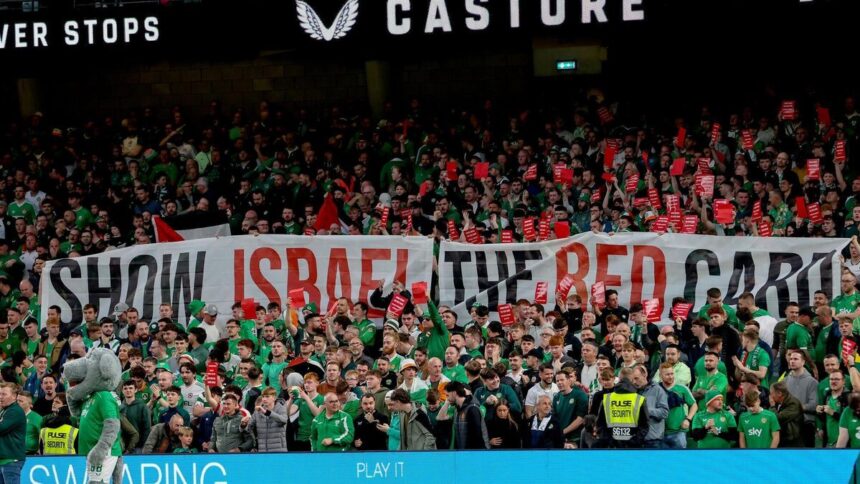
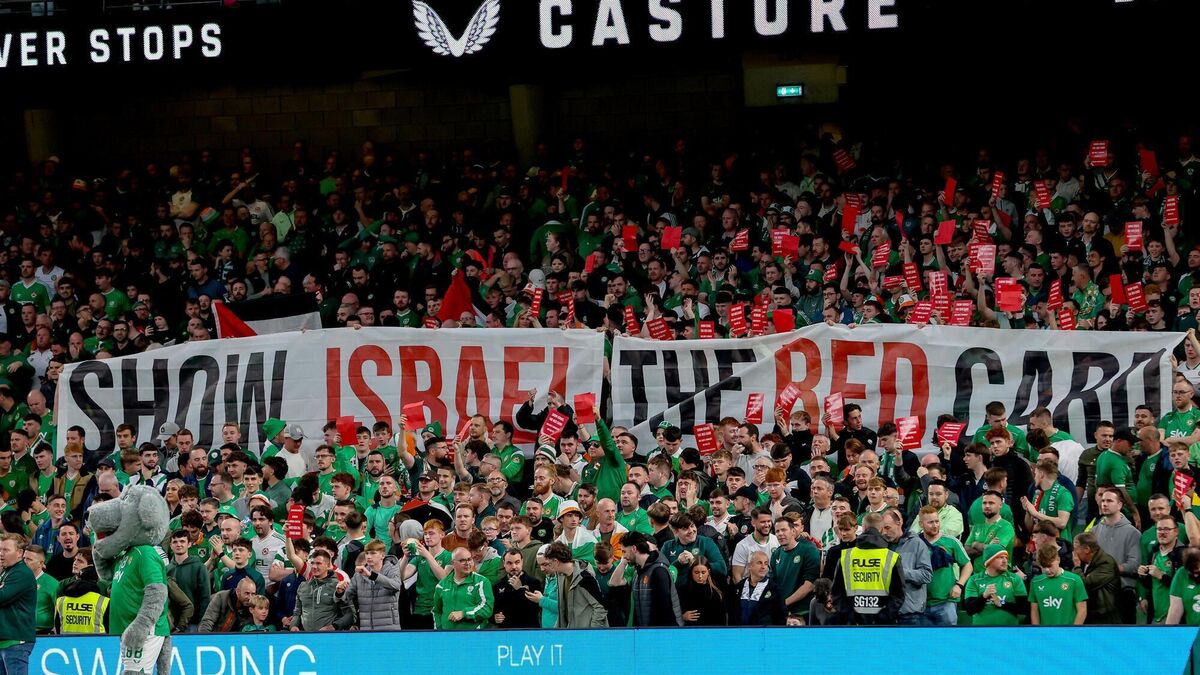
Sympathy to Palestine’s plight also frames Irish attitudes, as is evident by the backlash since the draw to the FAI’s confirmation of fulfilling the two fixtures.
That remains their intention – bar a collective boycott by the players – but the risk of protests and demonstrations at a match held in Ireland is influencing the choice of venue.
Ireland are due to welcome Austria to Lansdowne Road three days later but a double header home is rapidly moving off the table.
Belgium held their game behind closed doors in Hungary – the neutral country where Israel switched their home games to in the order of Uefa.
That may well be repeated by the FAI, seeing both fixtures between the teams held in Hungary a week apart.
Cork North Fianna Fáil TD Pádraig O’Sullivan, who is also a member of the Government’s sports committee, admitted this decision won’t be football-related and will ultimately be made by Justin Kelly.
“The voice of the Garda commissioner is going to be very important in all this,” he told Morning Ireland.
“There are going to be massive security implications. You could argue there are going to be as many protesters outside the stadium as there are inside.”
Switching a ‘home’ game out of Ireland reduces the number of games for season ticket from six but the FAI will look at substituting the fixture on another date or arrange a pro-rata refund.
Speaking in Cork, Micheál Martin said a decision on where the away leg of the fixture should take place was a matter for the football authorities.
He said that security authorities in Ireland would make an assessment on safety for the home leg in good time before the fixture takes place to ensure that it could take place “in a secure environment”.
“It should go ahead, and I think the FAI has taken the correct decision to fulfil the fixture,” Mr Martin told RTÉ News.
“We hope Ireland does well in the competition. There is a rejuvenation of a nation, a journey ahead for that Irish team. They have been doing very well so far, and we wish them well.”
SIPTU members employed by the FAI have raised serious safety concerns regarding any proposed Uefa Nations League match between Ireland and Israel, imploring the organisation to show consistency in its approach by boycotting the fixtures.
SIPTU Deputy General Secretary, Greg Ennis, said: “A match between Ireland and Israel is not only a serious political and moral issue but also has safety implications for workers and players which the FAI must consider. Our members believe that such a concern, and the duty of care the FAI must show for its staff, must also rule out this fixture.
“This is simply a call for consistency by the sporting body, which has already called for the exclusion of Israeli teams from international competition because of that State’s genocidal onslaught against the Palestinian people. It is unacceptable that the organisation would now demand its employees and players engage with their Israeli counterparts in fixtures that the FAI, and we believe the vast majority of Irish people, believe should not be taking place.
“Our members do not want to be part of a rank hypocrisy in world football which sees Russian teams banned due to their country’s illegal war in Ukraine, while another state that is perpetrating a legally defined genocide should be allowed to sport-wash its reputation at our expense.
“It is up to the governing association to consider these issues and not place players and staff in a situation where their safety and future reputations are in jeopardy.”
He added: “Irish sport has not been placed in such a predicament since the days of the sporting boycott against South Africa. The reputations of players and sporting organisations who broke that boycott were severely tarnished. In 1970, a rugby game between Ireland and South Africa led to major disruption, violence, and disorder in Dublin. Let’s not make the same mistake.
“We believe the Irish people want the FAI to do the right thing here. It must stand by its own words and respect the safety of those it has a duty of care towards. This necessitates it reconsidering its position in relation to fulfilling these fixtures.”